Key Takeaways
- Four things set a balcony inspection in motion: the state deadlines once your building qualifies, a condo conversion or sale, a hazard found by an inspector, and city enforcement.
- SB-721 covers rental apartment buildings and SB-326 covers condo associations. Ownership type decides which law applies, not the year the building went up.
- Repairs after an inspection need city permits, and a contractor who did your inspection can't be the one who does the repairs.
Five things decide what triggers balcony compliance inspections in California: the state deadlines, whether your building qualifies, converting apartments to condos, an inspector finding an immediate hazard, and city enforcement. If your building has three or more units and wood-supported balconies, stairs or walkways more than six feet off the ground, the law already requires an inspection, even if nothing looks wrong. The other triggers can add pressure, speed things up, or bring the city into the picture. Below, each trigger is explained in plain terms so you can tell where your building stands and what to do next.
What triggers balcony compliance inspections in the first place?
The law triggers them on a fixed schedule once your building qualifies, whether or not anything looks damaged. Other events can add triggers on top of that, including a condo conversion, an inspector flagging a hazard, or the city responding to a complaint.
A lot of owners wait for a symptom before they act. The law doesn’t work that way, and there’s a good reason. Wood balconies rot from the inside out, so by the time you see a sag, the damage has usually been growing for years.
Here are the separate triggers, all in one place:
- The calendar. A qualifying building has a first inspection date and then a repeat cycle.
- The building itself. Unit count, height of the walking surface, and wood support decide whether the law applies at all.
- A condo conversion or sale. A conversion requires an inspection before units sell, and existing reports must go to a buyer.
- An immediate hazard. An inspector who finds a dangerous condition must report it, and that starts its own clock.
- The city. A housing program notice, a tenant complaint, or a code case can bring enforcement to your door.
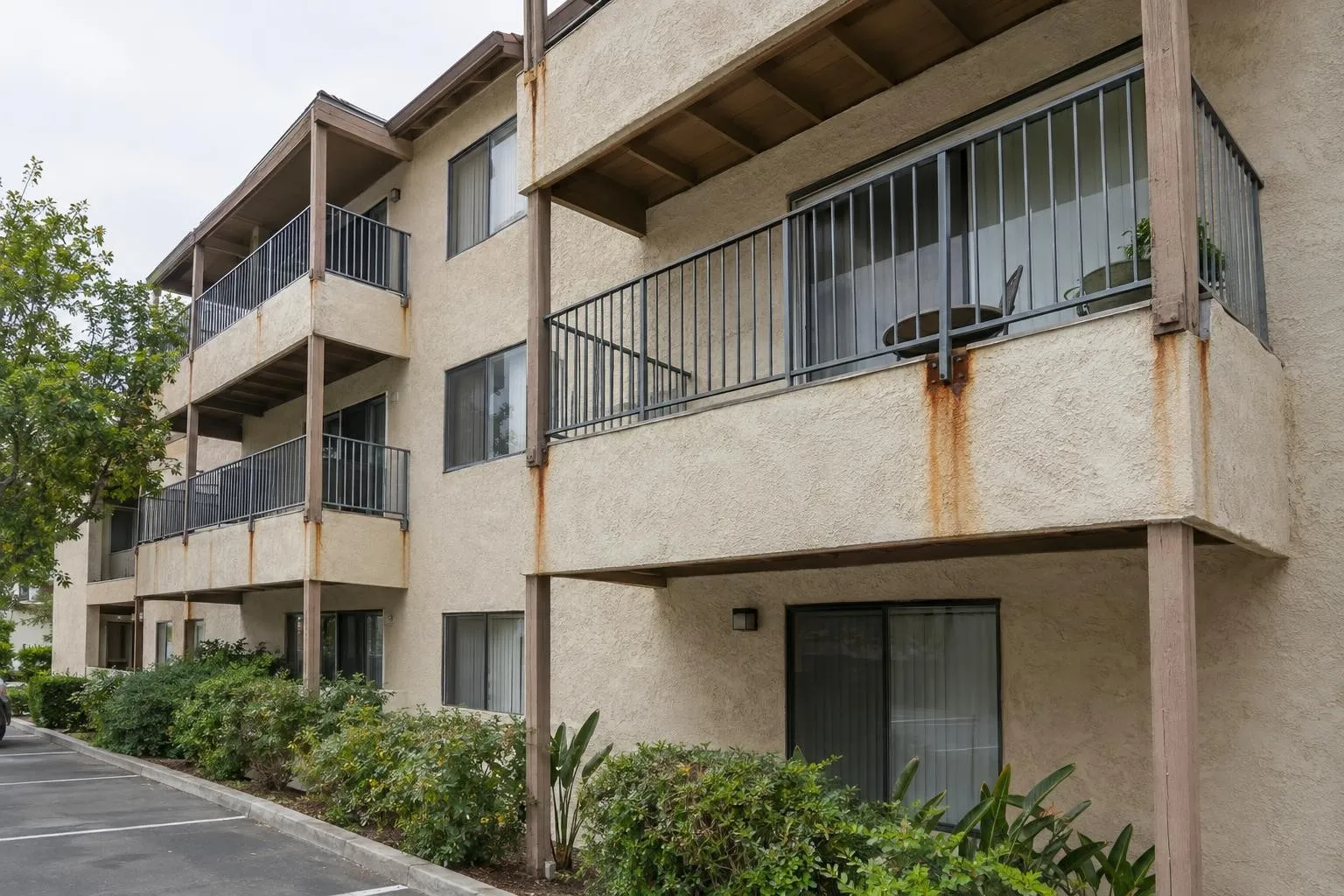
In older Los Angeles apartment buildings, balconies are often wrapped in stucco underneath and coated on top. That means nobody can see the framing without opening something up. Water slips in at the door threshold or around railing posts, sits on the plywood, and slowly softens the joists. That hidden decay is exactly why the law sets a schedule instead of waiting for complaints.
Does my building even need a balcony inspection?
It does if it has three or more units and wood-supported balconies, decks, porches, stairs, walkways or entry structures with a walking surface more than six feet above the ground. Single-family homes, duplexes, ground-level patios, and all-concrete or all-steel elements fall outside these laws.
The law calls these parts “exterior elevated elements.” That just means any outdoor platform or stair that people walk on, sits above the ground, and carries weight. The key words are “rely substantially on wood.” A concrete walking surface poured on top of wood joists still counts, because wood is holding it up.
You can do a quick first check yourself:
- Count the units. Three or more multifamily units puts you in range.
- Walk the property and list every balcony, deck, landing, exterior stair and walkway.
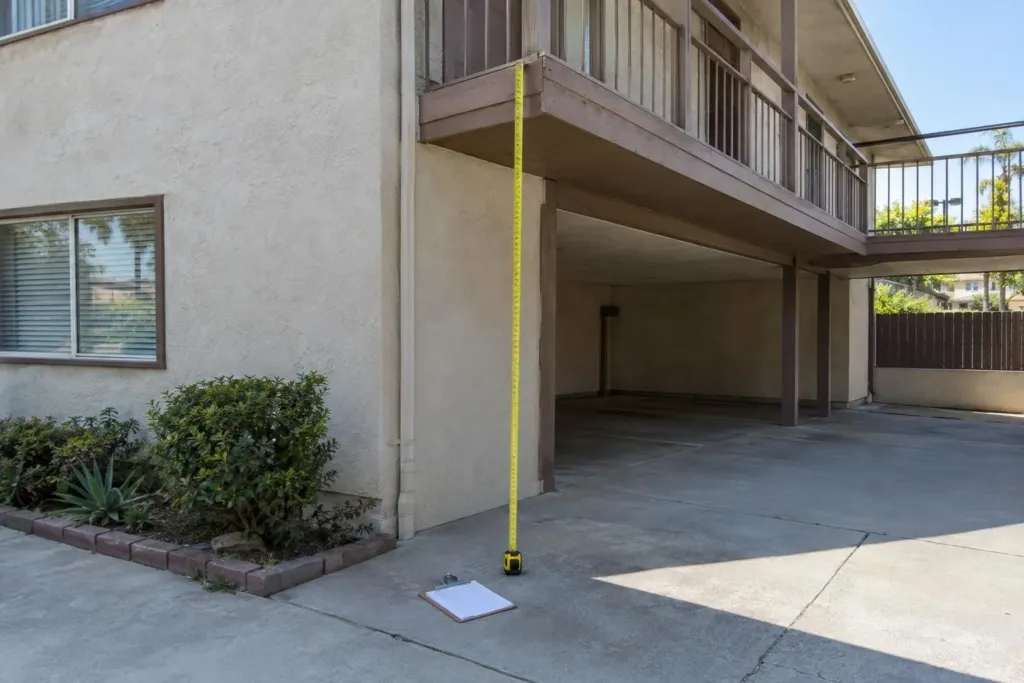
- Measure from the ground directly below up to the walking surface. Anything more than six feet is a candidate.
- Look at what holds each one up. If wood joists, beams, posts or stringers carry the load, it likely counts.
- Hand that list to the licensed professional you hire, who makes the final call on what’s included.
Being outside the law doesn’t mean a balcony is safe. A duplex with a rotted second-floor deck can fail just as easily. It simply isn’t on a required schedule. If you want the bigger picture on the apartment law, our post on SB-721 compliance in California covers the basics.
Am I under SB-721 or SB-326?
It depends on how the building is owned. Rental apartment buildings fall under SB-721, and condominium associations fall under SB-326.
You’ll find pages online claiming the split depends on whether a building went up before 2008 or 2020. Neither law uses a year-built cutoff. The apartment rules are in the SB-721 apartment balcony statute, and the condo rules are in the SB-326 condo association statute. Both are posted on California Legislative Information, and both are short enough to read in one sitting.
For apartments, the building owner is responsible for getting the inspection and making repairs. For condos, the association board handles the elements the association is responsible for maintaining. If you own a single condo unit, your governing documents say which parts belong to you and which belong to the association.
Why does it matter which one you’re under? It changes who can inspect, how much of the property gets looked at, and how often the inspection repeats. Getting this wrong is a common reason owners hire the wrong professional or plan around the wrong date. Once you know your ownership type, you know which set of rules shapes what triggers balcony compliance inspections at your property.
When was my first inspection due, and when is the next one?
The first condo inspection under SB-326 was due by January 1, 2025, and the first apartment inspection under SB-721 was due by January 1, 2026. After that, apartments repeat every six years and condo associations every nine years.
Both first deadlines have now passed. A 2024 change to the apartment law let some buildings that had a qualifying inspection in the three years before January 1, 2019, wait until January 1, 2026. That change applied only to the apartment law. Some pages say it also pushed the condo date back, but the condo statute still reads January 1, 2025. Condo associations coordinate their inspection with the reserve study, which is the periodic review of what the building will need to repair or replace over time.
If you missed your date, don’t wait for a letter. Schedule the inspection now and keep records of when you hired the inspector. The local enforcement agency can issue notices and penalties to owners who don’t comply, and a late start only shrinks your room to plan repairs. Your city building department, not your contractor, decides how enforcement and repair timelines play out.
A few details can shift the schedule. The apartment law allows extra time when asbestos has to be removed before the inspector can safely open things up. The inspector must deliver a signed or stamped written report to the owner within 45 days of finishing the inspection. Put the next cycle date on your calendar the day that report arrives.
Does selling the building or converting it to condos trigger an inspection?
Converting apartments to condos does: the inspection has to happen before the first condo unit sells, and it has to include repair recommendations. Selling an existing building doesn't start a new inspection by itself, but you must keep the reports and hand them to the buyer.
For conversions, the inspection becomes part of the deal. Buyers of the new units will want to see that the balconies and stairs were checked and that recommended repairs were handled. Planning that inspection early keeps it from holding up the first escrow.
For a regular sale, the paperwork matters. The apartment law requires owners to keep inspection reports for at least two inspection cycles and deliver them to the buyer. A buyer’s inspector or lender will ask for them. If you can’t produce them, expect hard questions, a request for a new inspection, or pressure on price.
Keep more than the report. Save the repair permits, the engineer’s drawings if any, the city’s final sign-off, and photos of the work before it was closed up. That file shows a buyer the repairs were done correctly and with permits. Our guide to balcony inspection reports explains how to read the report and what to keep with it.
Buying a building? Ask for the reports before you remove contingencies. Missing reports are one more answer to what triggers balcony compliance inspections, because you may have to order one yourself soon after closing.
Can the city or a tenant complaint trigger an inspection in Los Angeles?
Yes. In the City of Los Angeles, the Los Angeles Housing Department (LAHD) runs the E3-Apartments program for balcony inspections, and the Department of Building and Safety (LADBS) handles repair permits and construction inspection. A tenant complaint or code case can bring either agency's attention to your building.
The LAHD E3-Apartments program page explains that owners of apartment buildings with decks, stairways or other elevated elements more than six feet above the ground must hire a licensed professional for a safety inspection. When repairs follow, permits and construction inspections go through LADBS, which also publishes its policy on building and inspecting balconies, exterior stairs and walkways. LADBS covers only the City of Los Angeles. If your building sits in another city, that city’s own building department handles permits and enforcement.
A tenant who reports a soft spot, a loose rail or a sagging stair can trigger a code inspection. That visit may lead to correction orders, and those orders come with the city’s own timeline. Fixing the problem before a complaint is always easier than responding to one.
Watch your mail carefully. LAHD warns that some private companies send “E3” or “balcony inspection” notices that look official but aren’t from the city. To check a notice:
- Look at the sender. A real LAHD notice comes from the city, not a company selling inspections.
- Don’t call the phone number printed on the letter.
- Go directly to the LAHD website and compare the notice with what the program page says.
- If you’re still unsure, contact LAHD through the contact information on its own site.
What happens if the inspector finds an immediate hazard?
The owner must keep people off that balcony or stair right away and take emergency steps such as barricading or shoring. The report also goes to the local enforcement agency, and the element stays closed until repairs are inspected and approved by the city.
An immediate hazard means the inspector believes the element could fail and hurt someone. Shoring is temporary posts and beams set under a balcony or stair to carry the load until it’s repaired. It’s a stopgap, not a fix.
Here’s how the first days usually go:
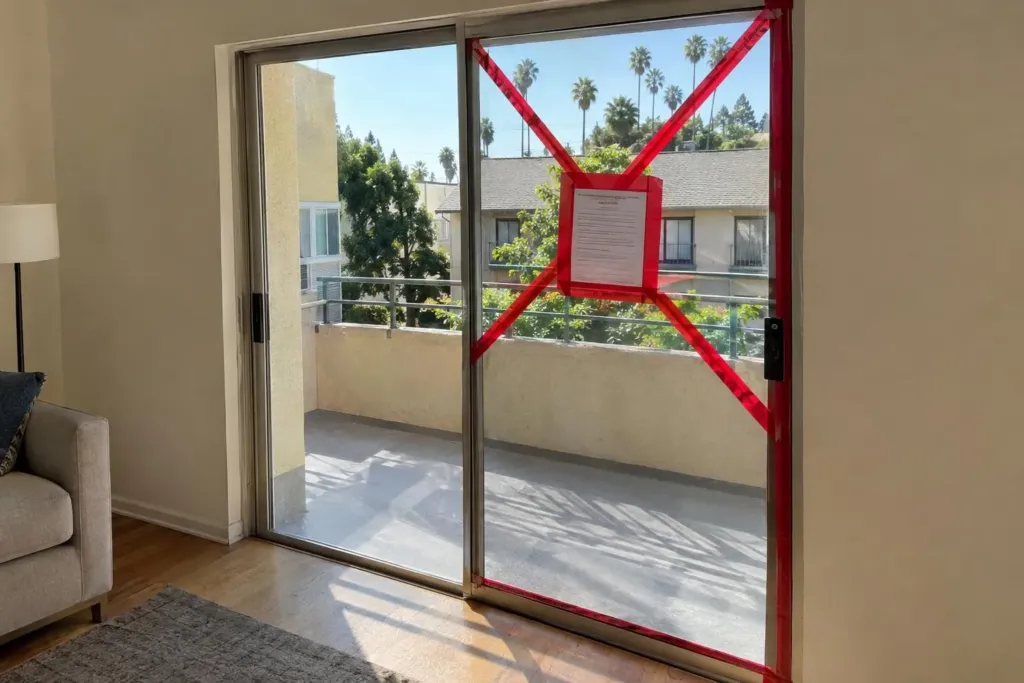
- Block access to the element. Lock or tape the door to the balcony and post a clear warning.
- Tell the affected tenants in writing why access is closed and that repairs are being arranged. Local housing rules may apply, so check with LAHD if you manage a City of Los Angeles rental.
- Have a licensed contractor install shoring if the inspector or engineer calls for it.
- Get a structural engineer involved if the repair changes framing or connections.
- Apply for repair permits, complete the work, and pass the city’s inspections before reopening.
Shoring posts need something solid to stand on. In Los Angeles courtyards, that’s often an old concrete pad or soft planter soil, and neither is always up to the job. A good crew checks what the posts land on before trusting them.
Expect the city to follow up once it receives the report. Approval to reopen depends on the building department’s inspection, so plan around its schedule, not a date someone promises you.
Who can do the inspection, and can that company also do my repairs?
For apartments, a licensed architect, a licensed civil or structural engineer, or a qualified contractor holding an A, B or C-5 license can inspect, while condo associations must use an engineer or architect. A contractor who served as your inspector can't perform the recommended repairs, and all repairs need permits from your city.
The rule against inspecting and repairing is written into the SB-721 bill text on purpose. It keeps the person who finds the problem from profiting by making it bigger. The same bill text says the owner must correct the elements that need repair and get all necessary permits from the local jurisdiction.
The inspection doesn’t open every balcony. For apartments, the inspector looks at a sample of at least 15 percent of each type of element. For condos, the engineer or architect looks at a random sample large enough to be statistically meaningful. If that sample turns up trouble, the inspector may recommend looking at more.
That split is how Villa Bella Construction works. A separate licensed inspector or engineer does the official inspection, and we handle the balcony and exterior stair repair afterward. Our approach is to find the real cause, then recommend the safest targeted repair the city will accept, instead of tearing out more than the problem requires. When framing has to be redesigned, the LADBS engineering requirements for balcony repairs shape the plans.
Older buildings bring extra issues. Railings and siding may carry lead paint, crews working at height need fall protection under Cal/OSHA rules, and tenants may lose balcony access for a while. Our post on how to prepare for balcony repairs walks through getting ready.
When should you call a licensed contractor about a balcony inspection?
Call a licensed and insured contractor as soon as you have an inspection report that lists repairs, an immediate-hazard finding, or a correction notice from the city. Call sooner if you see soft wood, rust streaks under a balcony, a bouncy stair or a rail that moves, even if your inspection date is years away. Knowing what triggers balcony compliance inspections helps you plan, but the repair still has to be scoped, permitted and built correctly. Villa Bella Construction can review your report, explain the repair options in plain terms, and handle the permitted repair work with the city building department.
“very reasonably priced, professional, and produced an excellent quality, faithful replacement” — Andrew B., Yelp review
Villa Bella Construction is a licensed and insured general contractor, building in Los Angeles for 25 years. CSLB License #1093648 (B – General Building).
Call +1 (323) 825-9798 or send us your project details.
Learn more: Balcony and exterior stair repair (SB-721 / SB-326).
Planning a construction or remodeling project in Los Angeles?
Schedule a Free On-Site Consultation or call +1 (323) 825-9798.