Key Takeaways
- Standing water under a raised-foundation house after rain is not normal. It usually comes from roof water, soil sloping toward the house, or low foundation vents.
- Fix the water outside first. Sump pumps and plastic liners come second, and sealing vents rarely suits the Los Angeles climate without a proper design.
- Repeated soaking rots the mudsill, posts, and cripple walls. Check the wood, and confirm permits for drains or grading with your city building department.
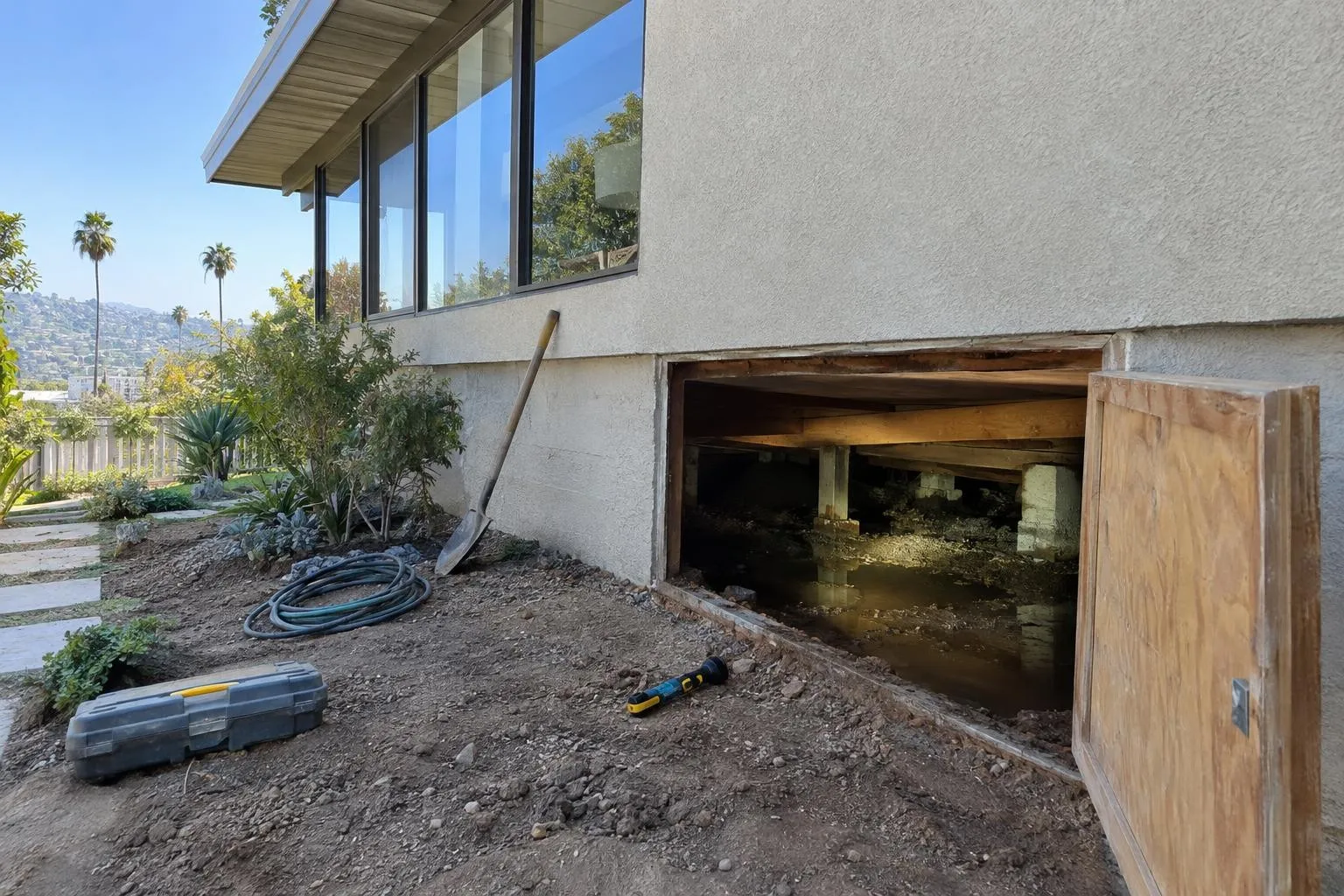
Water in crawl space dirt after rain usually means rainwater from outside is getting under your house faster than it can drain away. The usual sources are roof water dumped at the foundation, soil that slopes toward the walls, and runoff flowing in through low foundation vents. A plumbing leak or a hillside seep is less common, but you should rule both out. A crawl space is the short, open area between the dirt and the first floor of a raised-foundation home, and the wood down there holds your house up. Here’s how to find the source and fix it in the right order.
Is water in crawl space soil normal after a rainstorm?
Puddles under the house after rain are not normal. Slightly damp soil after a rare, heavy storm can happen, but water or wet wood that lasts for days means water is getting in faster than it can dry out.
Our rain comes in a few hard winter storms, then months of dry weather. That pattern fools a lot of owners. The crawl space floods in January, dries out by spring, and nobody looks under the house until a floor feels soft or a musty smell drifts up through the heater vents.
The real question is whether it comes back. Damp soil after one unusual storm may only need better gutters. Water that returns every time it rains is a drainage problem, and each soaking adds damage. The U.S. Environmental Protection Agency’s guidance on controlling moisture says water entering a crawl space should be stopped and wet areas dried within 24 to 48 hours. Treat that as a drying target, not a promise about when mold will appear.
Before anything gets pumped out or cleaned, take dated photos and short videos. Write down when it rained and how deep the water got. Those records help your insurance company, your contractor, and your tenants if you rent the home out. Coverage depends on your policy and the cause, so ask your insurer directly.
How do I tell rain runoff from a plumbing leak under the house?
Check the timing first. Water that shows up only during or right after storms points to rain, while water that appears in dry weather points to a leak in a supply line, drain, or water heater.
Supply pipes, drain lines, and sometimes water heater and air-conditioning drain lines run through the crawl space in many older homes. A slow leak can leave a puddle that looks just like rain seepage. A simple water-meter test helps sort it out.
- Pick a dry day and shut off every faucet, appliance, and sprinkler.
- Find your water meter, usually in a box near the street, and note the reading or watch the small leak indicator.
- Wait about an hour without using any water, then check again.
- If the meter moved, something is leaking, so call a plumber before you spend money on drainage.
- If the meter held still, look at where the water collects and which outside wall it seems to come from.
Rain seepage usually enters along one or two outside walls, often near a downspout or low vent. A leaking pipe leaves a wet trail that starts right under the plumbing. Remember that drain water never passes through the meter, so a cracked shower drain can soak the dirt while the test shows nothing. Wet soil under a bathroom in dry weeks means the drain needs checking.
Are my gutters, downspouts, or yard slope sending water under the house?
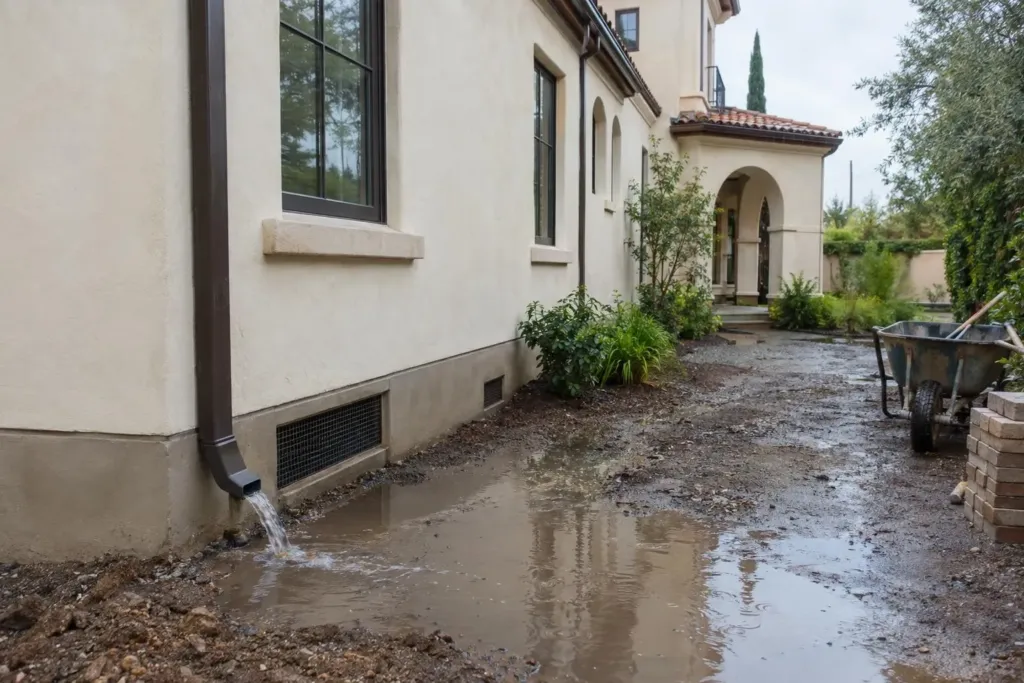
Gutters, downspouts, and yard slope are the most common sources. A roof sheds a lot of water in a hard storm, and when it lands next to the foundation or the soil tilts toward the house, it soaks down and runs under the walls.
Walk around the house during a steady rain with a flashlight. You’ll learn more in ten minutes than from any sunny-day inspection. In older Los Angeles homes, these are the usual culprits:
- Downspouts that end right at the wall, with no extension or splash block.
- Old underground downspout lines that cracked or filled with roots, so water leaks out beside the foundation.
- Roof water piped straight under the house during an old remodel.
- Soil, mulch, or raised planters built up higher than the foundation vents.
- Walkways that settled and now tilt toward the house.
- Gutters overflowing because they’re clogged or too small.
Grading means the shape and slope of the ground around your house. The soil next to the walls should fall away from the foundation so water runs off instead of soaking in. Years of gardening and settling often reverse that slope, and water in crawl space dirt is the result.
If your crawl space has a drain line or pump, keep its pipe separate from the gutter pipes. When both share one line, a heavy storm can push roof water backward under the house.
Could groundwater or a hillside seep be the source on my lot?
It's possible, especially on hillside lots or homes cut into a slope. When water keeps coming in from the uphill side for days after the rain stops, it may be traveling through the soil rather than running off the surface.
On a sloped lot, rain soaks into the hill above you and moves downhill through the soil. When it reaches the uphill foundation wall, it can seep through cracks or under the footing. Clay soils, common around Los Angeles, hold water for a long time and release it slowly.
Signs of a seep include wet soil along the uphill wall far from any downspout, water that keeps trickling days after the storm, and damp spots on the uphill side of the yard in dry weather. Don’t assume the water table is to blame, though. Surface runoff and roof water are more common suspects, but every lot is different.
If simple fixes don’t stop it, bring in a soils engineer, a licensed engineer who studies how the ground around your house behaves. Hillside drainage often involves engineering and city review, and our guide on planning hillside foundation drainage covers how that work is laid out.
What can standing water do to the mudsill, posts, and cripple walls?
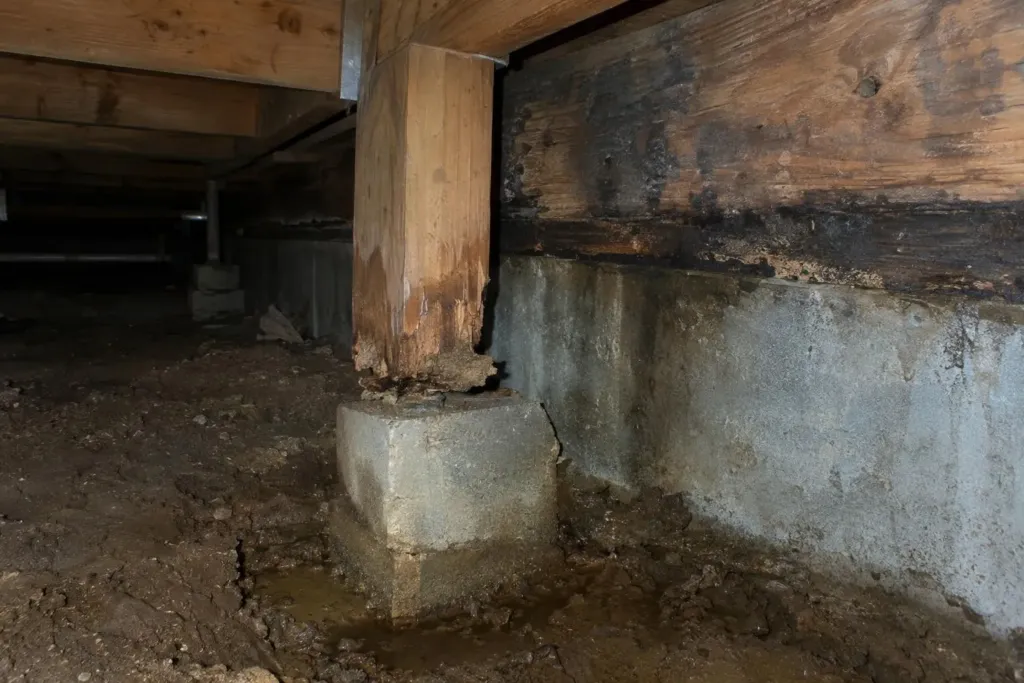
Repeated soaking rots the wood that carries your house and weakens how it's fastened to the foundation. It can also damage heating ducts, wiring, and gas line supports that sit low in the crawl space.
The mudsill is the flat board bolted to the top of the concrete foundation. Cripple walls are short wood walls that sit on the mudsill and hold up the floor. Posts are the wood columns under the middle of the house, usually on small concrete pier blocks.
In older Los Angeles homes, rot usually starts where wood touches wet concrete or dirt: the bottom of posts, the mudsill on the wettest wall, and old wood forms left buried in the soil. Push a screwdriver into the wood. Sound wood resists, and rotted wood is soft or crumbly. Ground termites love damp soil, so look for their mud tubes on the foundation too.
Rot matters for earthquake safety. Retrofit bolts and brackets only work in solid wood, so fix the drainage and replace damaged wood before any seismic work. Our foundation inspection checklist explains what to look at.
Ducts lying in water can rust and blow musty air into your rooms, and wiring shouldn’t sit in mud. If you find rot, cracked footings, or sinking posts, you may need foundation repair along with the drainage work. Our foundation repair guide for LA homes explains how that usually goes.
Should I fix drainage outside first, or add a sump pump or vapor barrier underneath?
Fix the outside first. Stopping roof water and correcting the slope keeps water out of the crawl space, while a pump or liner only manages water that already got in.
A sump pump is an electric pump set in a small pit at the lowest spot of the crawl space. It’s a useful backup when outside fixes can’t stop all the water, especially on hillside lots. A new pump needs a proper circuit and safe outlet, which may need an electrical permit, and the installer has to protect the gas lines, ducts, and wiring already under the house.
A vapor barrier is a heavy plastic sheet laid over the dirt to slow moisture rising from the ground. It helps with damp soil, but it won’t stop storm water, and water pooled on top can trap moisture against the wood. Encapsulation means lining and sealing the whole crawl space, which is a bigger change covered next.
The ENERGY STAR guide to closing and conditioning ventilated crawl spaces sets the same order: fix outside water problems first, then shape the floor so water flows to a low-point drain. Be wary of anyone selling a liner for water in crawl space dirt before they’ve looked at your gutters.
Should I seal my crawl space vents in the Los Angeles climate?
Usually not without a proper design. Sealed crawl spaces were developed mainly for humid climates, and simply closing the vents in a dry climate can trap moisture instead of removing it.
Foundation vents are the small screened openings along the base of the house that let moisture escape. Building codes require them unless the crawl space is built as an approved sealed and conditioned design.
Most online advice about sealing vents comes from humid regions. The U.S. Department of Energy insulation guide recommends sealed crawl spaces with insulated walls mainly for humid climates, and suggests insulating under the floor in dry or marine climates like ours.
What usually helps here is keeping the vents working. Clear away soil, plants, and stored items, and keep the screens intact so animals stay out. If a low vent catches runoff from a walkway, lower and reshape the ground in front of it rather than plugging it.
Do I need a permit for drains or regrading, and where can the water go?
Some drainage work may need city approval, so check before you dig. Regrading, dry wells, and pipes that run to the street or across the parkway can involve the building department and other city offices.
A French drain is a gravel trench with a perforated pipe that collects water and carries it away. A dry well is an underground pit that lets water soak slowly into the soil. Placed wrong, either can send water toward your foundation or a neighbor. Whether you need a permit depends on the size of the work, the location, and where the water ends up.
The Los Angeles Department of Building and Safety (LADBS) covers only the City of Los Angeles. Other cities have their own building departments, and the county handles unincorporated areas. Curb outlets may also need approval from the office that manages public streets. The building department decides what’s required and how long review takes, so plan around its answer. You can’t send water onto a neighbor’s lot, and stormwater rules limit how runoff reaches the street.
- Confirm which building department covers your address and ask what your drainage plan needs.
- Contact DigAlert at 811 before trenching, because gas, water, sewer, and electric lines often run beside the foundation.
- Wait for the utility markings before digging.
- Set the pipe on a steady slope and get any required inspections before you backfill.
What should I do about mold from a wet crawl space?
Stop the water first, because mold returns as long as the wood and soil stay wet. Small surface spots on dry, solid wood may be manageable, but widespread growth, a musty smell inside, or health concerns call for a professional.
Cleaning mold while water still gets in every winter just restarts the cycle. Fix the drainage, let the crawl space dry, then judge what’s left. The EPA doesn’t recommend bleach or other biocides for routine mold cleanup. The usual approach is to remove the moisture, clean or remove the growth, and replace materials too damaged to clean. Rotted wood isn’t a cleaning job; it needs to be cut out and replaced.
Wear gloves, eye protection, and a proper mask, and keep the crawl space closed off from the house. If growth covers large areas or reaches the ducts, bring in a mold professional.
Rental owners should act quickly. Chronic dampness and mold can become a habitability problem under Los Angeles Housing Department rules. Tenants should report problems in writing, and owners should keep records of the repairs.
When should I call a licensed contractor about water in my crawl space?
Call a licensed contractor when water comes back after every storm, when the wood under the house is soft, or when posts have sunk or floors feel springy. You also need one when the fix involves trenching, regrading, a dry well, a curb outlet, or a new pump circuit. Those jobs touch structure, utilities, and city rules.
Before hiring anyone, look up the license on the Contractors State License Board website and ask the contractor to explain where the water comes from before talking about products. Villa Bella Construction is licensed and insured, and our approach is simple: find the real cause, then recommend the safest targeted repair the city will accept, without tearing out more than the problem requires.
“Steve was easy to work with and was very responsive.” — Bill M., Yelp review
Villa Bella Construction is a licensed and insured general contractor, building in Los Angeles for 25 years. CSLB License #1093648 (B – General Building).
Planning a construction or remodeling project in Los Angeles?
Schedule a Free On-Site Consultation or call +1 (323) 825-9798.