
Key Takeaways
- Cracked cast iron or galvanized drain pipe gets replaced back to solid pipe. Epoxy, wraps, and silicone are not a lasting fix.
- Replacing drain pipe needs a plumbing permit, and the new pipe must pass inspection before the walls, floor, or tile close.
- Extra work needs a signed written change order first, and damage that reaches the sewer lateral is the owner's responsibility.
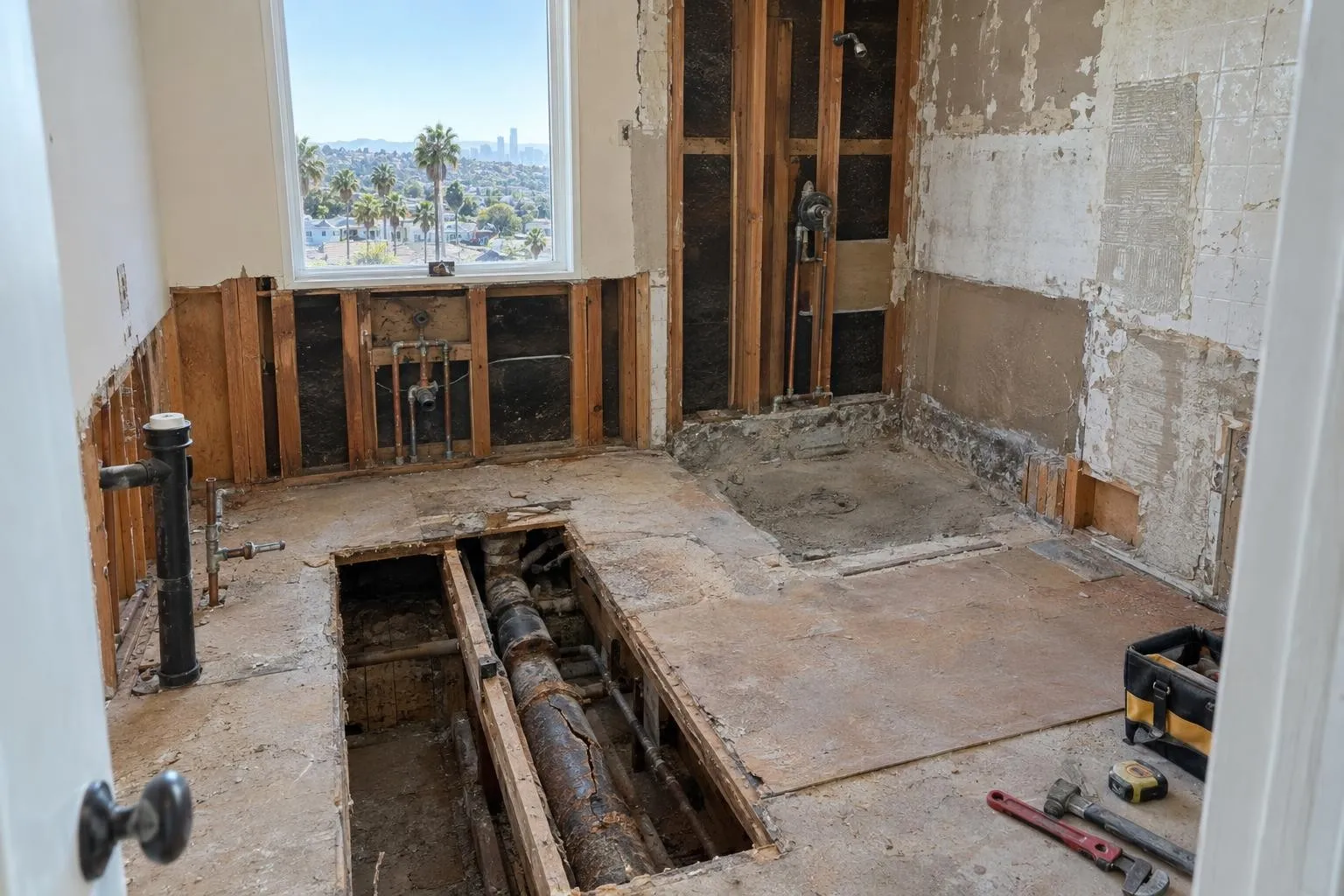
When your remodel uncovers cracked cast iron or galvanized drain pipe, the work near that pipe pauses until you know how far the damage goes. The cracked pipe gets replaced, not patched. You then sign a written change order, the new pipe goes in under a plumbing permit, and an inspector sees it before the walls and floor close. This kind of cast iron drain bathroom remodel surprise is common in older Los Angeles homes. Handled in that order, it’s a setback, not a disaster.
How do I know if a cracked drain can be repaired in sections or has to be replaced?
A short cracked piece can be cut out and replaced if the pipe on both sides is still solid. If the pipe next to the crack is thin, scaly, or cracking too, a section repair just moves the next leak a few feet down the line. The condition of the surrounding pipe decides it, not the size of the crack.
Cast iron rusts from the inside out. Water sits in the bottom of a horizontal pipe, so the metal thins there first. Cracks often run lengthwise along the underside, where you can’t see them from above. Galvanized drain pipe is steel pipe coated with zinc. It rusts inside until the opening narrows, and its threaded joints rot through.
Once the floor or wall is open, look for these warning signs:
- Orange or black stains on the subfloor or framing under the pipe
- Rust that flakes off in layers when you tap it
- A dull thud instead of a ring when the pipe is tapped
- Dark, soft wood near the joints
- A sewer smell inside the wall
A careful plumber checks the pipe a few feet on each side of the crack before deciding anything. If the pipe is sound where the new piece will connect, a section repair can hold. If the cut ends crumble, or the connection points look like the cracked piece, the replacement keeps going until it reaches solid pipe or a sensible stopping point such as the stack.
Galvanized drains rarely fail in just one spot. One cracked section usually means the rest of the run is close behind, so we usually recommend replacing galvanized drain lines back to the nearest sound connection. If your bathroom shows other signs of age, our guide on remodeling an aging bathroom covers what else to check while the room is open.
How far should the replacement go: just the bathroom, the whole stack, or out to the street?
Replace what is actually failing, and stop at a solid connection. For most bathrooms that means the branch lines under the floor. Sometimes it means the main vertical stack, and occasionally the problem continues out toward the sewer.
It helps to think of your drains in three parts. Branch lines carry water from the toilet, tub, shower, and sink. The stack is the main vertical pipe that runs through the house and out the roof as a vent. The building drain and the sewer lateral carry everything out to the city sewer in the street.
A sensible way to decide where to stop:
- Open enough floor and wall to see the whole bathroom branch and where it ties into the stack.
- Inspect and tap the exposed pipe. Cut out a small sample if the condition isn’t clear.
- Run a sewer camera, a small waterproof video camera on a cable, from a cleanout or the open pipe toward the street.
- Agree on the stopping point based on what you both saw, and put it in writing.
LADBS doesn’t require a camera for every remodel. Still, finding a cracked stack after the new tile is set means tearing out finished work. A camera look while everything is open is far easier.
Our approach is to find the real cause and replace what’s failing, not rip out every pipe in the house because one piece cracked. If the camera shows the stack and the line under the house are sound, they stay.
Does a cast iron drain bathroom remodel need a plumbing permit?
Yes. Replacing drain pipe is a change to the drainage system, so it needs a plumbing permit. The new pipe also has to be inspected before anything covers it.
In the City of Los Angeles, the LADBS plumbing permits page says a permit is required for any installation or change to drainage, waste, and vent systems, and to water piping. Small changes to an existing system generally don’t need plan check, the step where a reviewer studies drawings before a permit is issued. That keeps the paperwork simpler, but the permit is still required.
People often ask whether one cracked section really counts. The Los Angeles County Public Works list of work exempt from permits, which applies in unincorporated areas, exempts repairing a drain leak only when no trap or pipe is replaced. Once old pipe comes out and new pipe goes in, you’re past a simple leak repair. Other cities have their own building departments, so check the rules where your house sits.
If your cast iron drain bathroom remodel already has a permit, the plumbing work may be added to it or pulled as a separate plumbing permit. The city building department decides approvals and inspection timing, so build some room into your plan.
Expect the inspector to want the new drain exposed, the connections visible, and the pipe holding a test before it’s covered. That sets the order of work: plumbing first, then inspection, then waterproofing and tile. Closing up early can mean opening it all again.
Is epoxy, a pipe wrap, or relining a permanent fix?
Epoxy putty, wraps, tape, and silicone are temporary at best on cracked cast iron. The pipe keeps rusting from the inside, so the crack keeps growing past the patch. With the floor and walls already open, new pipe is usually the straightforward answer.
A patch only seals the outside surface. The metal underneath keeps thinning, and the crack spreads beyond the edges of the patch. Wax and silicone don’t belong on a drain line at all, whatever a forum thread says. A patched pipe under brand-new tile is a leak waiting to happen.
Relining is a different idea. A crew pulls a liner through the old pipe and cures it in place, so it forms a new pipe inside the old one. It’s mostly used where reaching the pipe would mean breaking a lot of slab, floor, or yard. If someone suggests it, ask whether it fits your pipe’s condition and whether your building department accepts it for your situation.
A remodel is the one time the pipe is out in the open. That’s your best chance to install new drain line you can see, test, and have inspected. Spend the money on pipe you trust, not on a coating over pipe you don’t.
Will this stop my remodel, and what should the change order say?
Work on the damaged plumbing stops until you and the contractor agree on the added scope. Other parts of the job may keep moving. Before any extra work starts, you need a written change order signed by both of you.
Here’s how a mid-remodel discovery should be handled:
- The crew stops cutting near the damaged pipe and makes it safe, capping open lines if needed.
- The contractor shows you the damage and photographs it.
- You agree on how far the replacement goes, often after a camera look.
- You receive a written change order listing the added work, the price added or subtracted, any change to the completion date, and how it affects the payment schedule.
- You both sign it before the extra work begins.
The Contractors State License Board’s page on what a home improvement contract must include explains that any change to price or scope has to be a written change order, signed by the customer and the contractor before the change. It then becomes part of your contract. A quick “go ahead” over the phone isn’t enough, for your protection or ours.
Plan for the bathroom to be out of service longer than first expected. The new pipe has to wait for inspection, and the city sets that schedule. If this is your only bathroom, talk early about temporary options.
Will the slab or floor under the shower have to be opened?
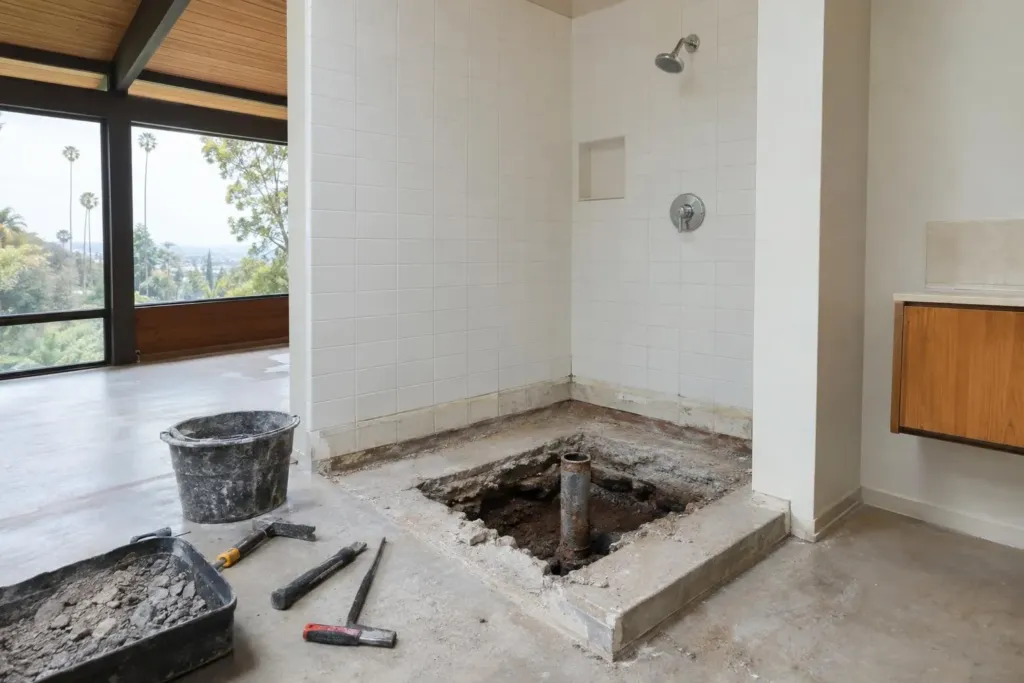
If the cracked drain sits under a shower or tub on a concrete slab, the concrete around it has to be cut out to reach the pipe. On a raised foundation, the pipe is usually reached from the crawlspace or through the subfloor. Either way, the opening is repaired before new shower waterproofing goes in.
On a slab-on-grade house, the crew saw-cuts a neat section around the drain and breaks it out carefully so they don’t crack the pipe they’re trying to reach. Then they look hard at the soil. A drain that’s leaked for years can soak or wash out the soil under the slab. Wet, soft dirt, hollow spots, or concrete that has dropped need attention before the patch is poured.
On a raised foundation, the crawlspace tells the story. In older Los Angeles homes, the joists and subfloor under a bathroom often show years of slow drips from a leaking drain. If the wood is soft or dark, read our post on rotted joists under bathroom floors before you close anything up.
The drain also ties directly into your shower waterproofing. The new shower drain has to sit at the right height and connect properly with the shower pan and membrane. Move or raise the drain and the floor slope and tile layout change too. Our Los Angeles bathroom remodeling guide explains how layout, waterproofing, and permits fit together.
Can the plumber notch or drill my joists and studs to run new pipe?
Some notching and drilling is allowed, but the rules limit how large the cuts can be and where they go. Cut too much from a joist or a bearing wall stud and you've traded a plumbing problem for a structural one. If the new pipe route needs more than the rules allow, the framing gets reinforced or the route changes.
New plastic drain pipe, usually ABS or PVC, doesn’t always follow the old cast iron path exactly. Fittings differ in shape, and the slope has to stay correct. That’s when someone reaches for a saw. Cuts near the top or bottom edge of a joist, especially near the middle of its span, weaken it the most.
Look for old damage too. Earlier plumbers sometimes notched joists deep to fit pipe. Signs include a dip in the floor, cracked tile along one line, or a joist with a big chunk missing. Those joists get reinforced with new lumber bolted alongside or added blocking. Larger problems may need an engineer.
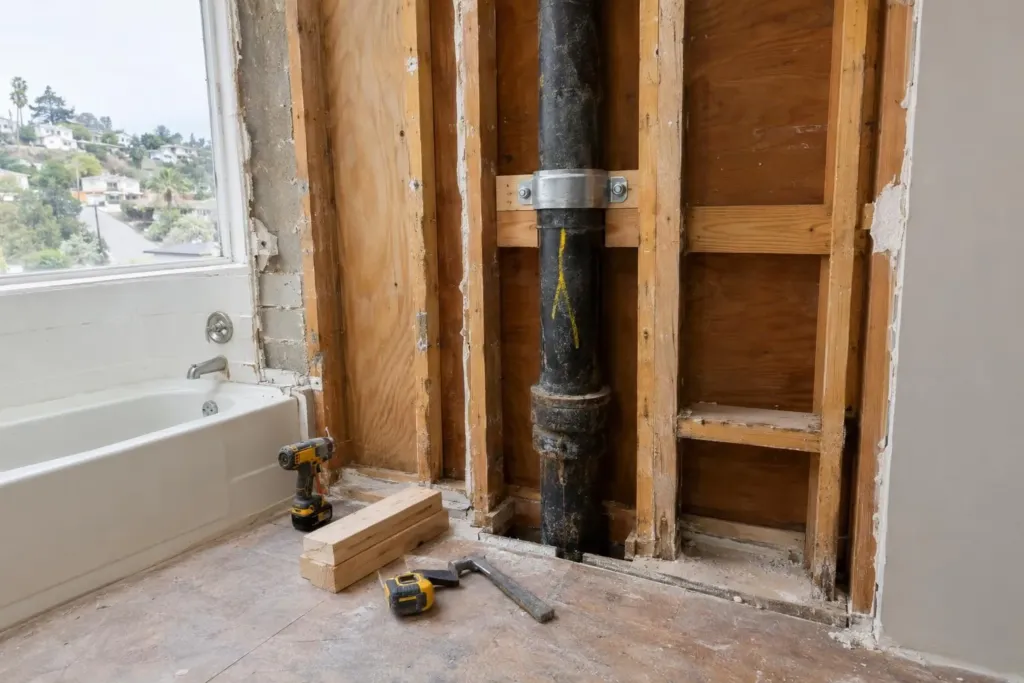
A vertical cast iron stack is heavy. Before anyone cuts it, it has to be held with riser clamps, steel clamps that bolt around the pipe and rest on the framing, above the cut. Without them, the pipe above can drop and break joints on another floor.
The inspector also checks where old pipe meets new. The joint has to use fittings approved for that connection, and the pipe has to be properly supported on both sides.
Who pays if the damage reaches the sewer line under the sidewalk or street?
You do. In the City of Los Angeles, the owner is responsible for the whole sewer lateral, from the house to the connection in the street, and the city doesn't pay for any part of it. Work under the sidewalk or street needs a Bureau of Engineering permit pulled by a Bonded Sewer Contractor.
The sewer lateral is the pipe that carries everything from your house to the city’s main sewer. LA Sanitation’s sewer system page explains that owners must maintain and repair the entire lateral. That includes the upper section from the building to the property line and the lower section from the property line to the middle of the street.
Not every plumber can work in the street. The Bureau of Engineering’s S-Permit processing procedures say any repair or replacement of a house lateral in the public right-of-way requires an S-Permit issued to an active Bonded Sewer Contractor. That permit is separate from the LADBS plumbing permit for your bathroom.
This is another reason to run the camera early. If it shows roots, cracks, or a sagging section in the lateral, you can plan for it instead of finding out after the new bathroom is done. Lateral work is usually its own project, with its own permit and its own contractor.
What about the old galvanized water supply pipes next to the drains?
If the walls are open and the supply lines are galvanized, now is the time to look hard at them. Galvanized supply pipe rusts inside, which cuts water pressure and leads to leaks at the threads. Replacing it while everything is open saves you from cutting into new tile later.
Watch for low pressure at the shower, brown or rusty water after the taps sit unused, white or orange crust on threaded joints, and slow drips at fittings. Any of these means the pipe is closing up or wearing through.
Then decide where to stop. Replacing the bathroom lines back to a solid connection is a modest addition to the job. Replacing the supply piping for the whole house is a bigger decision with its own scope, so don’t let it get rushed into a change order you haven’t thought through.
Water piping changes fall under the same LADBS plumbing permit requirement as drains. The inspector checks how new pipe joins the old galvanized line, because a poor joint between different metals can corrode quickly.
When should you call a licensed contractor about a cracked drain found during a remodel?
Call a licensed contractor as soon as any pipe has to be replaced, the vertical stack is involved, the slab needs cutting, or joists and studs need notching. Call right away if the open floor shows soft or stained wood. Those jobs need a permit, an inspection before close-up, and someone who can see how the plumbing, framing, and waterproofing fit together.
Villa Bella Construction is licensed and insured and handles bathroom remodels with structural or plumbing problems. We find the real cause first, then recommend the safest targeted repair the city will accept, so you replace what’s failing and get the job done once.
“If you want an honest, licensed contractor in the LA area, I highly recommend them!” — Robert H., Google review
Villa Bella Construction is a licensed and insured general contractor, building in Los Angeles for 25 years. CSLB License #1093648 (B – General Building).
Call +1 (323) 825-9798 or send us your project details.
Learn more: Bathroom remodels with structural or plumbing problems.
Planning a construction or remodeling project in Los Angeles?
Schedule a Free On-Site Consultation or call +1 (323) 825-9798.