
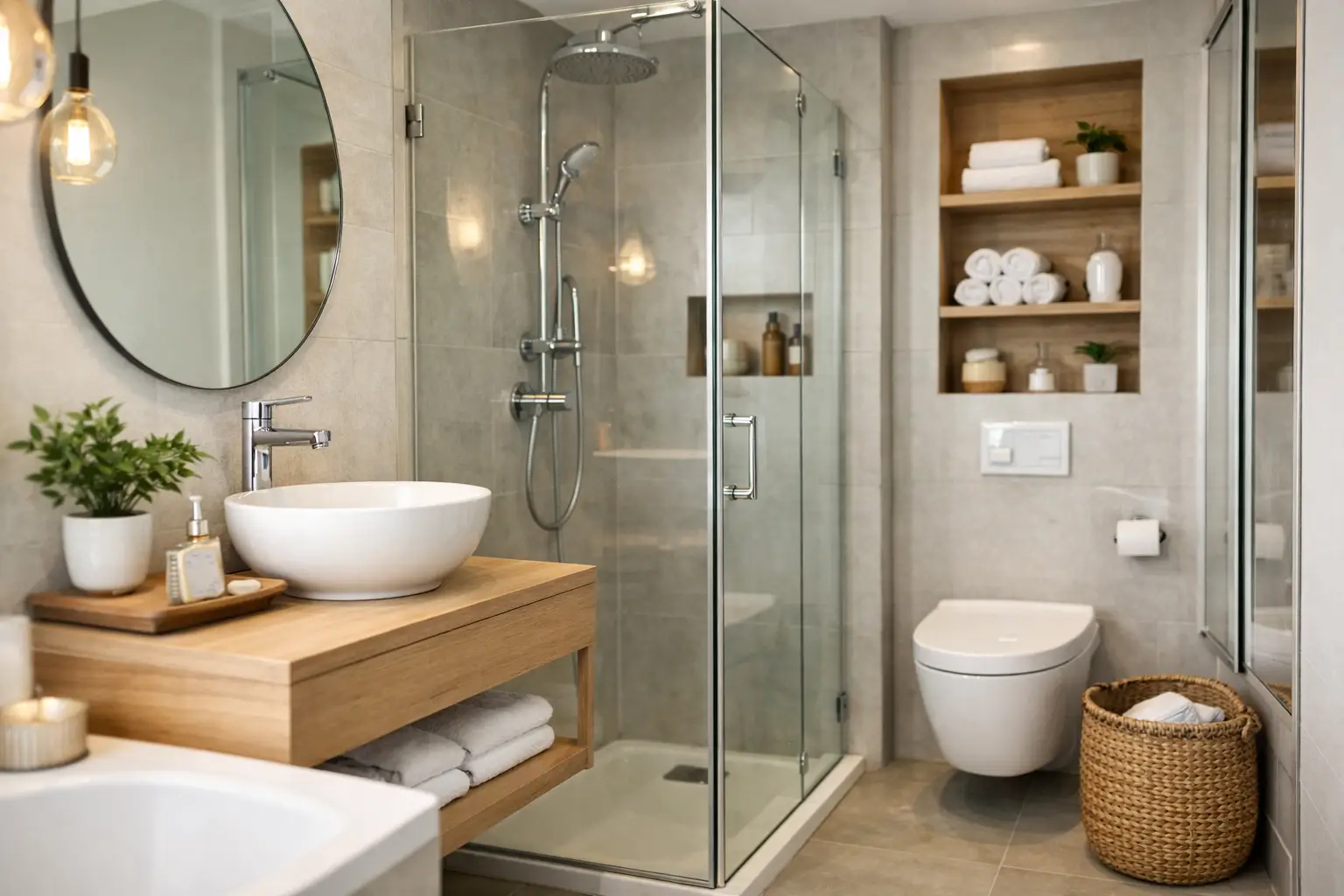
When a bathroom is only a few feet wide, every inch has a job to do. The best small bathroom renovation ideas are not just about making the room look bigger. They are about improving how it functions day after day, while staying realistic about plumbing locations, ventilation, waterproofing, and the kind of storage a household actually needs.
In Los Angeles homes, small bathrooms show up in older bungalows, guest baths, hallway bathrooms, and compact primary suites that were built long before modern storage expectations. That is why a good renovation starts with planning, not just tile samples. A clean design can make a small space feel calm and intentional, but the layout and construction details are what make it work for years.
Start with the layout before finishes
Homeowners often focus first on color, tile, or fixtures. Those choices matter, but layout has the biggest impact in a small room. If the door swings into the vanity, the shower feels tight, or the toilet placement blocks circulation, even beautiful materials will not solve the daily frustration.
A strong plan begins with clearances. You need enough room to move comfortably, open drawers, and step out of the shower without bumping into another fixture. In some cases, keeping the plumbing where it is saves money and shortens the timeline. In other cases, moving a vanity or replacing a bulky tub with a shower creates a much better use of the footprint. The right answer depends on the home, the slab or floor structure, and the budget.
For older Los Angeles properties, layout changes can also reveal code and condition issues. Once walls are opened, it is common to find outdated plumbing, inadequate framing, or ventilation that should be corrected during the renovation. That is one reason small bathrooms still benefit from full professional planning. The room may be compact, but the construction is not necessarily simple.
Small bathroom renovation ideas that create more usable space
Not every bathroom can be physically enlarged, so the goal is often to create visual space and better function within the existing walls. One of the most effective changes is replacing a shower curtain or framed enclosure with fixed glass. A clear glass panel keeps sightlines open and makes the room feel less segmented.
A floating vanity is another smart move when the layout allows it. Exposed floor area makes the room feel larger, and it can still provide useful drawer storage. If a floating vanity is not the right fit, a shallow-depth vanity often works better than a standard cabinet in a tight bathroom. The gain may seem minor on paper, but a few extra inches of walkway can change the room noticeably.
Wall-mounted faucets, recessed medicine cabinets, and built-in shower niches also help reduce visual and physical clutter. These details are especially useful in bathrooms where every projection into the room matters. The trade-off is that some of these upgrades require more wall coordination during construction, so they need to be planned early.
Consider a walk-in shower instead of a tub
In many small bathrooms, a tub is the single biggest space consumer. If the bathroom is not the home’s only tub and your household does not regularly use one, converting to a walk-in shower can improve both comfort and resale appeal. A curbless or low-threshold shower can also make the space easier to access over time.
That said, removing the only tub in a family home is not always the best choice. Buyers with young children may still prefer at least one bathtub in the house. This is where renovation decisions should match the property and the owner’s long-term plans, not just current design trends.
Use wall space more efficiently
Storage is usually the first thing missing in a small bathroom. The answer is not always a larger vanity. Vertical space can do a lot of work when it is used thoughtfully.
Recessed niches in the shower, a medicine cabinet set into the wall, or shelving above the toilet can add function without making the room feel crowded. Tall linen storage can also work well if there is an underused corner. The key is to avoid adding bulky pieces that interrupt movement or make cleaning harder.
Choose materials that make the room feel open
Light finishes are popular in small bathrooms for a reason. They reflect more light and make edges feel softer. White, warm gray, soft beige, and natural wood tones usually age better than overly trendy combinations, especially in homes where resale value matters.
Large-format tile is often a better choice than many homeowners expect. Fewer grout lines can make the room feel calmer and more expansive. On shower walls, continuous slab-look surfaces or oversized porcelain panels can create an especially clean appearance. Smaller mosaic tile still has a place, particularly on shower floors where slip resistance matters, but it works best when balanced with simpler surrounding surfaces.
Consistency also helps. Running the same floor tile into the shower can visually widen the room. Using one main wall tile rather than multiple competing patterns keeps the design more controlled. In a small footprint, too many feature moments can start to feel busy.
Lighting matters more in a compact bathroom
Poor lighting makes small bathrooms feel smaller. A single ceiling fixture rarely provides enough illumination for grooming, cleaning, and general comfort. Better results come from layering the light.
Vanity lighting should reduce shadows on the face, whether that means sconces at mirror height or a well-placed fixture above the mirror. Recessed ceiling lights can help brighten the room evenly, and shower-rated lighting improves visibility inside enclosed wet areas. If there is an opportunity to add or enlarge a window while preserving privacy, natural light makes a significant difference.
Mirrors also do more than reflect your image. A larger mirror can extend sightlines and bounce light across the room. In many small bathrooms, a custom mirror sized to the vanity wall feels more finished than a small off-the-shelf piece.
Ventilation and waterproofing are not optional upgrades
A small bathroom traps humidity quickly. That means ventilation should be treated as a core part of the renovation, not an afterthought. A properly sized exhaust fan helps protect paint, drywall, cabinetry, and framing from moisture damage over time.
Waterproofing is just as critical, especially in shower remodels. Behind the tile, the assembly needs to be built correctly so water is directed where it belongs. This is where craftsmanship and code-conscious construction matter. A bathroom can look finished on the surface and still fail early if the prep work is rushed.
For homeowners in Los Angeles, this is one of the biggest reasons to hire a licensed and insured contractor who manages the work from demo through final inspection. Small bathrooms demand precise execution because there is less margin for error.
Make fixture choices that match the scale of the room
Oversized fixtures can overwhelm a compact bathroom. A vanity with deep drawers may be practical, but if it makes the walkway too narrow, it is the wrong fit. The same goes for heavy-framed shower enclosures, wide mirrors with thick borders, or decorative lighting that projects too far from the wall.
Scale should feel balanced. Compact toilets, streamlined faucets, and simpler hardware often work better than statement pieces competing for attention. This does not mean the room has to feel plain. It means every element should earn its place.
Add character without adding clutter
The strongest small bathroom renovation ideas usually combine restraint with one or two intentional details. That might be a handmade-look tile, a warm oak vanity, a brushed nickel faucet set, or a subtle patterned floor. You do not need five focal points in a small room. One or two is enough.
This approach tends to age better, too. Homeowners can update paint, mirrors, or accessories later, but tile and plumbing decisions are more permanent. A well-built bathroom with timeless materials usually delivers better long-term value than a space designed around short-lived trends.
Budget for what you cannot see
One of the most common renovation mistakes is spending too much of the budget on visible finishes and not enough on the work behind the walls. In an older bathroom, hidden conditions often include drain issues, damaged subfloor, old shutoff valves, or electrical updates needed to support lighting and outlets safely.
A realistic budget should account for those possibilities from the start. It is also smart to leave room for decisions that improve performance, such as better waterproofing, a quieter exhaust fan, or a vanity with more durable construction. These upgrades may not be the first thing guests notice, but they are the details homeowners appreciate every day.
For projects that involve permit requirements or code-related updates, having one contractor manage design coordination, construction, and inspections can reduce delays and miscommunication. That is especially valuable in cities where approval processes can affect the schedule.
A small bathroom does not need a large footprint to feel finished, functional, and well built. When the layout is thoughtful, the materials are scaled correctly, and the construction is handled with care, even a compact space can become one of the most satisfying rooms in the house. If you are planning a remodel, start with the decisions that improve the way the room works, and let the style support that foundation.


