
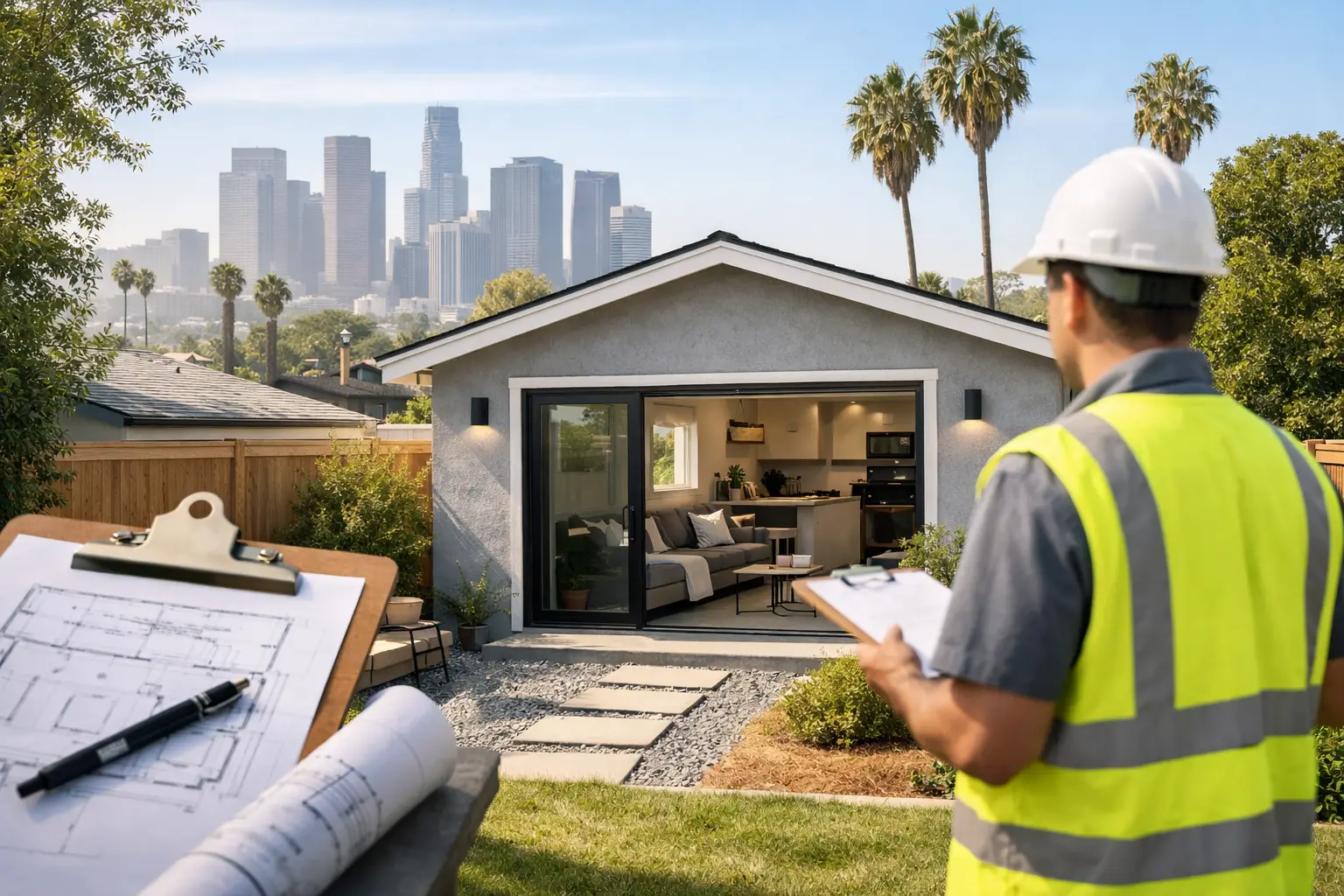
A garage conversion can add usable square footage, improve property value, and solve a real space problem. But garage conversion permit requirements are where many Los Angeles projects either move forward smoothly or get stuck in revisions, delays, and costly corrections.
In this market, permits are not a formality. Converting a garage into a legal living space changes how that structure is used, which means the city looks closely at safety, habitability, zoning, structural details, energy compliance, and sometimes parking implications. Homeowners are often surprised that a project that seems straightforward on paper can involve several layers of review before work begins.
What garage conversion permit requirements usually cover
At the most basic level, permit approval is the city’s way of confirming that the converted space will meet residential building standards. A garage built for parking and storage usually does not meet the same requirements as a bedroom, office, guest suite, or ADU. That gap is where most of the design and permit work happens.
Garage conversion permit requirements typically involve building plans that show the existing structure and the proposed layout, along with details for framing, insulation, ventilation, electrical, plumbing if added, and any structural modifications. In Los Angeles, the city may also review zoning, fire separation, ceiling height, egress, natural light, energy compliance, and drainage conditions around the slab.
That does not mean every garage conversion follows the exact same checklist. It depends on whether you are converting attached or detached space, creating habitable space for the main home, building an ADU, adding a bathroom or kitchenette, or modifying load-bearing walls, doors, or foundations.
Why Los Angeles garage projects get more scrutiny
Los Angeles has a large inventory of older homes, and older garages often come with hidden conditions. The slab may be low, cracked, or sloped toward the garage door. The walls may not be insulated. The roof framing may need reinforcement. Existing electrical may be outdated, and plumbing may need major upgrades if a bathroom is part of the plan.
There is also the issue of prior unpermitted work. It is common for homeowners to discover that a previous owner enclosed part of the garage, added wiring, or installed finishes without approval. When new plans are submitted, those conditions can become part of the review process. If they do not meet code, they may need to be corrected before the new permit can move forward.
This is one reason local experience matters. A contractor who regularly works in Los Angeles knows that permit planning is not just about producing drawings. It is about anticipating where plan check comments are likely to come from and resolving those issues early.
Plans and documents you may need
Most legal conversions start with measured plans of the existing garage and a clear scope for the new use. If the project includes layout changes, new windows, plumbing fixtures, HVAC, or structural alterations, those elements need to be reflected in the drawings. Depending on the property and scope, supporting documents may include structural calculations, Title 24 energy documentation, site plans, and engineering details.
For a simple conversion that creates conditioned living space connected to the main house, the city still wants to see how the room will meet code as habitable space. For an ADU conversion, the review is often more involved because separate living facilities trigger additional requirements.
If the garage door opening is being replaced with a wall, window system, or entry door, that needs to be designed properly. It is not just an aesthetic choice. The city may want details showing framing, anchorage, weather protection, insulation, and exterior finish compatibility.
The code issues homeowners run into most often
Ceiling height, light, and ventilation
A garage may feel roomy enough, but code standards for habitable space are different from what feels acceptable during casual use. Ceiling height can become a constraint, especially if the floor needs to be built up or the roof framing is shallow. Natural light and ventilation also matter, which may require adding or resizing windows.
Egress and life safety
Bedrooms and sleeping areas come with egress requirements. The city wants to know occupants can exit safely in an emergency. Smoke and carbon monoxide alarms may need to be added in the converted area and elsewhere in the home depending on the scope.
Insulation and energy compliance
Older garages are rarely insulated to current standards. Walls, ceilings, and sometimes floors may need upgrades. Windows and doors may also need to meet energy performance requirements. This is where owners sometimes realize that the cheapest construction path does not get the project approved.
Structural upgrades
Not every conversion needs major structural work, but many need some. The wide garage door opening changes how the front wall resists loads once the opening is enclosed. If the existing framing is undersized or altered, an engineer may need to specify upgrades. Seismic anchorage can also become part of the scope.
Plumbing and sewer connection
Adding a bathroom, laundry, or kitchenette can significantly change the permit process. Plumbing work can trigger trenching, drain tie-ins, venting changes, and additional inspections. On some properties, the physical route for new plumbing is easy. On others, it becomes one of the most expensive parts of the conversion.
Parking and zoning can still affect the plan
A common question is whether losing garage parking will stop the project. The answer depends on the type of conversion, the zoning rules that apply, and whether the project is being pursued as part of an ADU strategy or as habitable area tied to the main residence. In some cases, replacement parking is not required. In others, site conditions and local rules still matter.
This is where homeowners should be careful about relying on general online advice. A rule that applies in one California city may not apply the same way in Los Angeles, and exceptions often depend on the details of the property. The lot, access, setbacks, existing improvements, and intended use all shape the permit path.
Permit approval is only part of the process
Getting approved plans is a milestone, not the finish line. Garage conversion permit requirements also continue through construction in the form of inspections. The city may inspect framing, rough electrical, rough plumbing, insulation, lath or drywall in some cases, and final completion.
If work is done out of sequence or hidden before inspection, it can create delays and rework. The same is true when field conditions do not match approved plans. For example, if the slab is in worse condition than expected or framing changes are made on site without revised approval, the project can stall.
That is why homeowners benefit from permit and inspection management being handled as part of the construction process rather than treated as a separate administrative task.
How to avoid delays with garage conversion permit requirements
The fastest projects usually start with realistic assumptions. If the garage is older, expect that some code upgrades will be necessary. If you want a bathroom or kitchen components, expect more design coordination. If the goal is to create legal rental space, expect a more detailed review than a simple bonus room conversion.
It also helps to resolve design decisions before submitting plans. Midstream changes to window locations, plumbing layout, ceiling treatment, or entry doors can create revisions that cost both time and money. Clear plans, accurate site measurements, and early structural review reduce avoidable back-and-forth.
Most important, do not start with the assumption that permit requirements are an obstacle to work around. They are part of building a space that is safe, insurable, and usable for years to come. A permitted conversion protects resale value and reduces the risk of problems if the property is refinanced, rented, or sold.
Choosing the right contractor matters here
Garage conversions sit at the intersection of design, code compliance, and structural execution. That makes them very different from cosmetic remodeling. Homeowners need a licensed and insured contractor who understands local permitting, can coordinate plans and inspections, and knows how to build from approved documents without cutting corners.
For Los Angeles properties, that local coordination is often what keeps a good idea from turning into a frustrating project. Villa Bella Construction approaches garage conversions with the same design-to-build discipline used on larger structural and remodeling work, including permit management, inspection coordination, and hands-on oversight from planning through final completion.
If you are thinking about converting a garage, the smartest first step is not picking finishes. It is confirming what the space can legally become, what upgrades the city is likely to require, and what it will take to build it correctly the first time.


