Key Takeaways
- Close the balcony or stair to everyone today, with solid barriers and posted signs, not just caution tape.
- Tell occupants right away and follow up in writing, then bring in a licensed engineer to design any shoring.
- The 15-day window is the inspector's reporting deadline, not your repair deadline. The building department sets the timing for emergency work.
Close the balcony to everyone today. When an inspector flags a balcony immediate safety hazard, the law expects you to act right away. That means blocking access, telling your tenants in writing, and getting a licensed engineer and contractor out to secure the structure and plan the repair. You don’t have to finish the permanent repair this week. Under the law, keeping people off the element right away counts as compliance while emergency repairs are being arranged. Here’s how to handle the first hours and days without making things worse.
What does a balcony immediate safety hazard finding actually mean?
It means the inspector believes the balcony, stair, or walkway could fail and hurt someone soon, not years from now. The licensed inspector or engineer who did your SB-721 or SB-326 inspection makes this call, and the report must say whether blocking access or emergency repairs are needed.
Both laws cover what they call exterior elevated elements. That’s the legal name for balconies, decks, stairs, walkways, and landings more than six feet above the ground that rely on wood for support. Under the SB-721 statute on the California Legislature’s site, the report has to state whether any element is an immediate threat to occupants and whether it needs shoring or closed access. Shoring means temporary posts and beams that carry the weight until the real repair is done.
Inspectors usually flag a hazard for a few common reasons. The framing may be so soft that a probe sinks right in. The joist ends may be rotted where they enter the building, or the guardrail posts may wobble when pushed. On a stair, the stringers (the sloped boards that hold the steps) may be pulling away from the landing. In older Los Angeles apartment buildings, the damage often starts at the door threshold. Water slips under the waterproofing there and runs back into the framing for years before anyone sees it.
Don’t second-guess the finding because the balcony looks fine from above. Tile and coating can look solid while the joists underneath are mostly gone. If a line in the report confuses you, our guide to balcony inspection reports walks through how to read one.
Do I have to keep people off the balcony starting today?
Yes. Stopping all use right away is the safe move and the one the law expects, even before you collect repair bids. The SB-721 statute says that immediately preventing occupant access until emergency repairs are done counts as compliance.
A strip of caution tape isn’t enough. Tenants, kids, guests, and delivery drivers will step over tape. Your barriers need to physically stop a person from getting onto the element.
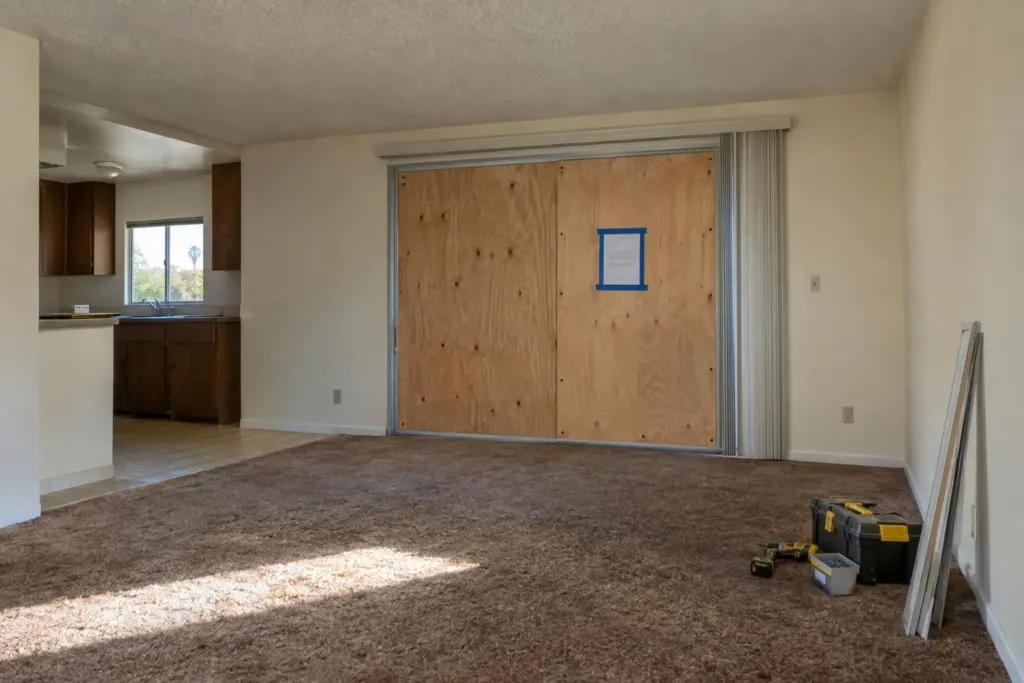
- Secure every door that opens onto the balcony. Ask the tenant for access, then install a lock, a bar, or screwed-on plywood so the door can’t be used to step out.
- For a stair or walkway, build a solid barricade at the top and the bottom, such as plywood or construction fencing that is fastened in place.
- Post a clear sign at each entry point that says the area is closed for safety and must not be used.
- Ask the tenant to remove planters, grills, furniture, and anything else heavy. Extra weight on rotted framing is the last thing you want.
- If the element sits over a walkway, entry, or parking space, close off the area underneath too. Pieces can fall even if nobody is standing on top.
- Take dated photos of every barrier and sign, and check them every few days to make sure nobody has moved them.
Resist the urge to fix it yourself with a few posts from the hardware store. Posts set on cracked concrete or bare soil can sink or kick out. Shoring that isn’t sized for the load can give people false confidence. Keep the element closed until a professional has looked at it.
How do I tell my tenants, and what do I owe them?
Tell them the same day in person or by phone, then follow up in writing explaining which element is closed, why, and what happens next. Questions about rent, relocation, or other obligations depend on your lease, state law, and local rent rules, so check before you promise anything.
A written notice protects your tenants and you. Keep it plain and specific. It should include:
- Which balcony, stair, or walkway is closed, and that nobody may use it for any reason
- That a licensed inspector found it unsafe, and that repairs are being arranged
- Who to contact with questions, and how you’ll give updates
- That workers and engineers will need access, with advance notice as the lease and law require
Losing a balcony means losing part of what the tenant pays for. Whether that affects rent is a legal question, not a construction one. If your building is in the City of Los Angeles and falls under rent stabilization, check the Los Angeles Housing Department’s rules before making changes or offers. A landlord-tenant attorney can help with anything unclear.
Keep copies of every notice, text, and email. When the building department or a future inspector asks what you did and when you did it, a dated paper trail answers the question quickly.
What if the flagged element is the building's only exit stair?
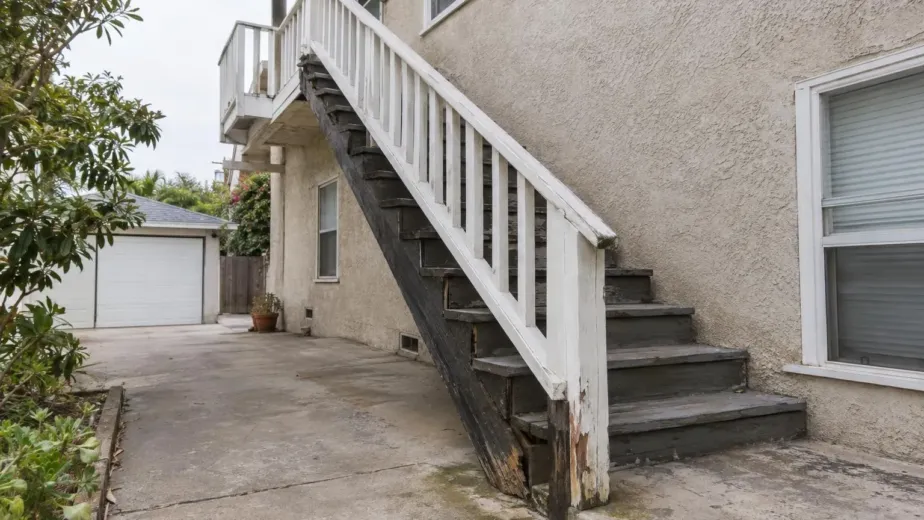
Then you have a bigger problem than a closed balcony, because the people upstairs may have no safe way out. Get a licensed engineer out the same day to decide whether shoring can make the stair safe to use or whether people need to stay elsewhere until it's secured.
Plenty of older two-story apartment buildings around Los Angeles have a single exterior wood stair serving every upper unit. If that stair is the hazard, simply barricading it can trap people upstairs with no way out in a fire or an earthquake. That’s dangerous in its own way.
Your building department and your engineer need to be part of this decision right away. Sometimes the engineer can design shoring that carries the stair safely while the permanent repair is planned. Other times the stair is too far gone, and the upper units can’t safely be occupied until it’s rebuilt or braced. The building department, not the owner or the contractor, has the final say on whether those units can stay occupied.
If tenants have to leave for a while, the questions about relocation and rent get serious. Talk to the housing department and an attorney early, before you tell anyone to move out. Rushing that step can create a second problem on top of the structural one.
Will the city find out, and how fast?
Yes. Under both laws, the local enforcement agency is notified of an immediate hazard, and in the City of Los Angeles that agency is LADBS. The 15-day window you may have heard about is the inspector's reporting deadline, not your repair deadline.
Under SB-721, the inspector has to deliver the report to you within 15 days, and the local enforcement agency must be notified of the hazard. Under the SB-326 statute for condo associations, the report goes to the association immediately and to the local code enforcement agency within 15 days. Several websites wrongly say the repair itself must be finished in 15 days. That’s not what the laws say. Your duty is to protect people right now.
For buildings in the City of Los Angeles, the LADBS information bulletin on exterior elevated elements explains how the report is filed. It says SB-326 immediate-threat reports go to the LADBS Code Enforcement Bureau, and that the inspector first reports the violation through the LADBS online Report a Violation portal. If your building is in another city, that city’s own building department handles it.
Expect the building department to follow up, and be ready to show what you’ve done. Your barriers, written notices, and engineer’s visit are what you point to. The department decides the timeline for emergency work, so stay in touch with it rather than guessing.
Do I need an engineer and a permit for emergency shoring?
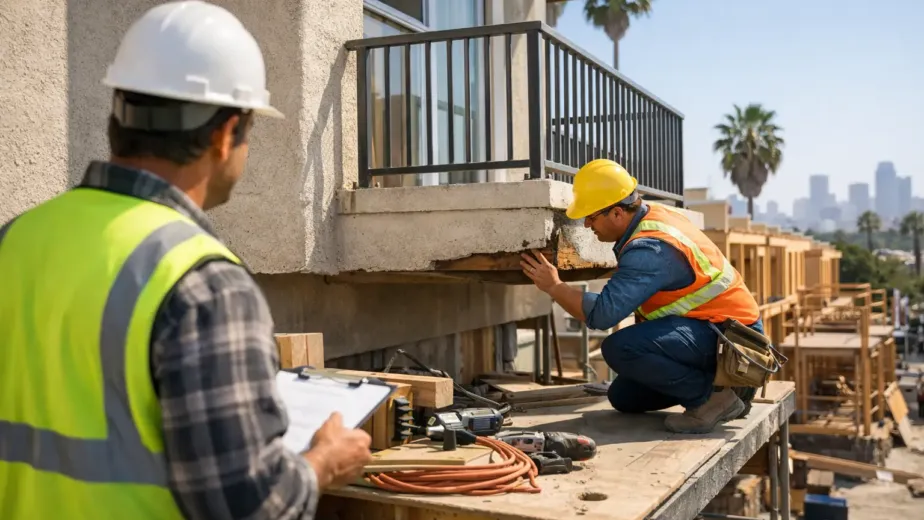
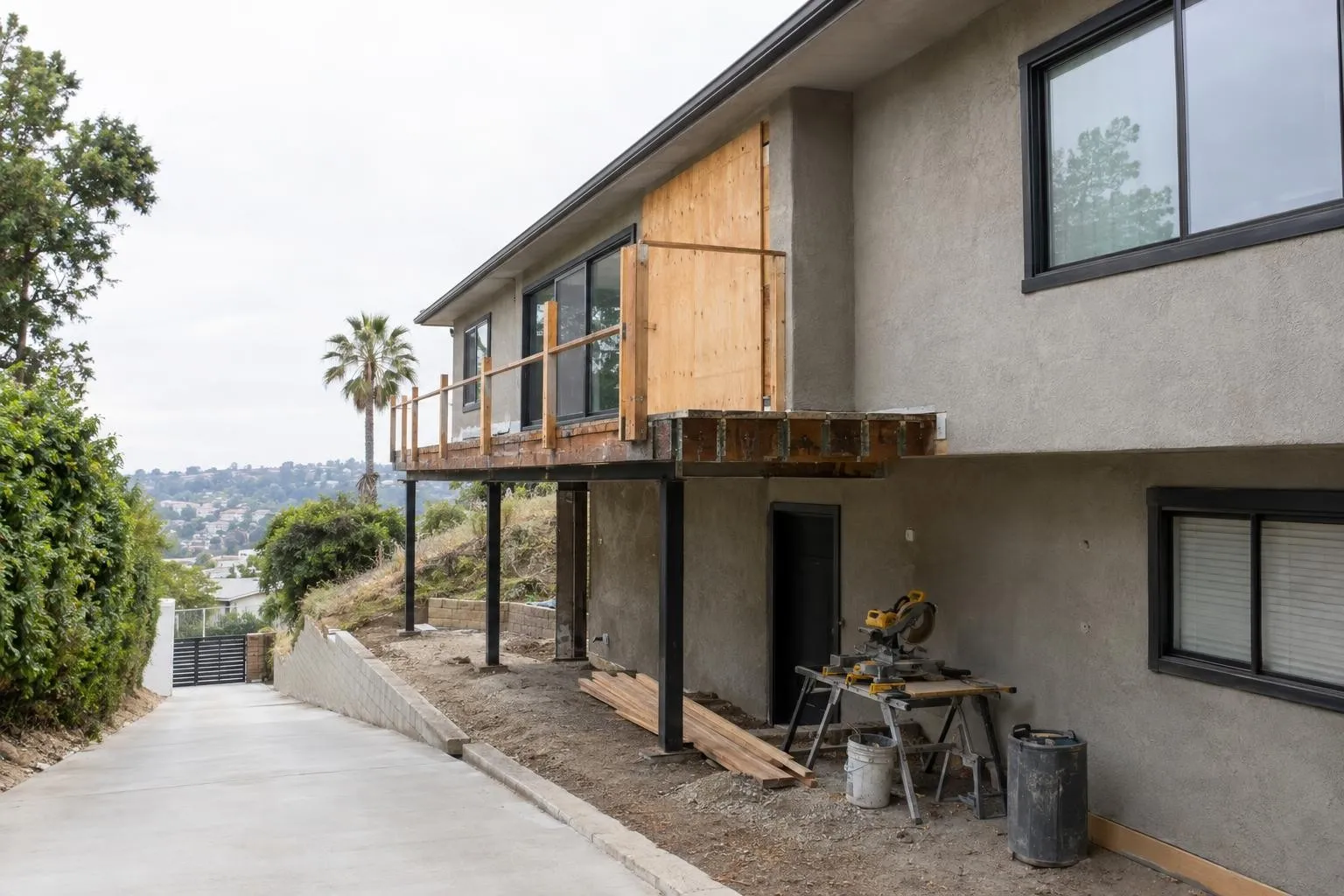
Shoring for a failing balcony or stair should be designed by a licensed civil or structural engineer and installed by a licensed contractor. Your local building department decides whether the shoring itself needs a permit, and the permanent repair will need one.
Shoring and the permanent repair are two different jobs. Shoring is temporary. It holds the structure up and keeps it from getting worse. The permanent repair replaces the bad framing and fixes the water problem. An engineer has to look at both, because the posts need a solid place to bear and the beams have to catch the right members.
- Call a licensed engineer to look at the element and the report.
- The engineer designs the shoring: post locations, sizes, and what the posts sit on.
- Ask your building department whether the shoring needs a permit or any notice before it goes in.
- A licensed contractor installs the shoring to the engineer’s design.
- The engineer checks the installed shoring and documents it.
- Keep the element closed unless the engineer and the building department say limited use is acceptable.
Check credentials before you hire anyone. You can look up an engineer’s license on the Board for Professional Engineers, Land Surveyors, and Geologists website and a contractor’s license on the Contractors State License Board website. If the inspector offers to do the repairs too, ask how that works under the law and your local rules. Many owners prefer to keep the person judging the work separate from the person selling it.
For the permanent fix, the city usually wants engineered drawings or a stamped repair report with the permit application. Our post on LADBS engineering requirements for balcony repairs covers what that package tends to include.
How is this different from the 120-day track for other repairs?
Under SB-721, the 120-day clock covers non-emergency repairs: you apply for a permit within 120 days of receiving the report. A balcony immediate safety hazard moves faster, and the local enforcement agency sets that timing.
One report can contain both kinds of findings. An inspector might mark one balcony as an immediate hazard and list three others for routine repair, such as a cracked coating or a loose guardrail cap. Those routine items fall under the 120-day permit-application timeline. The hazard does not wait for that clock.
Plan the two tracks together anyway. If the engineer is already designing a repair for the flagged balcony, it often makes sense to have the same set of drawings cover the other items. That way you go through permitting once instead of twice. The building department still decides how and when each piece moves forward.
Don’t let either track slide. If the work doesn’t happen, the building department can take enforcement action, and you take on liability for a known hazard every day it stays open. If something is holding you up, like a long wait for an engineer or a permit question, talk to the department early about your options. More background on the routine side is in our post on SB-721 repair in Los Angeles.
For a condo under SB-326, who handles it and when can the balcony reopen?
The association has to take preventive measures right away, including blocking occupant access. The balcony stays closed until the local enforcement agency inspects and approves the repairs, not simply when the work looks finished.
That reopening rule is stricter than many owners expect. The contractor finishing the job doesn’t reopen it, and neither does the board. A building department inspection and approval does. Plan your schedule and your owner updates around that final step.
Who pays depends on the association’s governing documents and on who carries maintenance responsibility for that element. Some balconies are common area the association maintains. Others are assigned to a unit owner. The board should have its attorney review the documents before anyone sends a bill, because a mistake here causes long disputes.
The inspection findings should also go to the people preparing the reserve study, which is the association’s long-term budget for major repairs. A hazard on one balcony is often a warning about the others built the same way. Boards that plan for that early tend to have fewer surprises during the next inspection cycle.
What does a proper permanent repair include?
A real repair fixes why the wood rotted, not just the rotted wood. That usually means replacing decayed framing, rebuilding the waterproofing and flashing, making sure water drains away, and securing the guardrail, all under a permit.
Patching the surface over bad framing just resets the clock on the same failure. The goal is to find where water got in and stop it.
- Open the deck surface and soffit until the engineer can see sound wood on every side of the damage.
- Replace rotted joists, ledgers, and sheathing to the engineer’s design. The ledger is the board that attaches the balcony to the building.
- Build in slope so water runs off the deck instead of pooling against the wall.
- Install flashing, which is thin sheet metal that steers water away from joints, at the door threshold, the wall, and the edges.
- Apply a waterproofing membrane, the continuous layer that keeps water out of the framing, and tie it into the flashing.
- Anchor the guardrail posts so they’re solid and meet the city’s requirements.
- Schedule the city inspections and keep the element closed until the final approval.
Older buildings bring extra care during demolition. Railings and siding from before 1978 may have lead paint, and some old deck coatings and stucco may need testing before anyone breaks them apart. A licensed contractor plans for that before the first board comes off. You can see how we approach this work on our balcony and exterior stair repair page.
Keep a file with the inspection report, engineer letters, shoring documentation, permits, inspection sign-offs, and photos taken while the framing was open. The next inspector will want to see what was replaced. Insurance questions come up too, so call your agent early and ask how your policy treats this kind of damage. Don’t assume it’s covered or excluded.
When should I call a licensed contractor after a hazard finding?
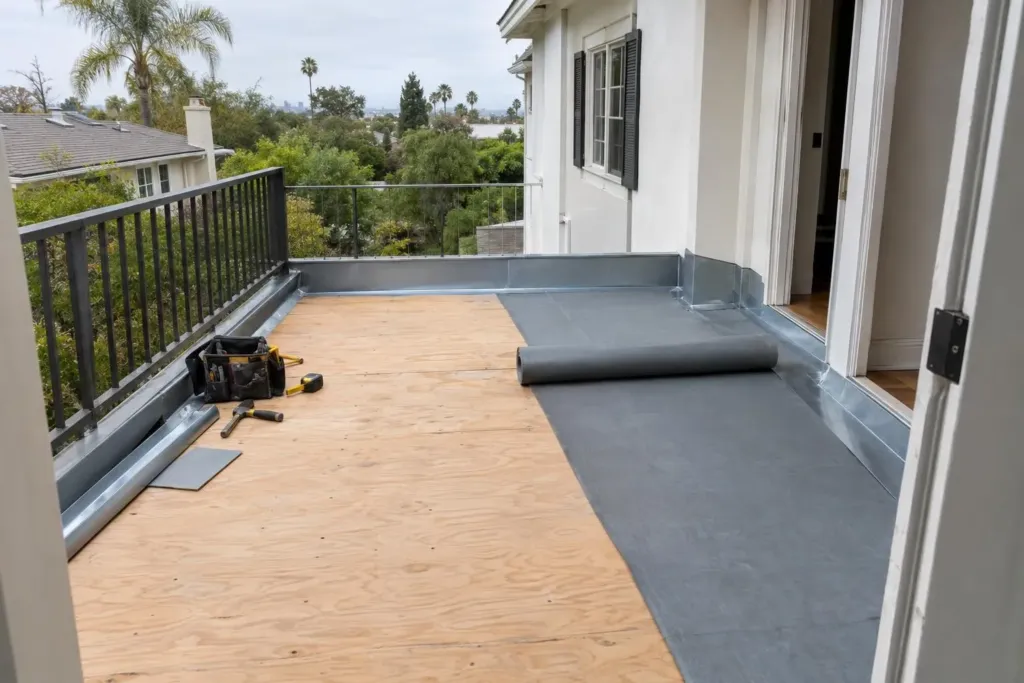
Call a licensed contractor as soon as the report flags a hazard, right after you’ve blocked access and told your tenants. Don’t wait for the building department to call you first. Call the same day if the flagged element is an only exit stair, if it hangs over a walkway or parking area, or if you see new sagging, cracking, or movement. A licensed contractor works with your engineer to get shoring in place, opens up the damage, and builds the permanent repair under permit. A separate licensed inspector or engineer performs the official SB-721 or SB-326 inspection, and Villa Bella Construction does the repair work afterward. Our approach is to find where the water got in and recommend the safest targeted repair the city will accept, without tearing out more than the problem requires.
“Steve was easy to work with and was very responsive.” — Bill M., Yelp review
Villa Bella Construction is a licensed and insured general contractor, building in Los Angeles for 25 years. CSLB License #1093648 (B – General Building).
Call +1 (323) 825-9798 or send us your project details.
Learn more: Balcony and exterior stair repair (SB-721 / SB-326).
Planning a construction or remodeling project in Los Angeles?
Schedule a Free On-Site Consultation or call +1 (323) 825-9798.