Key Takeaways
- Fix every item in the inspector's report. Block off immediate dangers right away. For other items, apply for a permit within 120 days and finish within 120 days after it's approved.
- The contractor who inspected your balconies can't do the recommended repairs. Hire a separate licensed and insured contractor, and check the license with CSLB before you sign.
- Structural repairs usually need a permit from your city's building department, which decides approvals and timelines. The repair has to fix how water gets in, not just the rotten wood.
SB 721 repair Los Angeles work follows a set order. You fix every item the inspector lists and meet the law’s deadlines. You use a contractor who did not do the inspection, and you usually need a permit from the building department. The report tells you what’s wrong. The repair is your job as the owner, and the way you plan it decides whether you fix the problem once or twice. Here’s how the process works on Los Angeles apartment buildings, from reading the report to keeping the records.
Does SB-721 apply to my building, or does SB-326 cover it because it's a condo?
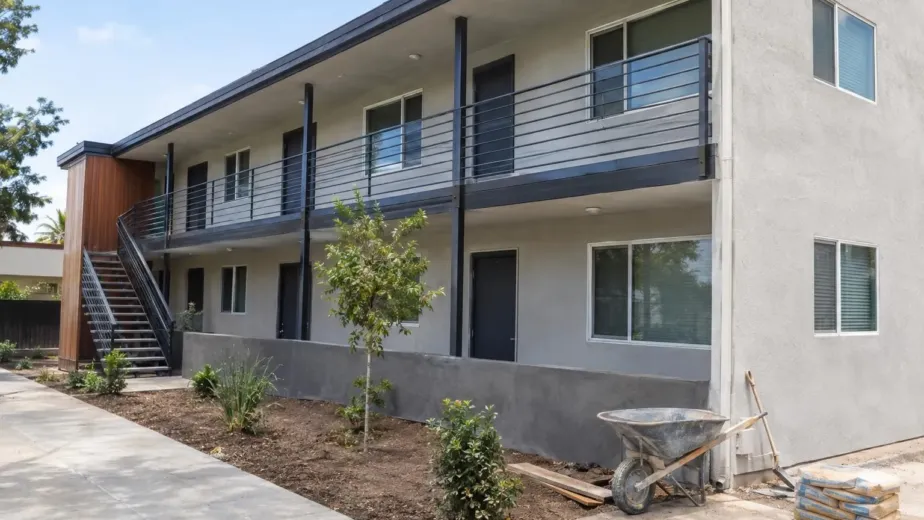
SB-721 covers buildings with three or more rental units that have balconies, stairs, decks, or walkways more than six feet above the ground and supported mostly by wood. SB-326 covers condo associations and the elevated elements they maintain. If you own an apartment building, SB-721 is almost always the law you're dealing with.
An exterior elevated element is any outdoor walking surface that sits up high, plus the framing, railings, and hardware that hold it up. The state law in the California Health and Safety Code covers balconies, decks, porches, stairways, walkways, and landings that rely mostly on wood or wood-based products. The inspector checks a random sample of at least 15 percent of each type of element. Some cities ask for more than that.
Concrete and steel balconies are a gray area. Some cities treat them as outside the law and some don’t. Ask LADBS, or your own city’s building department, before you assume you’re exempt.
Condos work differently. Under SB-326, the association board hires a licensed structural or civil engineer or an architect. That professional inspects a sample of the elements the association maintains at least once every nine years. Sources disagree on the first condo deadline, so check the current law.
In the City of Los Angeles, the Housing Department runs the E3 program for apartments. Its E3 apartments page warns that some private companies mail notices that look official but don’t come from the city. Check any letter against that page before you call anyone. For the broader rules, see our guide to SB 721 compliance in California.
My report lists repairs. What are the SB 721 repair Los Angeles deadlines?
Items marked as an immediate danger get blocked off and shored or repaired right away. For everything else, state law gives you 120 days to apply for a permit, then 120 days to finish once the permit is approved, unless the local agency grants more time.
The clock starts when you receive the report. Most SB 721 repair Los Angeles projects follow this path:
- Read the report and sort every item into “immediate danger” or “non-emergency.”
- Block access to anything dangerous, and arrange shoring or an emergency repair.
- Hire a licensed contractor. Add a structural engineer if the repair changes how loads are carried.
- Apply for the permit within 120 days of receiving the report.
- Finish within 120 days after the permit is approved, with city inspections before anything gets covered.
- Have the inspector review the finished work so your file shows each item was addressed.
The local building department decides when a permit is approved and whether to allow more time. Don’t plan around a date the city hasn’t given you. Submit early, answer plan-check comments quickly, and keep copies of everything.
The original SB-721 bill text puts the duty to repair on the owner. If repairs aren’t made, the law allows civil penalties and a safety lien on the property, and the city can issue orders. For apartments, the first inspection deadline is January 1, 2026, and inspections repeat every six years.
Can the company that inspected my balconies also do the repairs?
No. SB-721 says a contractor who did the inspection may not do the repairs that inspection recommends. Keep your inspector and your repair contractor separate.
The rule exists so nobody writes up work they’re hoping to sell. If one company offers to inspect and then fix everything it found, treat that as a warning sign.
People also mix up the license rules. The law lists licensed architects, civil or structural engineers, contractors with an A, B, or C-5 license, and certified building inspectors. That list describes who may inspect. It is not a rule about who may repair. For structural balcony and stair work, you still want a licensed and insured general contractor with real framing and waterproofing experience.
Check before you sign. Look up the license on the Contractors State License Board site. Confirm it’s active, the classification fits the job, and workers’ compensation and the bond are on file. If an engineer is involved, check that license with the state Board for Professional Engineers, Land Surveyors, and Geologists.
Villa Bella Construction does balcony and exterior stair repair after a separate licensed inspector or engineer has done the official inspection. We work from that report.
Do I need an LADBS permit and engineer drawings for balcony or stair repairs?
It depends on the scope of the work. Replacing joists, posts, beams, stair parts, connections, or railings usually needs a permit, and work that changes how weight is carried often needs an engineer's drawings. In the City of Los Angeles, LADBS decides, and other cities have their own building departments.
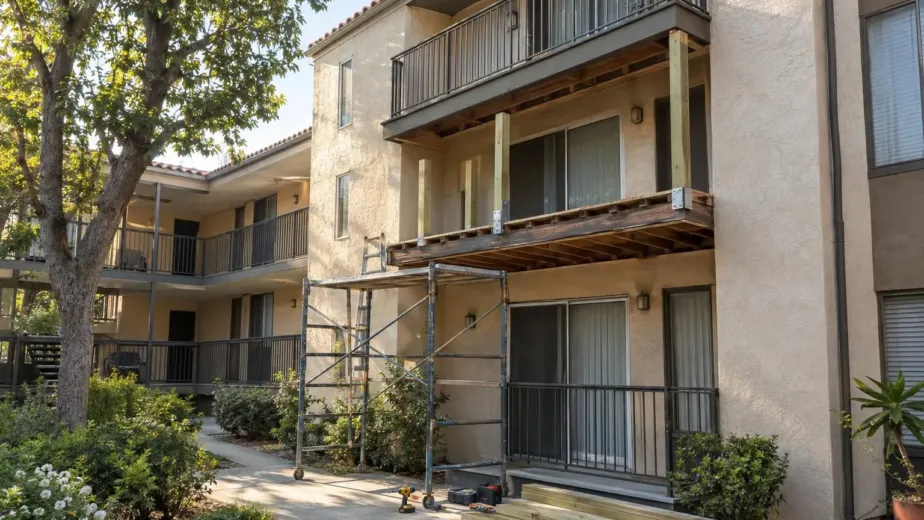
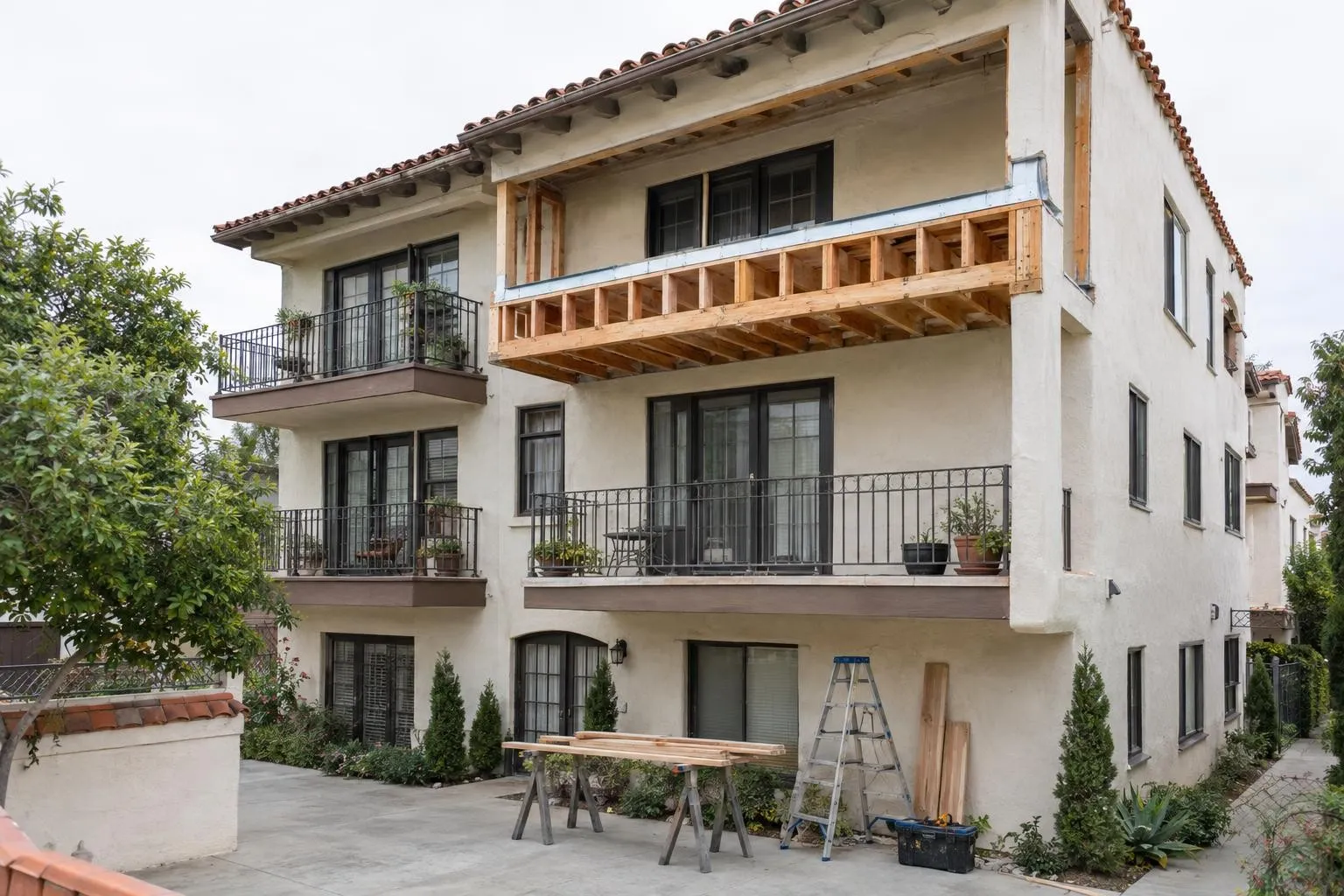
A joist is one of the horizontal boards that carries the balcony floor. A ledger is the board bolted to the building wall that the joists attach to. When rot reaches those parts, you’re doing structural work. The city will want to review a plan and inspect the framing before it’s covered.
Small surface fixes may not need a permit, but don’t guess. The LADBS information sheet on exterior elevated elements explains how the city handles these elements. Our post on LADBS engineering requirements for balcony repairs covers when you’ll need drawings.
Older buildings need one more check before demolition. Paint from before 1978 may contain lead, which brings EPA lead-safe work rules into play. Old stucco, deck coatings, or flooring may contain asbestos. That material needs testing, and if asbestos is found, the regional air quality district must be notified before removal. Rotted pressure-treated wood also has its own disposal rules.
Why does the repair include waterproofing and not just new wood?
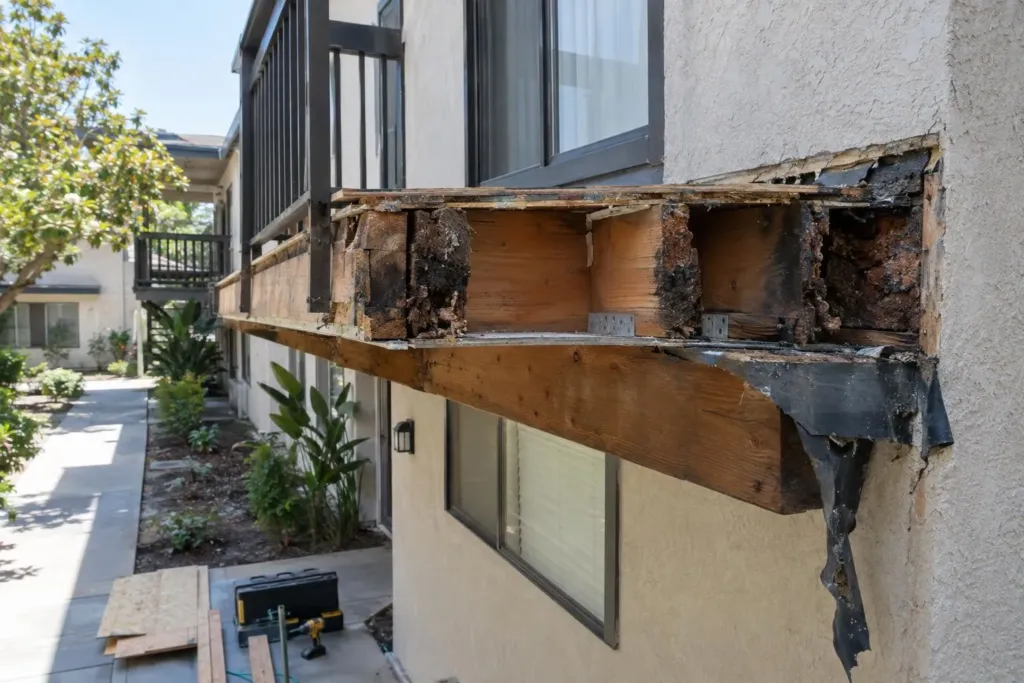
Water is what rots the wood in the first place. State law counts the flashings, membranes, coatings, and sealants that protect the framing as part of the element. If you replace the wood but leave the water path open, the job is only half done.
Flashing is a thin metal or plastic piece that steers water away from a joint, such as the spot where the balcony meets the wall. A membrane is the waterproof layer under the walking surface. When either one fails, water soaks the plywood and joists below. Nobody sees it until the wood turns soft.
In older Los Angeles apartment buildings, rot often hides under the balcony membrane at the door threshold, where water collects and runs back toward the wall. Stucco that wraps over the balcony edge can trap water too. Watch for:
- Brown stains on the underside of the balcony
- Bubbling coating
- Cracked stucco near the ledger
- Rusty hardware
- Puddles that are still there a day after rain
Our approach on SB 721 repair Los Angeles jobs is to find the real cause first. Then we recommend the safest targeted repair the city will accept, instead of tearing out more than the problem requires. Once the rot is out, we rebuild in this order:
- Repair or replace the framing and connections.
- Install new sheathing that slopes away from the building.
- Install flashing at the wall and edges, lapped so water runs out instead of in.
- Apply the membrane and walking surface, then seal the railing posts and any other openings.
What if the inspector says something is an immediate danger?
Block access right away and arrange shoring or an emergency repair. The inspector must give you the report immediately and send a copy to the local enforcement agency within 15 days, so the city will be involved. Closing off the area protects people, but it doesn't end your duty to repair.
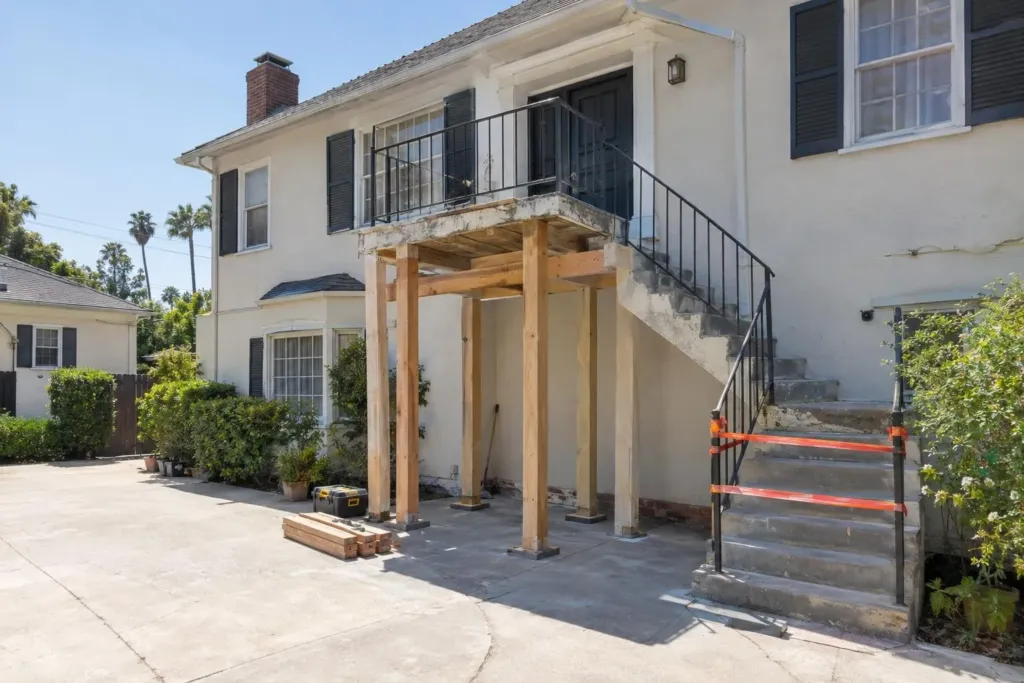
Shoring means temporary posts and beams that hold a weak structure up until the permanent repair is done. Barricade both ends of a dangerous balcony or walkway, lock balcony doors if you need to, and post clear signs. Tell tenants in writing what’s closed and why.
Stairs are the hard case. If a failing stair is a required exit, you can’t just tape it off, because people still need a safe way out in a fire or earthquake. A contractor and engineer may need to shore it quickly so it stays usable, or set up another safe route the city accepts.
The first few days matter most. Our guide to a balcony immediate safety hazard walks through them. If the trouble is at the stairs, read about exterior stair stringer rot. A stringer is the sloped board that carries the stair treads.
How do I keep tenants safe and handle access while a balcony or stair is closed?
Give tenants proper written notice before you enter their units, close off unsafe areas clearly, and keep every required exit open. If the building is under the city's rent stabilization rules, check with LAHD, because losing a balcony or stair for a while can raise reduced-service questions.
Inspectors and crews often reach balconies through tenants’ units. California law requires reasonable written notice before a landlord enters a unit, so plan the schedule ahead. A short letter that explains the work, the dates, and the closed areas heads off most complaints.
During the work, keep tools and debris off the walkways, protect doors and windows, and keep work hours predictable. If a repair makes a unit unsafe to live in, follow the city’s rules on tenant relocation. LAHD can tell you what applies to your building.
Worker safety matters too. Crews on balconies and stairs need fall protection under Cal/OSHA rules, and shoring should be set by people who know how. A loose railing is just as dangerous to a worker as it is to a tenant.
What records do I need to keep, and when is the next inspection due?
Keep inspection reports, permits, approved plans, photos, and city sign-offs for at least two inspection cycles, and give the reports to the buyer if you sell. For apartments, the next SB-721 inspection comes six years after the last one.
Build one file for the building, on paper or digital:
- Every inspection report, including any follow-up review
- Permits, approved plans, and engineer letters
- City inspection sign-offs
- Before, during, and after photos of the opened framing
- Tenant notices and closure dates
The law makes ongoing upkeep the owner’s job, not just the inspection years. Walk your balconies and stairs after the first big rain each season. Look for standing water, soft spots, wobbly railings, new stains, and rust at connectors. A failed sealant joint caught early is much less disruptive than a rotted ledger.
Good records also make the next inspection easier. The inspector can see what was opened, what was replaced, and what the city approved, so you aren’t paying to rediscover the same problem.
When should you call a licensed contractor about your SB-721 report?
Call as soon as the report arrives, especially if it lists an immediate danger, rotted framing, failed railings, or anything that needs a permit. The 120-day permit window goes fast once you add an engineer and plan check. Call sooner if you’re already seeing soft spots, sagging, or stains under a balcony or stair. Have the report and photos ready. A good contractor will explain what the evidence shows, open only what’s needed to confirm it, and build a repair the building department can review.
“Steve’s communication and follow-through is excellent.” — Michael B., Google review
Villa Bella Construction is a licensed and insured general contractor, building in Los Angeles for 25 years. CSLB License #1093648 (B – General Building).
Call +1 (323) 825-9798 or send us your project details.
Learn more: Balcony and exterior stair repair (SB-721 / SB-326).
Planning a construction or remodeling project in Los Angeles?
Schedule a Free On-Site Consultation or call +1 (323) 825-9798.