Key Takeaways
- A wobbly balcony post often means water has been getting in around the post, not just that the hardware is loose.
- New screws or blocking help only if the framing under the post is dry and solid, and checking that usually means opening the deck.
- For apartment and condo balconies, SB-721 and SB-326 make the owner or association responsible, and structural repairs generally need a permit.
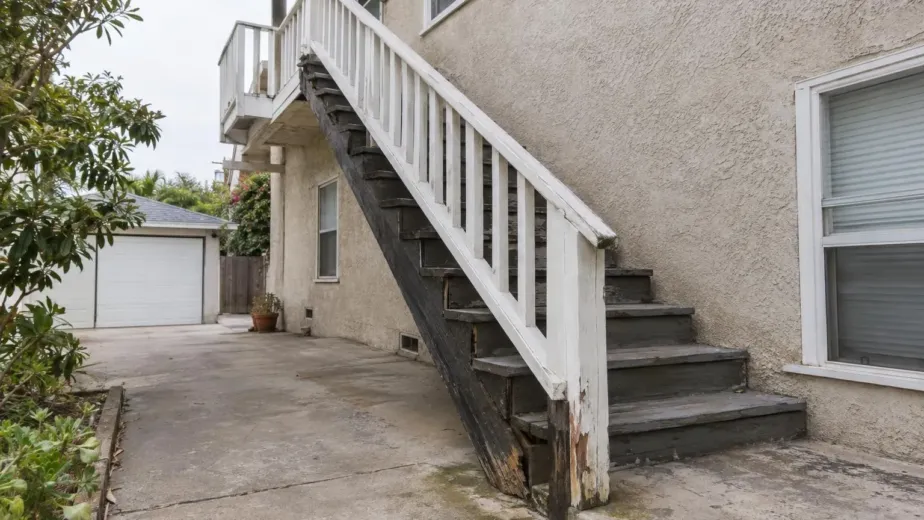
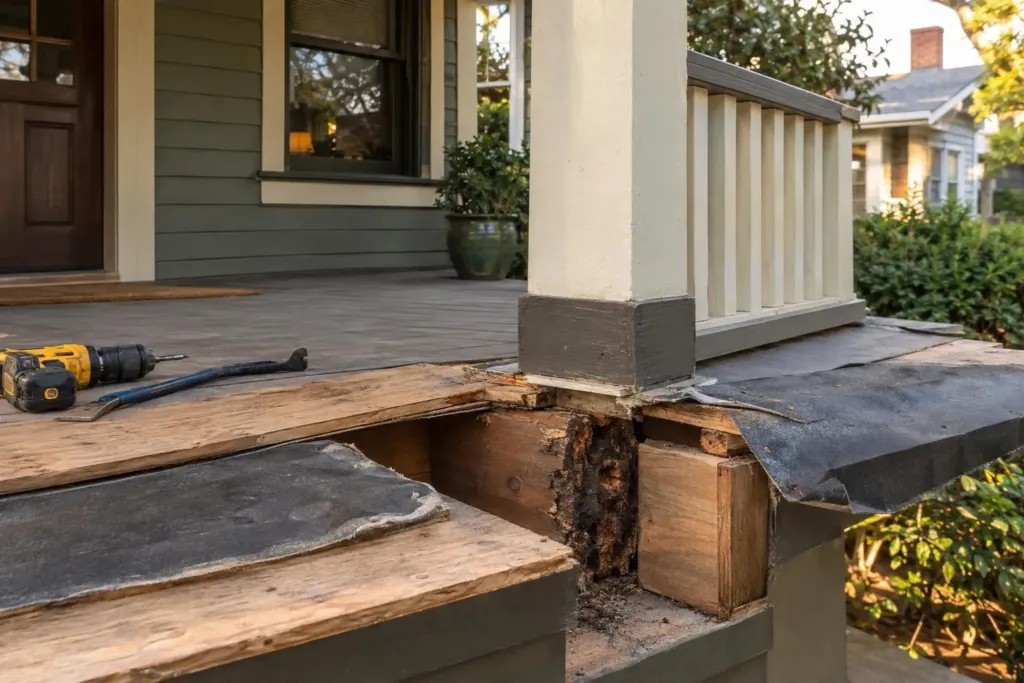
Sometimes a loose post just needs to be re-anchored. On a balcony, though, a wobble often means water has been getting in around the post and rotting framing you can’t see. Good loose balcony railing repair starts with finding out why the post moved, before anyone adds a screw. If the wood holding the post is soft, new hardware has nothing solid to grip. Then the deck has to be opened so the damaged framing can be repaired in a way that meets the city’s requirements.
Why is my balcony railing post loose?
A post gets loose for one of two reasons: the bolts or screws holding it have worked loose or rusted, or the wood they're fastened into has rotted. On balconies the second cause is common, and you can't tell which one you have by looking at the top of the deck.
Every time someone leans on a rail, the post works like a lever. That force goes through the bolts and into the rim joist, the board along the outer edge of the balcony framing. Over the years the wood shrinks and swells, the bolt holes stretch, and the bolts lose their grip.
The other version starts with water. Rain and mop water run toward the post base, find the screw holes, and soak into the end grain of the wood. The wood around the bolts goes soft, the post rocks a little more, and that movement opens the gap wider for the next rain.
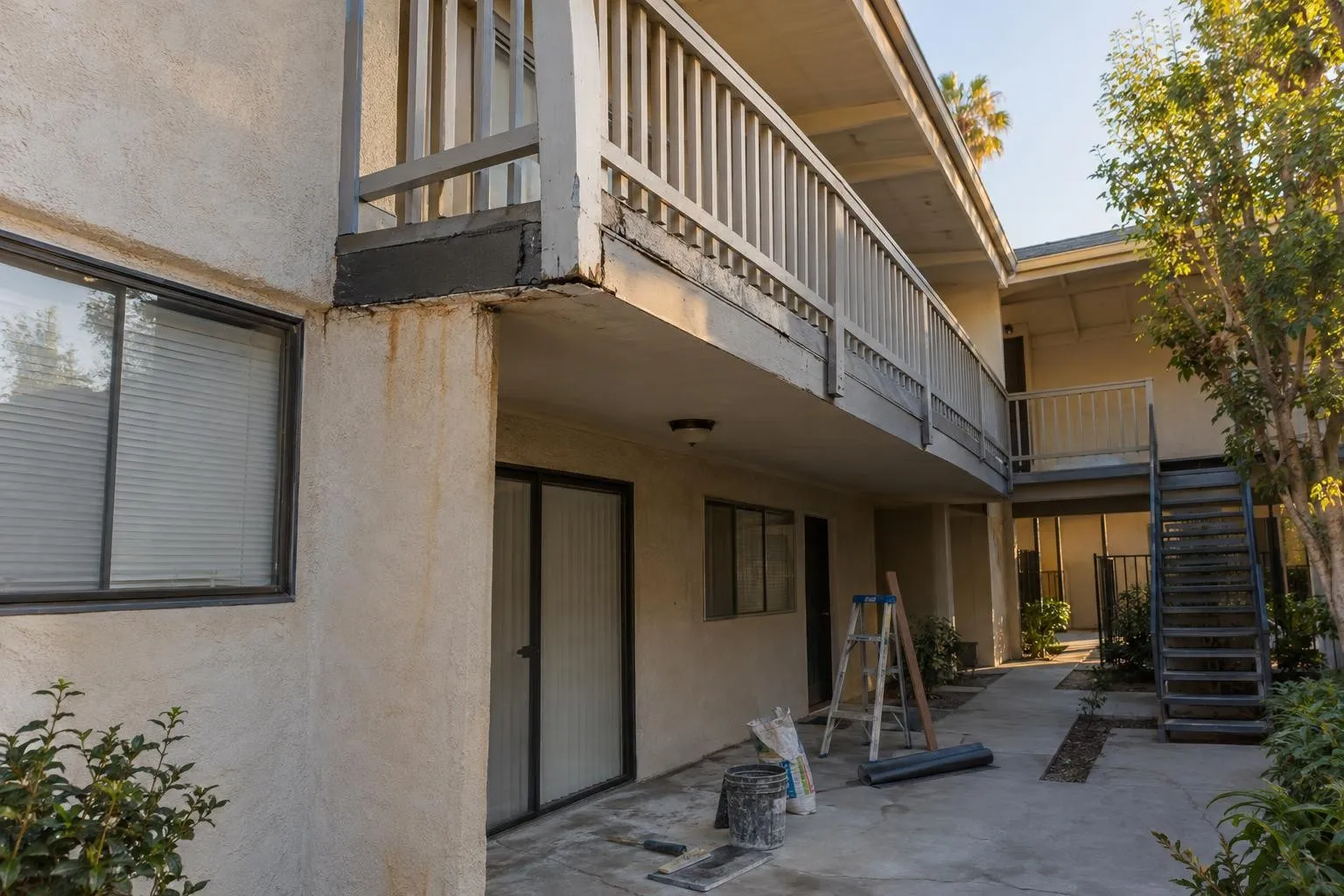
Steel has its own problems. Steel posts set in a concrete curb can rust inside the concrete, swell, and crack it apart, and caulking over those cracks doesn’t stop the rust. If a post moves and you also see rust stains or cracked material at its base, you’re dealing with more than loose hardware.
Is a balcony railing different from a backyard deck railing?
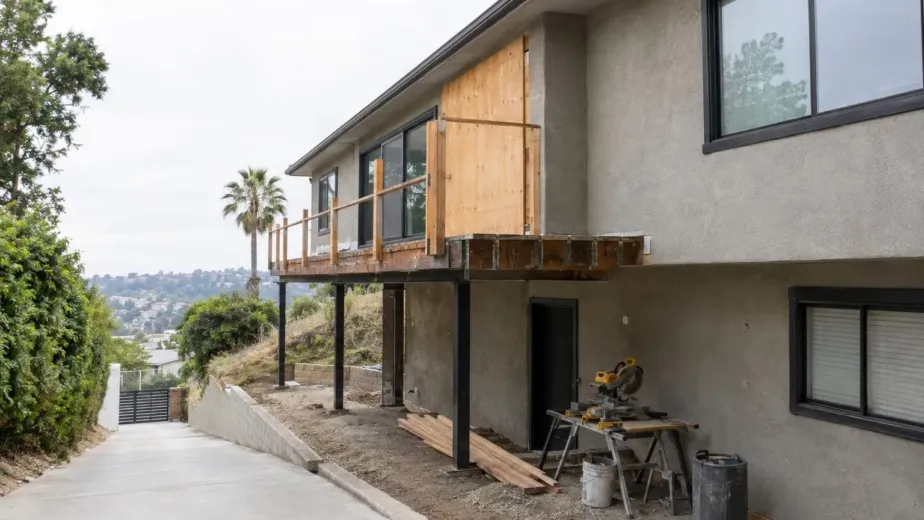
Yes. A backyard deck is open underneath, so you can see the joists, but most Los Angeles balconies have a waterproof coating on top and stucco or plaster below that hides the framing. Many are also cantilevered, which means the joists stick out from the building with nothing supporting their outer ends.
The DIY railing guides online assume you can walk under the deck and look at the wood. On a balcony you see the coating from above and the soffit, the plastered ceiling under the balcony, from below. Rot can spread between those two layers for years before anything shows.
On a cantilevered balcony, the rail is fastened at the far end of the joists, right where water collects. When those joist ends rot, the wood gets weaker at the exact spot the rail depends on. Our article on cantilevered balcony joist rot explains that pattern in more detail.
Height is the other difference. A failed rail two steps above the lawn is a scare. On a third-floor balcony it can seriously hurt or kill someone, so advice written for ground-level decks doesn’t fit here.
Does a loose railing post mean the waterproofing has failed?
Usually it means the seal around that post has failed, even if the rest of the deck coating still looks fine. Once a post moves, the joint where it meets the deck opens and closes, and water gets into the fastener holes.
The coating on your balcony is one continuous layer, called a membrane, and its whole job is to keep the wood dry. Every bolt through it is a weak point. Those spots rely on sealant and flashing, the shaped metal or membrane pieces that steer water away from a joint.
In older Los Angeles apartment buildings, posts were often bolted straight through the deck coating with just a bead of caulk around them. Our sun dries that caulk out within a few years. Once it cracks, every rain sends water down the bolts, and the framing under a coated deck can stay damp long after the surface dries.
So loose balcony railing repair has to fix the waterproofing as well as the anchor. New bolts without a rebuilt, flashed membrane leave the same water path open. Expect the post to loosen again and the rot to keep spreading where you can’t see it.
How can I check for hidden damage without tearing anything apart?
Look below the balcony and around each post, not just at the top of the deck. Stains, soft spots, rust streaks, cracked stucco, and a deck that bounces or slopes toward the building all mean the framing needs a closer look from a professional.
You can do a careful first check yourself. The goal is to collect information, not to test how strong the rail is.
- If the balcony feels bouncy or soft, stay off it and look from the doorway or the ground. Never lean on the rail to test it.
- Look at the soffit for dark stains, bubbling or peeling paint, sagging, or loose plaster.
- Check the stucco below each post and where the balcony meets the wall for cracks or missing pieces.
- At each post base, look for rust streaks, gaps in the caulk, cracked coating, or dark, stained wood.
- Where wood is exposed, press a screwdriver in gently. If it sinks in easily, the wood is soft.
- Count how many posts move, and note any sag, slope toward the building, or standing water after rain.
One loose post with a clean, dry soffit is very different from three loose posts and a stained soffit. The more signs you find, the more likely the rot has reached the joists.
Take photos and compare your notes with any report you already have. Our guide to balcony inspection reports explains how to read the findings and what to ask next.
When is re-anchoring enough for loose balcony railing repair?
Re-anchoring can be enough when the wood or concrete around the fasteners is dry and solid and the only problem is worn or loose hardware. If there's soft wood, rust damage, or water staining below, new screws only hide the problem until it shows up again.
Tightening a post fastened into rotted wood can feel solid for a few weeks, because the threads catch the last firm layer. Then it loosens again, and in the meantime you’ve silenced your only warning sign. Nobody can say a re-anchored post is as strong as the code requires without first checking the framing it’s attached to.
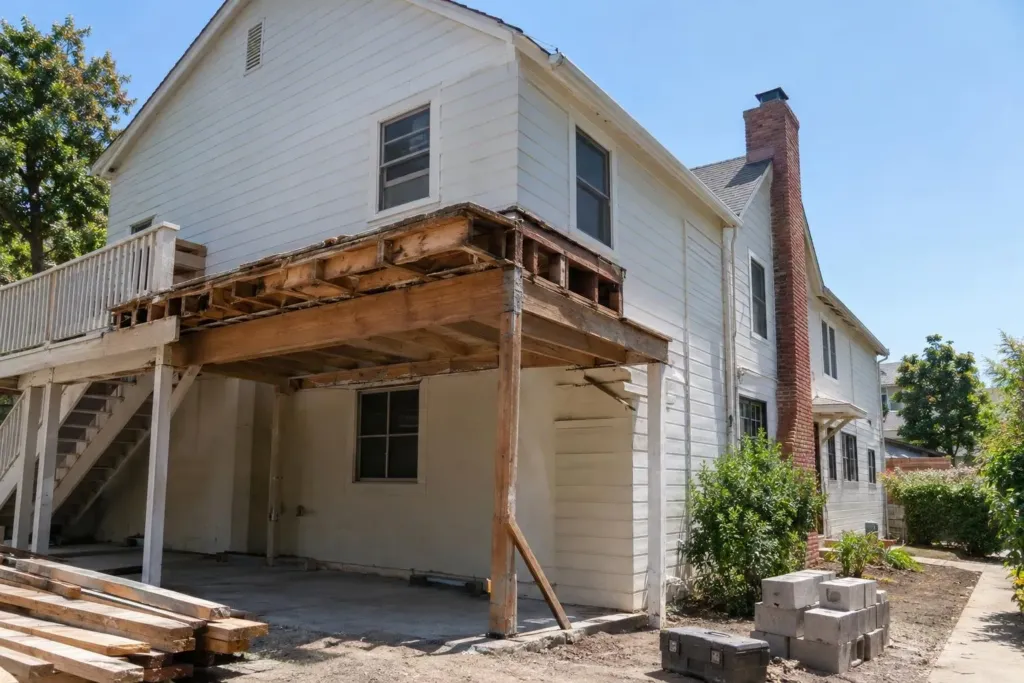
That’s why a wobbly rail flagged in an SB-721 or SB-326 report often leads to opening the deck instead of adding screws. A typical repair goes like this:
- Cut back the coating and decking around the post to expose the post base, the blocking, and the joist ends.
- Probe the wood and find out how far the rot goes in every direction.
- If the damage goes beyond the post, bring in an engineer to design the repair where the city requires one.
- Replace or reinforce the damaged framing and install new post connections into solid wood.
- Rebuild the waterproofing and flash the post before the walking surface goes back on.
Epoxy fillers and wood hardeners aren’t a structural repair for balcony posts or the joists that hold them. We open only as much as it takes to find where the damage stops, then make a targeted repair designed to meet the city’s requirements, without tearing off a whole balcony for a limited problem. Our balcony and exterior stair repair page explains how we handle this work.
My building has three or more units. What do SB-721 and SB-326 require for a loose railing?
SB-721 covers wood-framed balconies, stairs and walkways more than six feet above the ground on apartment buildings with three or more units. SB-326 covers similar elements that condo associations maintain. Both make the owner or association responsible for keeping railings and their supports safe.
Under SB-721, the inspection must be done by a licensed architect, a licensed civil or structural engineer, a contractor holding specified licenses, or a certified building inspector or building official. The owner has to repair anything the inspector says needs repair or replacement, and keeping these elements safe is an ongoing duty. In the City of Los Angeles, check the LAHD exterior elevated elements (E3) program for current deadlines. LAHD also warns that some private companies mail “balcony inspection” notices made to look like official government letters.
SB-326 applies to condo associations. At least once every nine years, the board must hire a licensed structural or civil engineer or an architect to inspect a random sample of the elevated elements the association maintains. The law treats the load-bearing parts and their waterproofing as one system, which is exactly why a loose post and a failed seal get looked at together.
Condo owners often ask who pays for a loose railing. The association’s CC&Rs decide which parts are common area and which belong to the unit owner, so ask the board to confirm in writing before work starts. A separate licensed inspector or engineer performs the official inspection, and Villa Bella Construction does the repair work afterward.
Should I keep people off the balcony right now?
Yes, if a post moves noticeably, more than one post is loose, or the deck feels bouncy or soft. Keep everyone off until someone qualified has looked at it. SB-721 counts immediately keeping occupants off an unsafe element as compliance until emergency repairs are done.
Make the balcony hard to use, not just discouraged. Lock or secure the door that leads to it, put up a clear sign, and tell the residents in writing why it’s closed. A rope across the doorway isn’t enough, especially if children live in the unit.
Ask tenants to move heavy planters and furniture off the deck if they can do it without leaning on the rail. Planters add weight and keep water sitting against the coating, often right next to a post base.
If people need the balcony for access, a licensed contractor can install temporary bracing or a barrier while the repair is planned. If tenants will be affected for a long period, check with LAHD about notice rules for your building before work starts.
Do I need an LADBS permit and an engineer to fix the posts and framing?
In the City of Los Angeles, repairing or replacing balcony framing generally needs a building permit from LADBS, and many structural repairs need an engineer's design. LADBS decides what plans it needs and how long review takes, so plan around the city's schedule.
LADBS has published an information bulletin on exterior elevated elements that explains how the department handles balcony, stair and walkway work under SB-721 and SB-326. Don’t assume a small loose balcony railing repair is exempt; ask before any work begins. Other cities in the area have their own building departments and rules.
When the rot reaches the joists, an engineer usually designs the repair, and the city inspects the framing before it’s covered back up. We walk through what the department typically asks for in LADBS engineering requirements for balcony repairs.
Older buildings raise one more issue. Old stucco, paint, and deck coatings can contain lead or asbestos, so have suspect materials tested before anyone cuts into them. Our article on how to prepare for balcony repairs covers testing, access and tenant coordination.
How do I keep the posts from working loose again?
Keep water out of the post connections and check them on a regular schedule. A properly flashed post, a sound deck coating, and a quick look each year before the rainy season will catch most problems while they're small.
Most of this gets decided during the repair. Ask how the posts will be attached and how the membrane will be sealed around each one. Where the engineer’s design allows, posts fastened to the side of the framing put fewer holes through the walking surface.
After the repair, a simple yearly check goes a long way:
- Push gently on each post from a standing position and note any movement.
- Look for cracked caulk or coating at every post base.
- Check the soffit below for new stains or peeling paint.
- Clear the drains and scuppers, the openings that let water off the deck edge.
Deck coatings wear out, especially on balconies facing south or west. Recoating on schedule and fixing small cracks costs far less than reopening the framing. If a post starts to move again, treat it as an early warning, not a reason to grab a screwdriver.
When should you call a licensed contractor about a loose balcony railing?
Call a licensed contractor as soon as an inspection report flags a railing, or whenever a post moves and you also see stains, rust, soft wood or cracked stucco. Call right away if more than one post is loose or the deck feels bouncy. Once the official inspector or engineer has written the report, loose balcony railing repair belongs with a licensed general contractor who opens the deck, works with the engineer, pulls the permit and rebuilds the waterproofing. Before you hire anyone, look up their license on the Contractors State License Board website. Villa Bella Construction is licensed and insured and does this repair work across Los Angeles.
“Steve was easy to work with and was very responsive.” — Bill M., Yelp review
Villa Bella Construction is a licensed and insured general contractor, building in Los Angeles for 25 years. CSLB License #1093648 (B – General Building).
Call +1 (323) 825-9798 or send us your project details.
Learn more: Balcony and exterior stair repair (SB-721 / SB-326).
Planning a construction or remodeling project in Los Angeles?
Schedule a Free On-Site Consultation or call +1 (323) 825-9798.