Key Takeaways
- If the wood is soft at the tread notches, the landing connection, or the base, keep people off the stair until a professional checks it.
- On a building with three or more units, a wood stair more than six feet up may fall under SB-721, which sets deadlines and says who can do the repair.
- A safe fix follows a licensed professional's plan, uses a city permit, and stops the water that caused the rot so it doesn't come back.
Treat exterior stair stringer rot on an apartment building as a safety problem first and a paperwork problem second. Probe the wood. Keep people off the stair if it’s soft where it carries load. Then get a licensed professional’s repair plan and a permit before anyone cuts wood. A stringer is the sloped board that holds up the treads. When it rots through, a stair can sag or drop with little warning. On a building with three or more units, that stair may also fall under SB-721, which sets its own rules for who repairs it and how fast. Here’s how to sort it out.
How can I tell if exterior stair stringer rot is structural, and when should I close the stair?
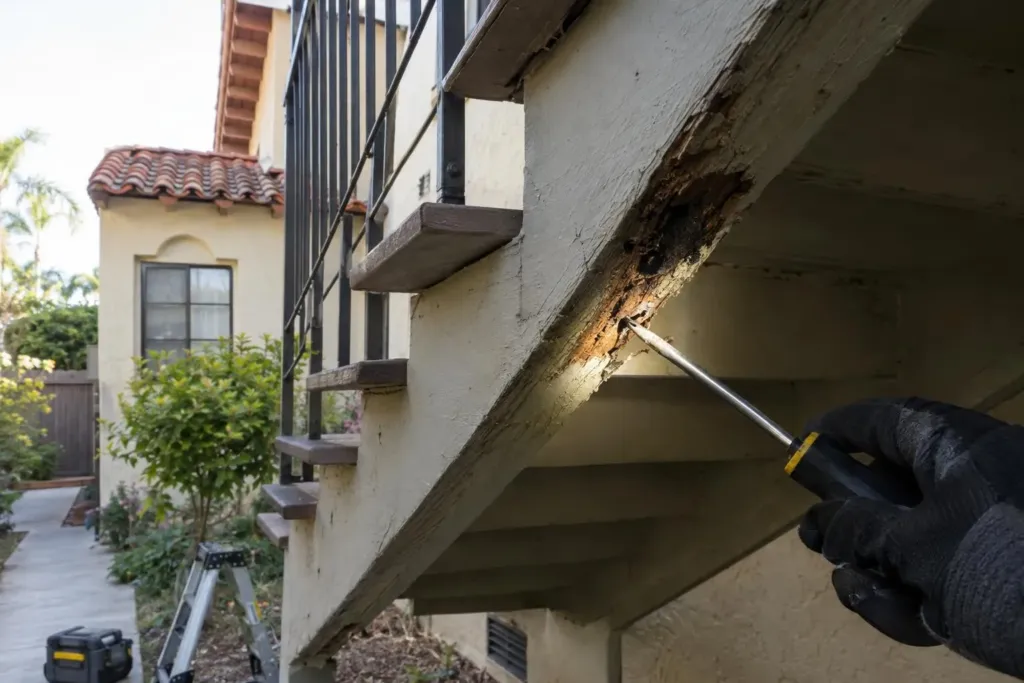
Rot is structural when the wood is soft or crumbling where it carries weight: at the tread notches, at the top where the stringer connects to the landing, or at the bottom where it meets the ground. If a screwdriver sinks in easily at any of those spots, or the stair bounces, leans, or pulls away from the building, stop using it until a professional looks at it.
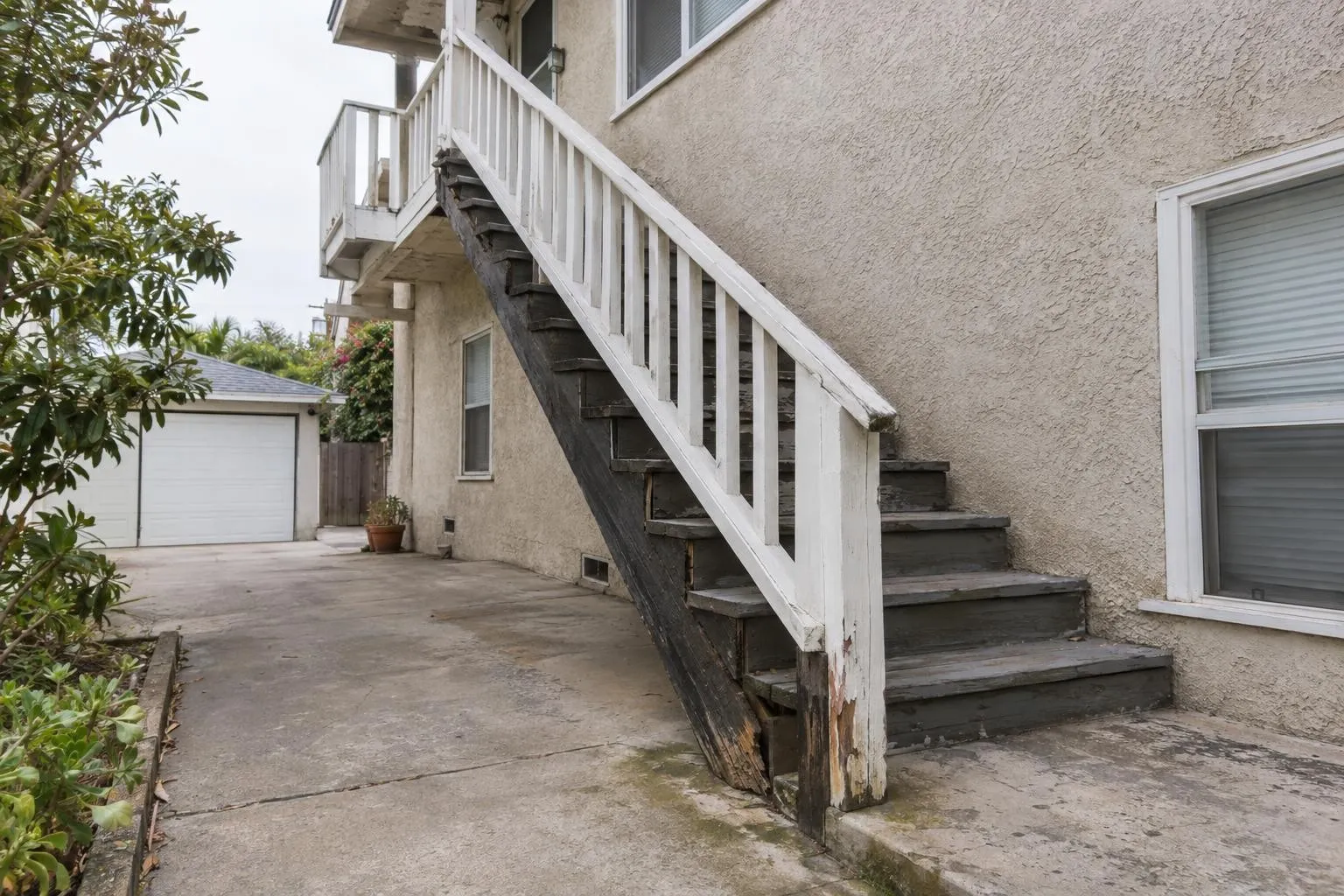
Paint hides a lot. A stringer can look fine from the walkway and be soft as cork underneath. In older Los Angeles apartment buildings, rot usually starts at the cut notches under each tread, at the top connection where water runs off the landing, and at the bottom where the stringer sits on dirt or a slab that holds water after rain.
A quick check you can do yourself:
- Look underneath with a flashlight for dark, stained, or split wood, and for rusty brackets or bolts.
- Press a flat screwdriver into the wood at each notch, the top connection, and the base. Sound wood resists. Rotted wood gives, crumbles, or comes out in short, stringy pieces.
- Walk the stair slowly and feel for bounce, a tilt to one side, or a tread that moves.
- Check the landing for soft spots, cracked coatings, or puddles that sit after watering or rain.
Surface softness on a tread edge is a different problem from a stringer that’s soft halfway through at the landing connection. You can’t always tell the depth by poking, which is why a licensed inspector or engineer may need to open up the area. When in doubt, close the stair first and ask questions second.
Does my apartment stair fall under SB-721 or SB-326?
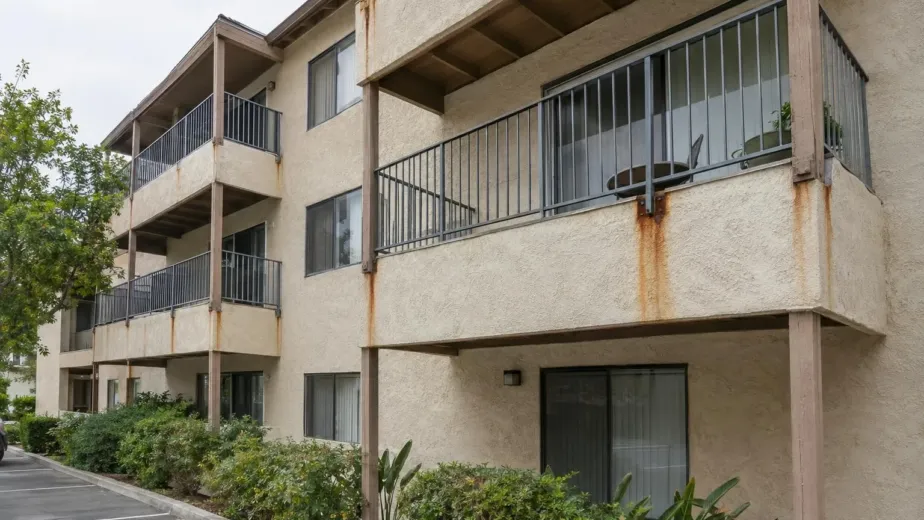
SB-721 generally covers buildings with three or more units where a stair, landing, balcony, or walkway has a walking surface more than six feet above the ground and is supported by wood or wood-based materials. Condominiums and other homeowner associations fall under SB-326 instead, which has a similar purpose with different rules.
The law calls these parts “exterior elevated elements.” That means the outdoor walking surfaces up in the air and the framing that holds them up. A rotted stringer on a second-floor stair is exactly the kind of thing the law was written for, because the stringer is the load path from the walking surface down to the ground.
Not every stair qualifies. A short run of steps with a top landing under six feet may not be covered. A stair framed entirely in steel or concrete may be treated differently, and agencies describe that differently, so ask your inspector rather than assuming. If you want the bigger picture first, our post on what SB-721 compliance means in California walks through the basics.
In the City of Los Angeles, the Housing Department explains on its exterior elevated elements page for apartments that owners must hire a licensed professional to inspect these elements for decay, fungus, deterioration, and improper alteration. Even if your stair isn’t covered, rot in a stringer still has to be fixed safely and with the right permit.
If my inspection report flags the stringer, what are my deadlines?
Under SB-721, if the report calls for repair or replacement, you must apply for a permit within 120 days of receiving the report, then finish the repairs within 120 days after the permit is approved. If the inspector calls the stair an immediate threat, you must block occupant access right away until emergency repairs, including shoring, are done.
Those timeframes come straight from the SB-721 bill text on California Legislative Information. The clock starts when you get the report, not when you get around to calling someone. That’s why it pays to start lining up an engineer and a repair contractor as soon as the report lands.
Shoring means temporary posts and beams that carry the load so the rotted part isn’t holding anyone up. It’s a stopgap, not the repair. The permanent fix still goes through the permit process.
Keep in mind that the city building department decides how long plan review and inspections take. Your 120-day repair window begins after the permit is approved, but you control how fast you submit and how complete your drawings are. Falling behind can bring enforcement action and penalties under the statute, so if you’re stuck, talk to the department early rather than going quiet. Our guide to balcony inspection reports explains how to read what the inspector wrote and what to do with each finding.
Can the company that inspected my stairs also repair them?
Not if a licensed contractor did the inspection. SB-721 says a contractor who served as the inspector may not do the recommended repairs, so you hire a separate licensed contractor for the work.
The rule keeps the person finding problems from profiting off fixing them. Inspectors under SB-721 include licensed architects, licensed civil or structural engineers, certain licensed contractors, and certified building inspectors or officials. Villa Bella Construction does not perform the official balcony or stair inspection. A separate licensed inspector or engineer does that, and we handle the repair work afterward.
Watch your mail carefully. The Los Angeles Housing Department has warned that some private businesses send “E3 inspection” notices designed to look like official city letters. If a notice pressures you to book a specific company, check it against the Housing Department’s own page before you respond.
Before you hire anyone, confirm their license. You can look up a contractor with the License Check tool on the Contractors State License Board website, and you can verify an engineer’s license through the state’s engineering licensing board. Make sure the license is active, matches the name on the bid, and that the contractor carries workers’ compensation insurance if they have employees.
Do I need a permit and an engineer to fix a rotted stringer?
Plan on a building permit for any structural stringer work on an apartment stair. Plan on a licensed engineer or architect designing the fix when the rot reaches the connections, the landing framing, or more than one stringer, because SB-721 requires repairs to follow a licensed professional's recommendations and local permit rules.
Replacing or sistering a stringer changes how the stair carries weight, so it’s structural work, not maintenance. In the City of Los Angeles, the Housing Department runs the compliance program for apartments, while the Department of Building and Safety issues repair permits and inspects the work. LADBS explains its approach in its information bulletin on exterior elevated elements, which covers balconies, exterior stairs, and walkways. Other cities have their own building departments and their own procedures.
An engineer earns their fee when the problem isn’t simple. If the stringer hangs from a rotted landing beam, if the ledger (the board bolted to the building that holds up the landing) is soft, or if the original stair was built poorly, a generic patch won’t cut it. Our post on LADBS engineering requirements for balcony repairs covers what the department typically wants to see.
A typical path looks like this:
- Get the inspection report or an engineer’s evaluation of the stair.
- Have the engineer or architect prepare repair drawings based on what’s actually there.
- Submit for a permit and answer any plan review comments.
- Shore or close the stair as needed, then do the repair.
- Call for the required inspections, and keep the signed-off permit with your compliance records.
Should the stringer be sistered, partly replaced, or should I replace the whole stair?
It depends on how far the rot runs and what the licensed professional specifies. Sistering can work when the rot is limited and the wood it attaches to is still sound, while full replacement makes sense when rot runs through the notches, the connections, or the landing framing.
Sistering means bolting a new board alongside the old one so the new board carries the load. It’s a fair fix for a stringer with one bad section and solid wood at both ends. It’s a poor fix when the bolts would land in soft wood, or when every notch on the stringer is decayed.
Epoxy filler and wood hardener show up in a lot of online advice. On a load-bearing stringer, they’re not a structural repair unless a licensed professional specifically calls for them. Filling a soft notch can also trap water behind the patch and hide the problem from the next inspector.
Our approach is to find the real cause, then recommend the safest targeted repair the city will accept. Sometimes that’s one new stringer. Sometimes the honest answer is a new stair, because exterior stair stringer rot has spread into the landing and patching would mean coming back in two years. You can see how we handle this work on our balcony and exterior stair repair page.
What caused the rot, and how do I keep the new stringer from rotting?
Stringer rot almost always comes from water that sits on or soaks into the wood: failed flashing or waterproofing at the landing, the stringer touching dirt, or leaves and debris packed into the notches. If you don't fix the water source, the new wood will rot too.
Look up before you look down. In older Los Angeles buildings, the landing above often has a cracked coating or a missing piece of flashing, the thin metal that sheds water away from the wood. Every time it rains or a sprinkler hits the landing, water runs straight into the top of the stringer. SB-721 inspections look at these waterproofing parts for that reason.
At the bottom, a stringer sitting on bare dirt or buried in a planter will wick up moisture. The base should rest on concrete with a gap or a connector that keeps the wood from sitting in water. Cleaning out the debris that collects in tread notches and along the landing edge also helps more than most owners expect.
Pressure-treated lumber holds up better outdoors, but it can still rot, especially at cut notches and ends where the treatment doesn’t reach the center of the board. Good repairs seal those cuts, use fasteners and hangers rated for treated wood and outdoor exposure, and drain water away from every joint. Our post on choosing an outdoor stairs repair contractor in Los Angeles has more on what a durable stair repair includes.
What should I tell tenants while the stair is closed or under repair?
Tell them early, in writing, which stair is closed, why, and how to get in and out safely while work goes on. If the stair is a required way out of upper units, work out a safe alternate exit with your contractor and the city before closing it.
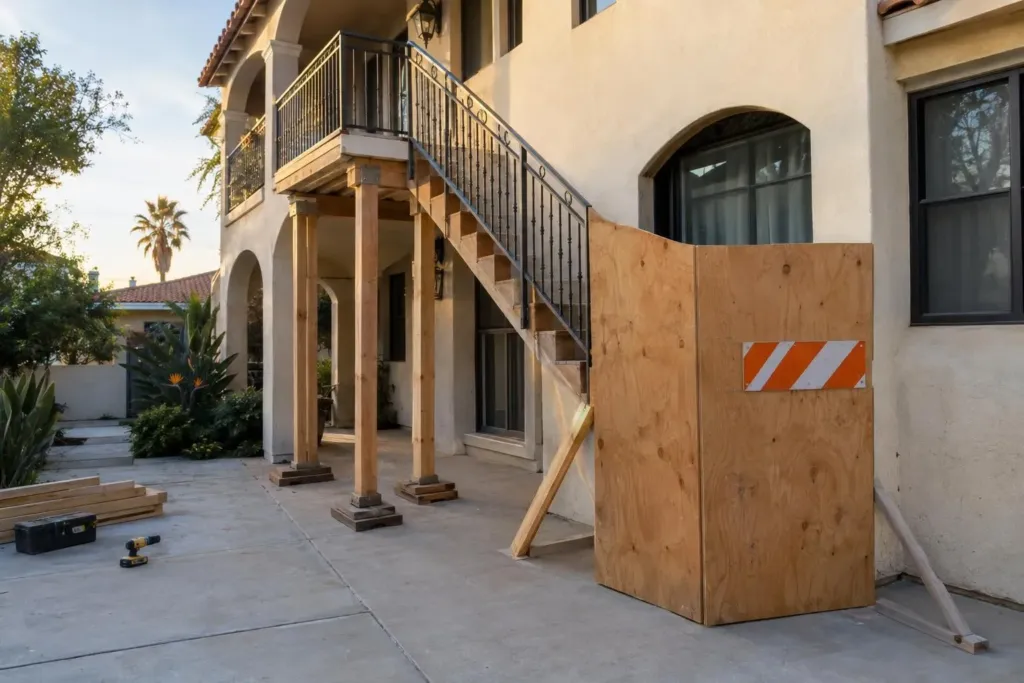
A strip of caution tape isn’t enough. If the stair is unsafe, block it with a solid barricade at the top and the bottom, and post a clear sign. Tenants and delivery drivers will climb over tape.
A good written notice includes:
- Which stair or landing is closed and the date it closed.
- Which route to use instead.
- When work is scheduled, and who to contact with questions or concerns.
- A reminder not to move barricades or use the stair for any reason.
Some apartments have only one stair serving the upper units. Closing it without another safe exit creates a new hazard. Owners also have legal duties to keep units safe and livable, so if the closure affects access to a unit, get advice from the Housing Department or a qualified attorney about your obligations before you act.
Could the old paint contain lead, and how do I get rid of the removed treated wood?
In older buildings, assume stair paint may contain lead until it's tested, and check nearby materials such as stucco or old landing coatings for asbestos before demolition. Old pressure-treated lumber counts as treated wood waste in California and must go to an authorized facility, not a regular dumpster, fire pit, or chipper.
Many older Los Angeles apartment buildings have layers of paint going back decades. Cutting, sanding, or tearing out painted stringers can spread lead dust onto walkways and into units. Testing before work starts lets the crew set up containment and cleanup that fit what’s actually there.
Asbestos is less common on the wood itself, but it can turn up in older stucco, patching compounds, or landing coatings near the stair. If testing finds it, a licensed abatement contractor handles that portion before structural work continues. It’s better to find out up front than to stop halfway through.
For the old lumber, the Department of Toxic Substances Control’s fact sheet on treated wood waste says it must not be burned, chipped, ground, or mulched. It has to be kept separate from other debris, with any treatment markings left on, and taken to an authorized treated wood waste facility. Ask your contractor how they’ll handle it, and get it in writing.
When should I call a licensed contractor about exterior stair stringer rot?
Call a licensed contractor as soon as you find soft wood at a tread notch, the landing connection, or the base of a stringer, or when an SB-721 or SB-326 report flags the stair. Don’t wait if the stair bounces, leans, or pulls away from the building. Close it first, then call.
The right contractor will coordinate with the engineer, follow the inspector’s recommendations, pull the permit, and fix the water problem that started the rot. Villa Bella Construction is a licensed and insured general contractor that handles exterior stair and balcony repairs after a separate licensed inspector or engineer completes the official inspection. Remember that the city building department sets approvals and inspection schedules, so starting early gives you the most room to meet your deadlines.
“Steve was easy to work with and was very responsive.” — Bill M., Yelp review
Villa Bella Construction is a licensed and insured general contractor, building in Los Angeles for 25 years. CSLB License #1093648 (B – General Building).
Call +1 (323) 825-9798 or send us your project details.
Learn more: Balcony and exterior stair repair (SB-721 / SB-326).
Planning a construction or remodeling project in Los Angeles?
Schedule a Free On-Site Consultation or call +1 (323) 825-9798.