Key Takeaways
- Start with the inspection report. Close off anything marked unsafe, then hire a separate contractor, because a contractor who did the inspection can't do the repairs.
- Before any work starts, get the repair designed and get a permit from your city's building department, which controls approvals and timing.
- Plan around tenants and lead and asbestos testing on older buildings, and keep every report and repair record so you can hand it to a buyer.
The right way to prepare balcony repairs is to turn your inspection report into a clear, permitted repair plan before anyone touches a pry bar. That means you secure anything marked unsafe, hire a contractor who didn’t do the inspection, get the repair designed and permitted, and get your tenants and building ready. If you’re working out how to prepare balcony repairs after an SB-721 or SB-326 inspection, doing it in that order keeps people safe. It also keeps you from paying to do the same job twice. Each step is explained below in plain terms, along with what the city expects at each stage.
How to prepare balcony repairs: what do I do first when the report arrives?
Read the whole report and find any item marked as an immediate hazard, then deal with that first. After that, gather your building's paperwork so the people who design and build the repair can see the whole history.
The report covers each exterior elevated element on your building. That’s the law’s term for a balcony, deck, stair or walkway more than six feet above the ground that relies wholly or mostly on wood for support. Concrete or steel balconies aren’t automatically left out. What counts is what actually holds them up, so ask your inspector if you’re not sure.
- Mark every item the inspector flagged for restricted access or emergency repair.
- Collect old plans, past permits, repair invoices, earlier inspection reports and any photos of leaks or stains.
- Make a simple list of every balcony and stair: where it is, how it’s framed, what the walking surface is, and how it drains.
- Note where the inspector opened test holes, since those spots usually show the worst conditions.
- Give the report and your records to a licensed repair contractor and, when needed, an engineer.
For apartment buildings in the City of Los Angeles, the Housing Department runs the LAHD exterior elevated element (E3) program. Owners hire their own licensed professional for the inspection. LAHD has also warned that private companies are mailing “E3 inspection” and “balcony inspection” notices that look like official government letters. If a notice pushes you to call a number quickly, check with LAHD directly before you respond.
If the wording of your report is confusing, our guide to balcony inspection reports explains what the common sections and ratings mean.
What if the report says a balcony is an immediate danger?
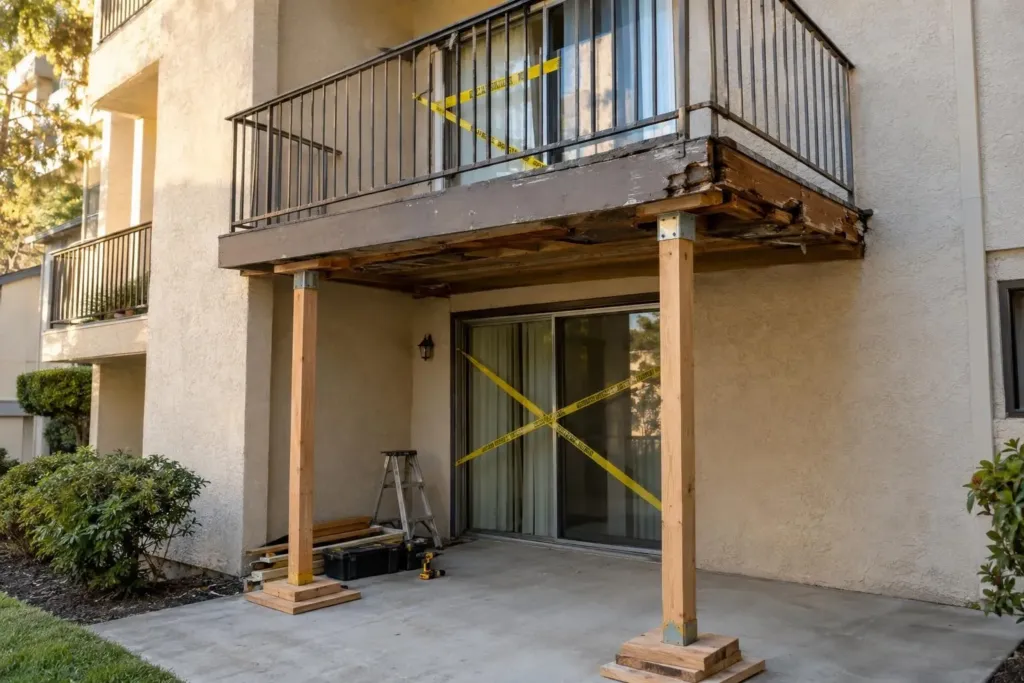
Keep everyone off it right away, and arrange temporary shoring or emergency repair as the report directs. Don't wait for the full repair design before you make the balcony safe.
State law requires the report to say whether occupants should be kept off an element and whether emergency repairs are needed, including shoring. Shoring means temporary posts and beams that carry the balcony’s weight until the permanent repair is done. If your report calls for either one, treat it as today’s job, not next month’s.
Lock or screw the door shut from inside, put up a barricade and a sign, and give the tenant a written notice explaining why. Ask them to leave nothing out there. Even one heavy planter adds load to framing that’s already weak.
LADBS policy has the inspector report violations to the department, so assume the city may already know about the problem. Ask the building department what it requires for emergency work. The department decides what can go ahead right away and what needs a permit first.
In older Los Angeles apartment buildings, the worst rot often sits where the balcony joists run back into the building wall, behind the stucco. You can’t see it from the ground. A balcony that looks fine from below can still be the one that needs shoring.
Can the inspector who wrote my report also do the repairs?
Not if the inspector is a licensed contractor. State law bars a contractor who served as the inspector from doing the recommended repairs, so you'll need a separate company for the work.
This rule keeps the inspection honest. The person deciding what’s wrong shouldn’t be the person paid to fix it. The text of SB-721 spells this out. It also says the owner is responsible for correcting the problems and must get permits from the local building department.
Villa Bella Construction does the repair work after a separate licensed inspector or engineer completes the official inspection. On our balcony and exterior stair repair jobs, we start by finding the real cause. Then we recommend the safest targeted repair the city will accept, instead of tearing out more than the problem requires.
Check every license before you sign. You can look up a contractor’s license on the Contractors State License Board website. While you’re there, confirm the license is active and that workers’ compensation coverage is listed. Engineers are licensed through the Board for Professional Engineers, Land Surveyors, and Geologists (BPELSG), and architects through the California Architects Board. Both boards have online lookups.
Take a few minutes to make sure the name on each license matches the company on the proposal. If the names don’t match, ask why.
Do I need engineer drawings and a permit before the repair starts?
The law requires a permit from your local building department for balcony repair or replacement. Structural work usually needs drawings from a licensed engineer or architect. The department decides what it wants to see and how long its review takes.
In the City of Los Angeles, LADBS issues the repair permit and sends inspectors during construction. LAHD runs the inspection program. If your building is in another city, that city’s own building department handles permits. Our article on the LADBS permit process for SB-721 balcony repairs walks through the City of Los Angeles steps.
Good drawings show which joists get replaced and how new members connect to the building. They also show the guardrail height and the waterproofing layers, including the flashing. Flashing is thin metal that steers water away from joints, like the spot where the deck meets the wall. Our post on LADBS engineering requirements for balcony repairs covers what plan reviewers commonly ask for.
Sometimes the engineer needs a few small openings before finishing the design. That’s normal, and it gives a far more accurate plan than guessing. Even with openings, more damage can turn up once demolition starts. Agree in writing ahead of time on how hidden damage gets documented, approved and priced.
Don’t let anyone start tearing out framing before the permit is issued. The city inspector has to see the new framing and waterproofing before they’re covered. Work that gets closed up too early can mean opening it again.
What should I tell tenants, and how do I get the building ready?
Give tenants proper written notice before anyone enters their units, and explain that they'll lose use of the balcony for a while. Then plan crew access, staging and debris removal before work day one.
Part of knowing how to prepare balcony repairs is planning for the people who live there. California law requires written notice before you enter a rental unit, and crews may need to pass through living rooms to reach the work. If the job could make a unit unlivable for a time, ask LAHD whether relocation rules apply to your rent-stabilized units before you set a start date.
Ask tenants to clear balconies completely: furniture, plants, grills, bikes and satellite dishes. Tell them which doors will be locked, roughly when, and who to call with questions. Calm, early notice heads off most complaints.
Plan where the crew parks, where the debris bin goes, and how walkways and the sidewalk stay protected and open. A bin or scaffold in the street may need its own city permit. Your contractor should also handle fall protection for workers and keep tenants out from under overhead work. Old pressure-treated lumber can’t go in regular trash, so ask how it will be disposed of.
Condo buildings under SB-326 work a little differently. The homeowners association usually manages repairs to common areas, and the association’s governing documents decide who pays for a balcony tied to one unit. Our SB-326 balcony repair contractor guide covers how boards usually organize the work.
My building is older. Do lead paint or asbestos rules apply?
If your building was built before 1978, plan on testing for lead paint. Any paid work that disturbs lead paint must follow EPA lead-safe rules. Old stucco, coatings and some deck materials can contain asbestos, so test those before demolition too.
The EPA’s Lead Renovation, Repair and Painting program requires firms that disturb paint in pre-1978 housing to be certified. It also requires them to use trained renovators who follow lead-safe practices. Rental owners and property managers can be covered by this rule too, not just contractors.
In practice, lead-safe work looks like this:
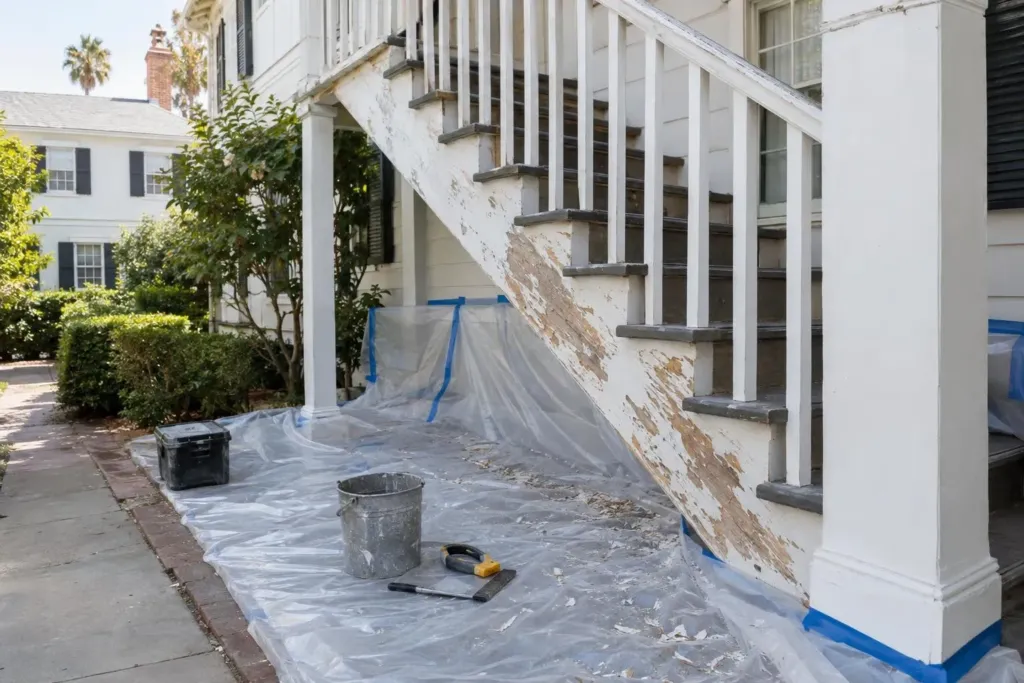
- Plastic sheeting goes down under the work area.
- Crews avoid dry sanding and open-flame paint removal.
- Debris is bagged and removed carefully.
- The area gets a careful cleanup at the end of each day.
On a balcony over a courtyard or entry, this also keeps paint chips away from kids and pets.
Asbestos can show up in older stucco, deck coatings, roofing-type membranes and drywall in the soffit. The soffit is the ceiling surface under a balcony. Have samples tested before demolition. If anything comes back positive, schedule abatement first, because framing can’t be opened until that’s done. Local air quality rules from South Coast AQMD cover how that removal is handled.
Testing early protects your schedule. A surprise lab result after demolition starts can stop the job while everyone waits.
What waterproofing details will the city inspector look for?
The inspector will want the moisture barrier installed the way the manufacturer's written instructions say, with the framing fully protected before anything covers it. Slope, flashing at walls and doors, and drainage all get checked.
The LADBS policy on balconies, exterior stairs and walkways, available through LADBS, calls for manufacturer’s installation instructions wherever a waterproof membrane protects balcony framing. A membrane is the sheet or coating layer that keeps water off the wood. Keep a printed copy of those instructions on site for the inspector.
The details that fail most often are small ones:
- the joint where the deck meets the wall
- the door threshold
- holes for railing posts
- the drip edge at the outer edge
In older Los Angeles homes and apartments, rot often hides under the balcony membrane where water collects against a flat or backward-sloped deck. If the new surface doesn’t send water away from the building, the repair won’t last.
A water test before the finish goes on is a smart check. Flood or spray the surface and watch for leaks below. It’s far cheaper to fix a seam then than after new tile or coating is down.
How long do I keep the report and repair records, and what does a buyer get?
State law says inspection reports must be kept for at least two inspection cycles. If you sell the building, the reports have to be disclosed and handed to the buyer.
Keep more than the report. Build one file for each balcony and stair that holds:
- the permit and approved drawings
- signed-off city inspection cards
- photos of the framing before it was covered
- lead and asbestos test results
- the membrane product information
Those records help the next inspector understand what was done and why. They also let you show a buyer, lender or insurer that the work was permitted and inspected rather than patched.
Store copies in two places, such as a paper binder in the office and a scanned folder online. Records get lost when managers change or buildings change hands. Rebuilding that history later is hard.
When you’re thinking through how to prepare balcony repairs, set up this file at the very start. That’s far easier than chasing photos and papers after the crew leaves.
When should I call a licensed contractor about balcony repairs?
Call as soon as the inspection report is in your hands, and right away if it marks anything as an immediate hazard. You should also call if you notice soft spots underfoot, a loose railing, rusty connectors, or stains on the ceiling under a balcony, even before an inspection is due. A licensed and insured contractor can work with your engineer and turn the report into a repair plan the building department can review. Getting that plan started early gives you more repair options and fewer surprises once the work begins. Villa Bella Construction focuses on finding the real cause and making the safest targeted repair the city will accept.
“immediately spotted problematic work on a project a different builder was working on” — Stephen L., Yelp review
Villa Bella Construction is a licensed and insured general contractor, building in Los Angeles for 25 years. CSLB License #1093648 (B – General Building).
Call +1 (323) 825-9798 or send us your project details.
Learn more: Balcony and exterior stair repair (SB-721 / SB-326).
Planning a construction or remodeling project in Los Angeles?
Schedule a Free On-Site Consultation or call +1 (323) 825-9798.