Key Takeaways
- Look up the contractor's CSLB license yourself. Confirm it's active, check the bond and workers' comp, and make sure the license type fits your job.
- Get a written contract with a payment schedule tied to finished work. California caps the down payment, and payments can't run ahead of the work.
- Let the licensed contractor pull the permit. Walk away from cash-only deals, door-to-door offers and pressure to sign today.
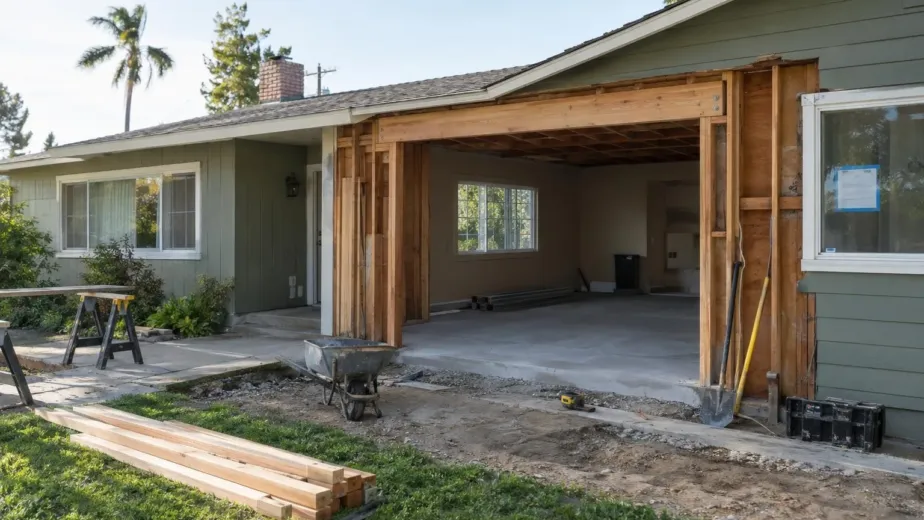
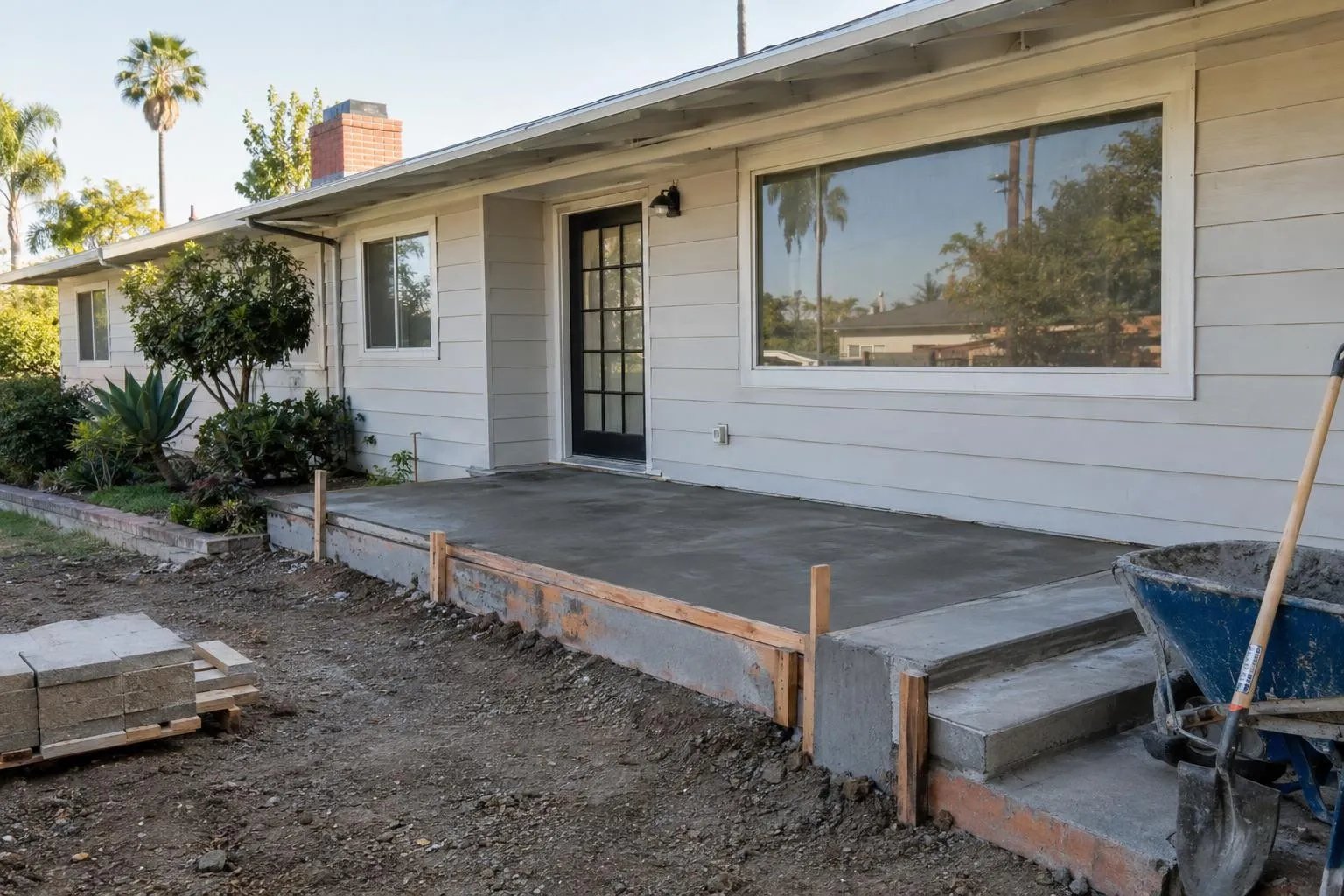
Choose a remodeling contractor by checking three things yourself: the license and insurance, a contract with payments that follow the work, and a licensed contractor who takes responsibility for the permit. That is the core of how to choose remodeling contractor help in Los Angeles. The paperwork tells you more than the portfolio does. Nice photos and a friendly pitch won’t show you how a company handles rotted subfloor, a wall that turns out to hold up the ceiling, or a correction notice from the building department.
What should I check first when deciding how to choose remodeling contractor help?
Check the contractor's license on the CSLB website before anything else. The license page shows whether the license is active, whether a bond and workers' comp are on file, and whether there's any disciplinary history.
The Contractors State License Board (CSLB) is the state agency that licenses contractors in California. CSLB says a license requires exams, at least four years of journey-level experience, a bond, and a criminal background check. An active license means the person cleared real hurdles. The CSLB’s guide to finding the right contractor puts license verification at the top of its list.
- Ask for the license number and the exact business name on the license.
- Look the number up on the CSLB website and confirm the status is active.
- Check that the name and address match the ones on the bid.
- Confirm a bond and workers’ compensation information are on file.
- Read any complaints or disciplinary actions listed.
- When you meet in person, ask to see the pocket license and a current photo ID.
Don’t skip that last step. A license number printed on a flyer can belong to someone else entirely. CSLB also requires home improvement salespeople to be registered, so if a salesperson comes to your door, ask about their registration as well.
A license bond is money the contractor posts with the state to cover certain claims. It helps, but CSLB says bonds don’t assure a contractor’s competence or financial integrity. Treat the bond as a minimum, not a seal of quality.
Does the type of contractor license matter for my remodel?
Yes. Each license has a classification, and it should match the work you're hiring for. A remodel that touches walls, plumbing and electrical needs a contractor whose license covers the whole job.
The B General Building license covers building projects that bring several trades together. CSLB has also added a newer license called the B-2 Residential Remodeling Contractor, aimed at remodeling work in existing homes. Specialty licenses, such as electrical or plumbing, are limited to their own trade.
The question to ask is simple: does your license cover everything in my scope? Read the classification description on the CSLB site, then ask the contractor directly whether it covers any structural part of your project. A good contractor answers that clearly and without getting defensive.
This matters because remodels change once the walls open. In older Los Angeles homes, a wall that looks like a simple divider often turns out to be load-bearing, meaning it holds up the ceiling joists or the floor above. A kitchen job can turn structural in an afternoon. You want someone licensed and experienced for that turn.
If your project already involves plumbing problems or framing, look for a contractor who regularly handles a kitchen remodel with structural or plumbing problems, not just cabinet and counter swaps.
What insurance should a remodeling contractor carry, and how do I check it?
Ask for a certificate of workers' compensation insurance if the contractor has employees, and a certificate of liability insurance. Then call the insurance carrier yourself to confirm the policies are active.
Workers’ compensation pays an injured worker’s medical bills and lost wages. In California, a contractor with employees must carry it. If a contractor tells you they have no employees but shows up with a crew, stop and ask questions.
Liability insurance covers damage the contractor’s work causes to your home or your neighbor’s property. CSLB tells homeowners to verify both workers’ comp and liability coverage by getting the certificate or the carrier’s name and checking with the carrier.
A certificate is only a snapshot. Policies can lapse a month after they’re printed. Call the number for the insurance company itself, not the number on the certificate, and confirm the policy dates and the business name.
The California Attorney General warns that hiring an unlicensed or uninsured contractor can leave you paying more if your home is damaged or a worker gets hurt. A short phone call now costs you nothing.
How much can a contractor legally ask for up front in California?
For a home improvement job, California limits the down payment to a small fixed dollar cap or 10 percent of the contract price, whichever is less. After that, payments can't run ahead of the work completed or the materials delivered.
The CSLB Home Improvement Contracts consumer guide spells out this limit, including the current dollar cap. Read it before you sign anything. A progress payment is a payment made as each stage of work is finished. Each one should match work you can see on site.
CSLB also warns homeowners to be careful about paying for “plans” or “permits” before any work starts. That’s a common way people lose money. They pay a large sum for drawings or a permit that never shows up.
If a contractor asks for half the price before starting, that’s not normal practice. It’s a sign to walk away. The same goes for anyone who wants cash only. CSLB tells consumers not to pay cash and not to let payments get ahead of the work.
Special-order items like cabinets can take weeks to arrive. Ask how those items fit into the payment schedule instead of paying ahead for them.
What has to be in a home improvement contract in California?
The contract must be in writing and include a payment schedule that ties each payment to specific work, materials or services. It should also include your notice of the right to cancel and spell out the scope, the materials and how changes will be handled.
Before you sign, read the contract slowly, even if the contractor seems trustworthy. Look for these items:
- A clear description of the work, room by room.
- Materials and allowances. An allowance is a placeholder amount for items you haven’t picked yet, like tile or fixtures.
- Approximate start and completion dates.
- A payment schedule tied to finished stages of work.
- How change orders work. A change order is a signed, written change to the scope and price.
- The notice of your right to cancel.
- The mechanics lien warning.
The right to cancel gives you a short window to back out after signing. CSLB says that window is longer for buyers 65 and older. A mechanics lien is a legal claim against your property that an unpaid subcontractor or supplier can file. As you make payments, ask for lien releases from the contractor and major suppliers.
Hidden conditions are where contracts get tested. Opening walls in older Los Angeles homes often turns up old galvanized pipe, a rotted subfloor under the sink, or wiring added without a permit. A good contract explains how those discoveries get documented, priced and approved by you before work continues.
Should I let the contractor pull the permit, or pull it myself?
In most remodels, the licensed contractor should pull the permit. If you pull an owner-builder permit, you become the responsible party, and your homeowner's insurance may not cover workers who get hurt.
In the City of Los Angeles, LADBS allows a permit to be obtained by the owner, a contractor or an agent. An owner permit requires an Owner-Builder Declaration. The LADBS owner-builder acknowledgment form warns that the owner becomes the responsible party of record. It also says owners can protect themselves by hiring a licensed contractor to take the permit.
Here’s the trap. An unlicensed operator asks you to “just pull the permit in your name to save time.” Now you’re legally the builder. If a worker falls off a ladder, the claim may land on you. Treat that request as a red flag.
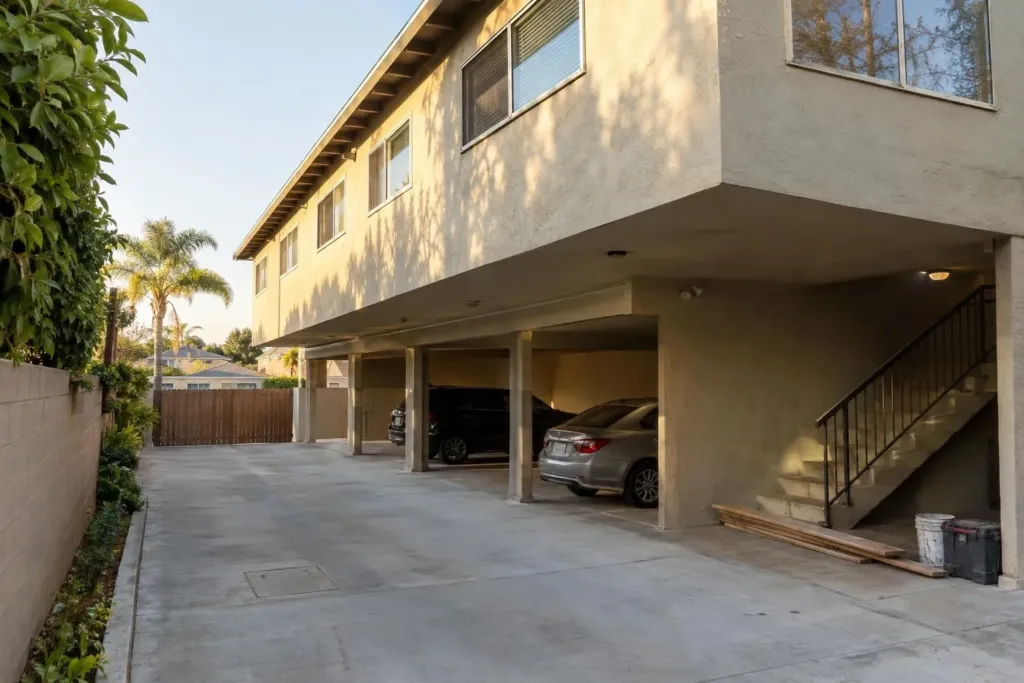
LADBS has an Express Permit system for some small renovations, such as many kitchen and bathroom remodels. Other cities in the area have their own building departments and their own steps. Either way, the building department decides approvals and timelines, so plan around its schedule rather than a date someone hands you.
For more on doing this the right way, see our guide to permitted home remodeling in Los Angeles and the permit coordination guide for remodels.
My house was built before 1978. Does my contractor need to be lead-safe certified?
Yes. The EPA's lead rule requires anyone paid to disturb painted surfaces in homes built before 1978 to be certified and to use lead-safe work practices.
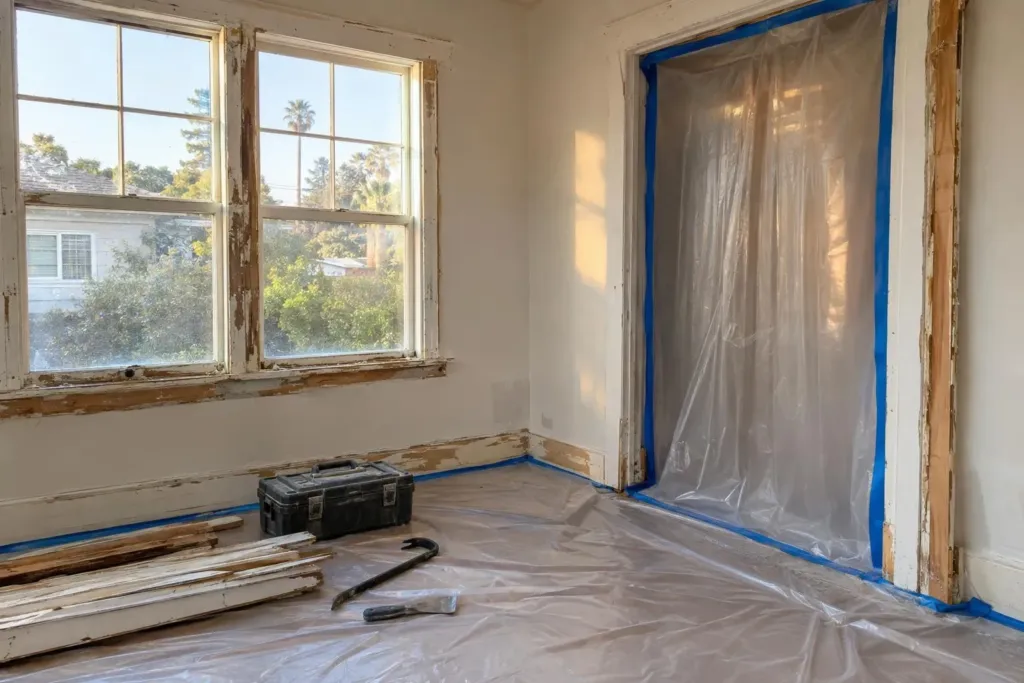
The rule is called the Renovation, Repair and Painting (RRP) Rule. Lead paint was common before 1978, and sanding, cutting or demolishing it releases dust that’s harmful, especially to children. A large share of Los Angeles homes were built before that year.
The EPA Lead Renovation, Repair and Painting Program page explains the requirement and offers a search tool for certified contractors. Ask for the certification and check it, the same way you checked the license.
You can usually tell lead-safe work when you see it:
- Plastic sheeting on floors and taped over doorways.
- Warning signs at the work area.
- HEPA vacuums, which trap very fine dust, used for cleanup.
- A careful cleaning check before the area reopens.
EPA also recommends having a certified inspector or risk assessor test for lead-based paint. If a contractor shrugs off the question, that tells you how they’ll handle the rest of the job.
How many bids should I get, and why not just pick the lowest?
CSLB suggests getting at least three bids and not automatically taking the lowest one. Compare what each bid includes before you compare the price.
Two bids can look different simply because one leaves things out. One may include demolition, debris hauling, protecting your floors, permit coordination and inspection scheduling. Another may skip half of those. A key part of how to choose remodeling contractor help is laying the bids side by side and checking scope line by line.
Watch the allowances closely. A low bid with tiny allowances for fixtures or tile can become the most expensive option once you pick real products. Ask each contractor what the allowance actually buys.
Use the bid meetings to ask practical questions:
- Who supervises the site each day?
- Do you use your own crews, or subcontract most of the work?
- What happens if you find rot or a leak behind the wall?
- Can I talk to owners of recent, similar projects?
Listen for how they handle hidden damage. A good contractor finds the real cause and recommends the safest targeted repair the city will accept, instead of tearing out more than the problem requires. If you’re weighing a single team for design and construction, our post on design-build contractors for remodels covers what to ask.
What red flags point to an unlicensed or scam contractor?
Cash-only deals, door-to-door offers, pressure to sign today, and big payments before work starts are the classic warning signs. So is any request that you pull the permit yourself.
The California Attorney General lists common scams, such as fake “free inspections” that always find an urgent problem, and contractors taking more down payment than the law allows. After wildfires and other disasters, CSLB warns that unlicensed operators go door to door looking for work.
Other signs to watch for:
- No license number on the bid, or one that doesn’t match the business name.
- Vague contracts with no payment schedule.
- A “special price” that expires if you don’t sign today.
- Claims that an inspection result or a permit date is already settled.
- Talk about skipping permits to save money.
Nobody can honestly tell you ahead of time how an inspection will turn out. The building department decides that. A contractor who says otherwise is telling you what you want to hear.
If something does go wrong, such as a contractor walking off the job or leaving poor work, you can file a complaint with CSLB. The CSLB guides and publications library includes a guide to filing complaints and describes its mandatory arbitration program for smaller damage claims. Keep your contract, payment records and photos so you’re ready.
When should you call a licensed contractor for your remodel?
Call a licensed contractor before any work starts if your remodel moves plumbing, removes or opens a wall, or needs a permit. Call right away if a project already in progress has turned up soft wood, a leak behind the wall, or a correction notice from the building department. Those are the moments when the right license, insurance and experience matter most.
Villa Bella Construction is a licensed and insured general contractor in Los Angeles. We handle kitchen and bathroom remodels with structural or plumbing problems, and we start the same way every time: find the real cause, then recommend the safest targeted repair the city will accept. Check our license on the CSLB site and hold us to every point in this article.
“immediately spotted problematic work on a project a different builder was working on” — Stephen L., Yelp review
Villa Bella Construction is a licensed and insured general contractor, building in Los Angeles for 25 years. CSLB License #1093648 (B – General Building).
Planning a construction or remodeling project in Los Angeles?
Schedule a Free On-Site Consultation or call +1 (323) 825-9798.