Key Takeaways
- SB-721 covers wood balconies, stairs and walkways on apartment buildings with three or more units. SB-326 covers condo associations. Single-family homes and duplexes are not covered.
- A separate licensed professional performs the inspection. A contractor who acts as the inspector can't do the repairs that inspection recommends.
- Repairs need permits from your local building department. In the City of Los Angeles that's LADBS, and the department decides approvals and timing.
If your building has three or more units and wood balconies, stairs or walkways more than six feet off the ground, state law requires a licensed professional to inspect them on a set schedule. You then have to fix whatever the report flags, with permits. That’s the core of the SB-721 & SB-326 balcony repair Los Angeles owners face. SB-721 covers apartments, SB-326 covers condo associations, and in the City of Los Angeles the Department of Building and Safety (LADBS) issues the repair permits. Below is how the inspection, the report and the repair work fit together, and what you can do now to keep the job moving.
Which buildings and balconies fall under SB-721 and SB-326?
SB-721 covers buildings with three or more apartment units, and SB-326 covers condominium associations with three or more units. Both apply only to exterior elevated elements with a walking surface more than six feet above the ground that rely mainly on wood or wood-based framing.
An exterior elevated element is any outdoor surface people walk on that sits up in the air. That includes balconies, decks, porches, stairways, walkways and entry landings, along with the beams, posts and railings that hold them up. The apartment inspection law on California Legislative Information spells out this definition.
Single-family homes and duplexes fall outside both laws. So do elements framed mainly in concrete or steel. A balcony with tile or a concrete topping laid over wood joists still counts, though, because the wood carries the weight.
A mixed-use building with shops below and three or more apartments above generally falls under SB-721. A condo building run by an association falls under SB-326 instead. If you aren’t sure which elements are in scope, the inspector should confirm it in writing before starting.
Owners often forget the long exterior walkway that serves the upstairs units. On older Los Angeles apartment buildings, that walkway is usually the most-used elevated surface on the property. It’s also the one tenants can’t avoid.
When are the inspections due, and how often do they repeat?
For apartment buildings, the current statute sets the first inspection deadline at January 1, 2026, with repeat inspections every six years. Condo associations must inspect at least once every nine years, and the LADBS bulletin lists January 1, 2025 for their first round.
You’ll still find websites saying apartments were due January 1, 2025. That date is out of date. A 2024 amendment moved the apartment deadline to January 1, 2026, and the current statute and the city housing department both show the new date.
If your building has already missed its deadline, schedule the inspection now. Qualified inspectors and engineers book up, and the longer you wait, the longer a rotting balcony stays in use.
The law gives local agencies real enforcement tools. It allows penalties, lets the agency recover its enforcement costs, and lets it record a safety lien against the property. A safety lien is a recorded claim on your title, and it stays there until the agency records a release. How and when enforcement happens is up to the city, not the contractor or the inspector.
Who can do the inspection, and can that same company do my repairs?
For apartments, the statute allows licensed architects, licensed civil or structural engineers, certain experienced licensed contractors, and certified building inspectors who don't work for the local jurisdiction. Condo inspections must be done by a licensed structural or civil engineer or architect. A contractor who serves as your SB-721 inspector can't perform the repairs that inspection recommends.
There’s no state “SB-721 certification” or “SB-326 certification.” The laws list license types, not a special credential. Be wary of anyone who leans on a certificate the state doesn’t issue.
The conflict-of-interest rule matters when a firm offers to “inspect and fix everything.” Under SB-721, a contractor who inspects can’t take the repair work from that same report. Ask the question plainly before you sign anything.
Villa Bella Construction is a licensed and insured general contractor that handles the repair side. An independent inspector or engineer does the official inspection. Keeping those roles separate also keeps the report honest.
Check every license yourself. Contractor licenses and their classifications can be looked up on the Contractors State License Board website. Engineers can be checked through the state Board for Professional Engineers, Land Surveyors, and Geologists. Confirm that the license is active and matches the work.
What does the inspection check, and what has to be in the report?
The inspector looks at the load-bearing parts and the waterproofing that protects them, using a sample rather than every element. For apartments, you must receive a signed or stamped report within 45 days of the inspection, and you keep reports for two inspection cycles.
For apartments, the inspector must check at least 15 percent of each type of element, such as balconies, stairs and walkways. For condos, the condo inspection statute calls for a random, statistically significant sample. Either way, the inspector can widen the scope if the first elements show trouble.
Most of the work is visual, backed by tools. A moisture meter is a handheld tool that reads how wet the wood is. Sometimes the inspector also cuts a small opening in the stucco or the soffit, which is the finished underside of the balcony, to see the framing.
The report must include photos, test results and a written narrative that set a baseline for the next inspection. Later reports must include copies of earlier ones. For condos, a 2025 change made these reports association records that members can inspect, and the latest report now goes to buyers. Our guide to balcony inspection reports walks through how to read one.
Asbestos can turn up in older stucco, coatings or flooring. If testing confirms asbestos-containing material, the statute gives you extra time to have it removed before the inspection is finished. Keep every removal record with your inspection file.
What happens if the inspector finds an immediate safety threat?
You must keep people off that element right away and make it safe, usually by blocking access and adding temporary supports. In the City of Los Angeles, the inspector also has to report the condition to LADBS.
An immediate threat means the element could fail under normal use. Common causes are rotted joist ends, a ledger pulling away from the wall, or a guardrail that moves when you push on it. Shoring is temporary posts and beams that hold the structure up until the permanent repair is done.
The LADBS information bulletin on exterior elevated elements says the inspector reports the violation through the LADBS online portal. The inspector then sends the report to the LADBS Code Enforcement Bureau within 15 days. Expect the city to follow up.
Here’s the usual order of steps:
- Lock or block the door to the balcony, or close the stair or walkway, the same day.
- Tell affected tenants in writing why the area is closed.
- Have a qualified crew install shoring if the structure is sagging or a closed stair or walkway is the only way in or out.
- Get an engineer’s repair design and apply for the permit.
- Leave the barriers up until the repair passes the city’s inspection.
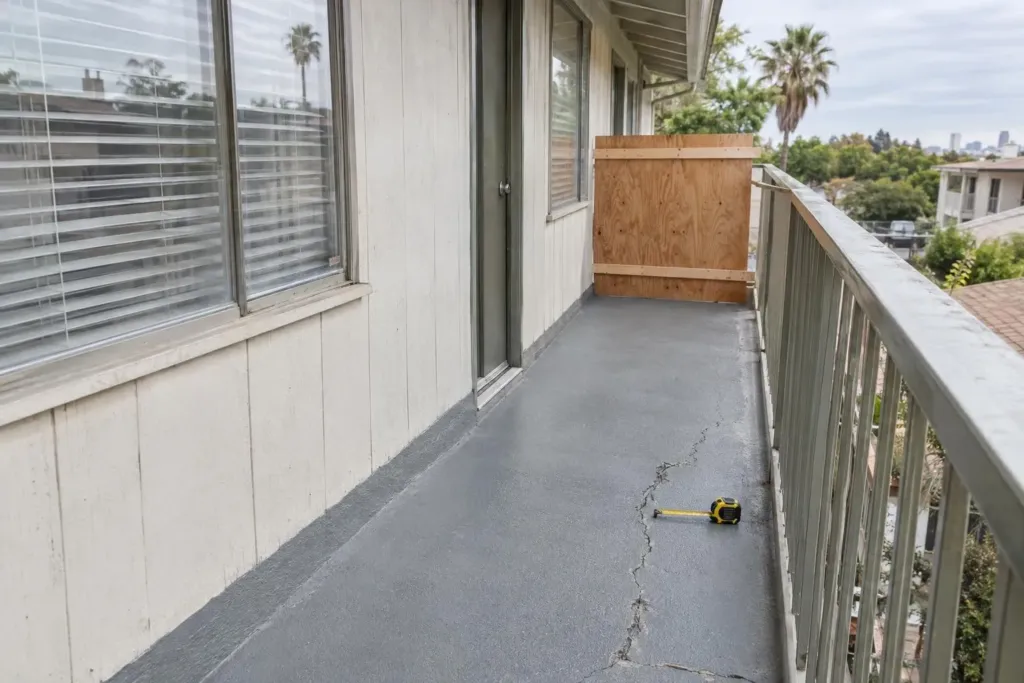
How does the SB-721 & SB-326 balcony repair Los Angeles owners need usually work?
A contractor reviews the report, opens the damaged areas to see how far the rot goes, and works from an engineer's design when structure is involved. The work is then permitted, built, and inspected by the building department before the element goes back into use.
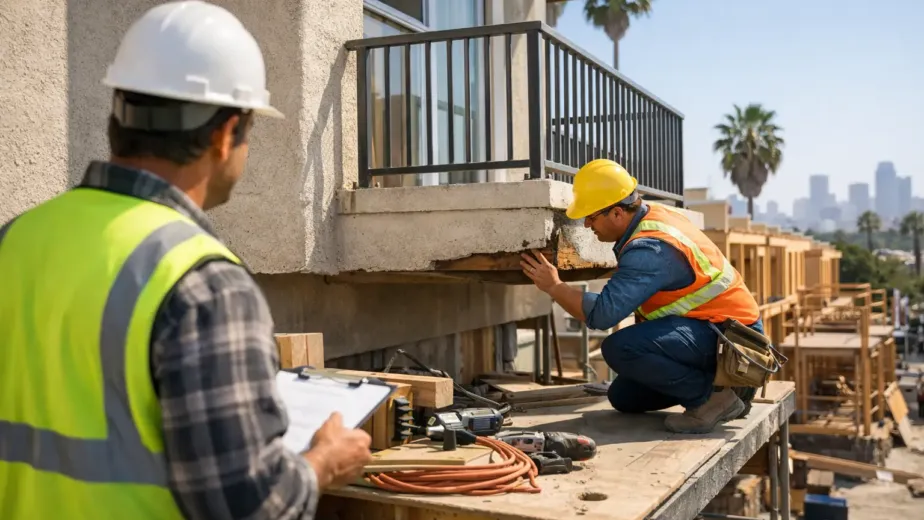
Most failures come from water. Dry rot is fungus decay in wood that stays wet, and it leaves the wood soft and crumbly. It usually starts in the joists, the horizontal boards that carry the deck, or in the ledger, the board bolted to the building wall that holds the balcony’s inner end.
In older Los Angeles buildings, the worst rot often sits where the balcony meets the wall. Water runs back along the ledger and stays there, hidden behind stucco. Flashing is thin metal that steers water away from joints, and when it’s missing or rusted, that’s often the real cause.
The goal is to find that cause and make the safest targeted repair the city will accept, not to tear off more than the problem requires. Here is a typical sequence:
- Walk the property with the inspection report in hand.
- Open suspect areas to measure how far the damage extends.
- Have an engineer prepare repair details and drawings.
- Submit for a permit and answer the building department’s review comments.
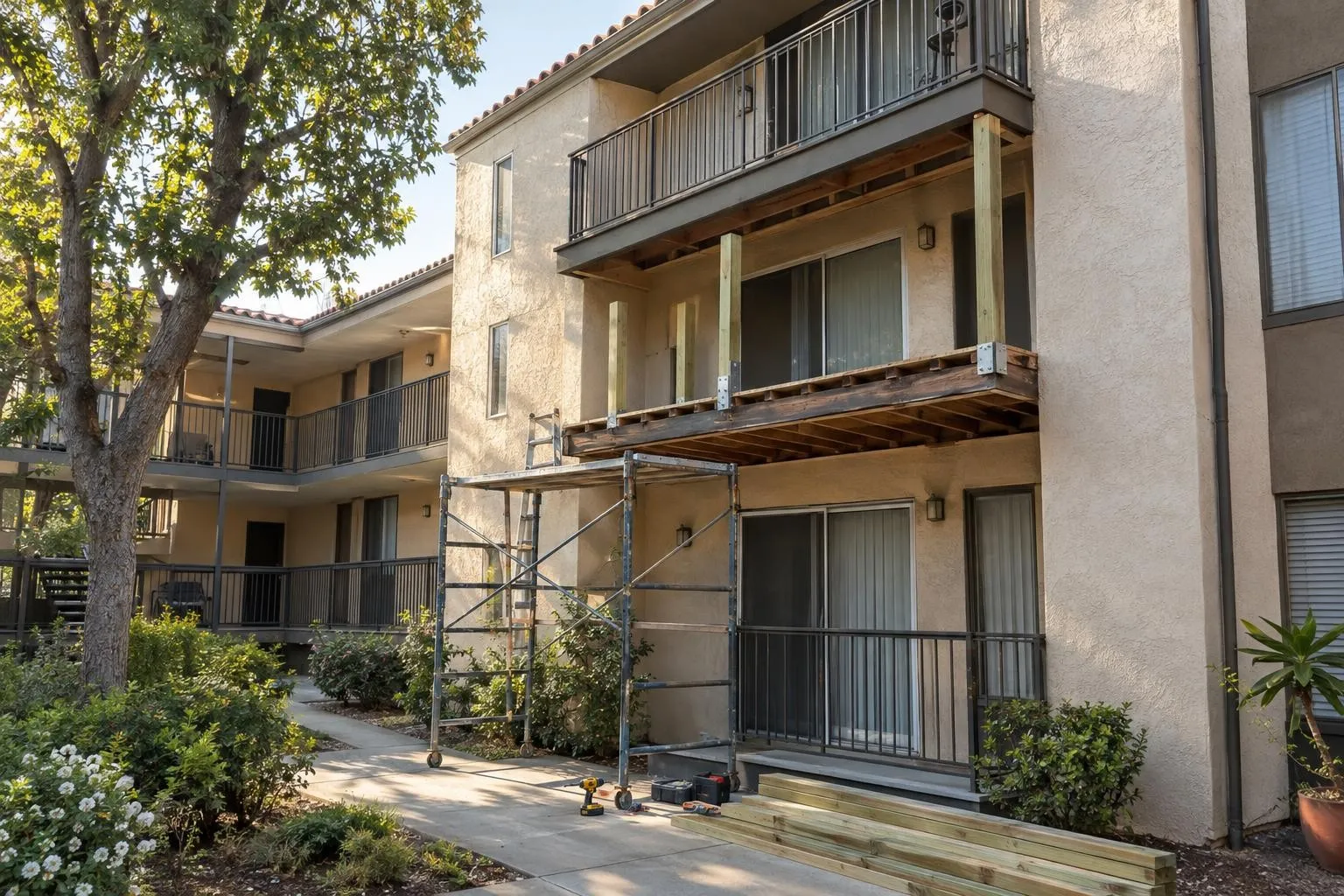
- Shore the element, remove rotted wood, and install new framing and connectors.
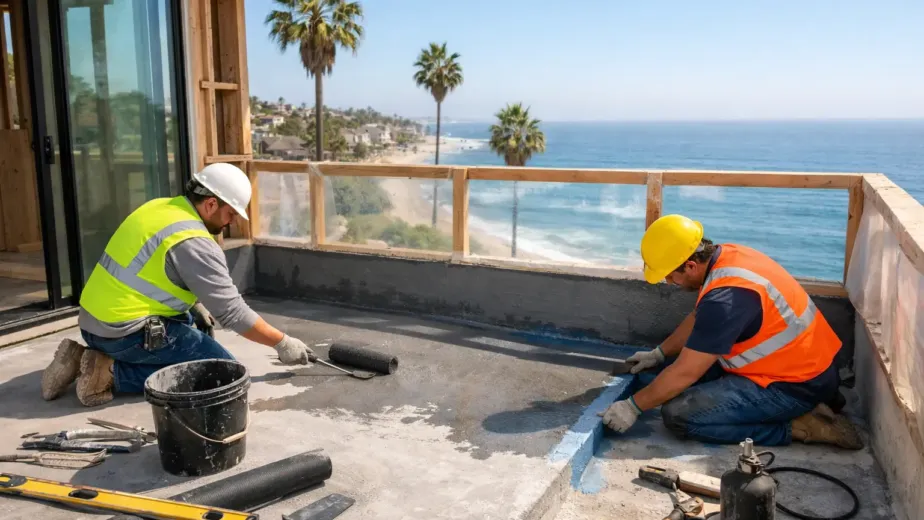
- Install new flashing and a waterproofing membrane, the sealed layer under the walking surface.
- Rebuild guardrails and finishes, passing city inspections at each required stage.
- Gather the permit sign-off and photos for your inspection records.
Exterior stairs follow the same logic. The stringers, the sloped boards that carry the treads, rot at the bottom where they meet the ground, so see our page on outdoor stair repair. For the full service, visit our balcony and exterior stair repair page. How long it all takes depends on what the opening reveals and on the building department’s schedule.
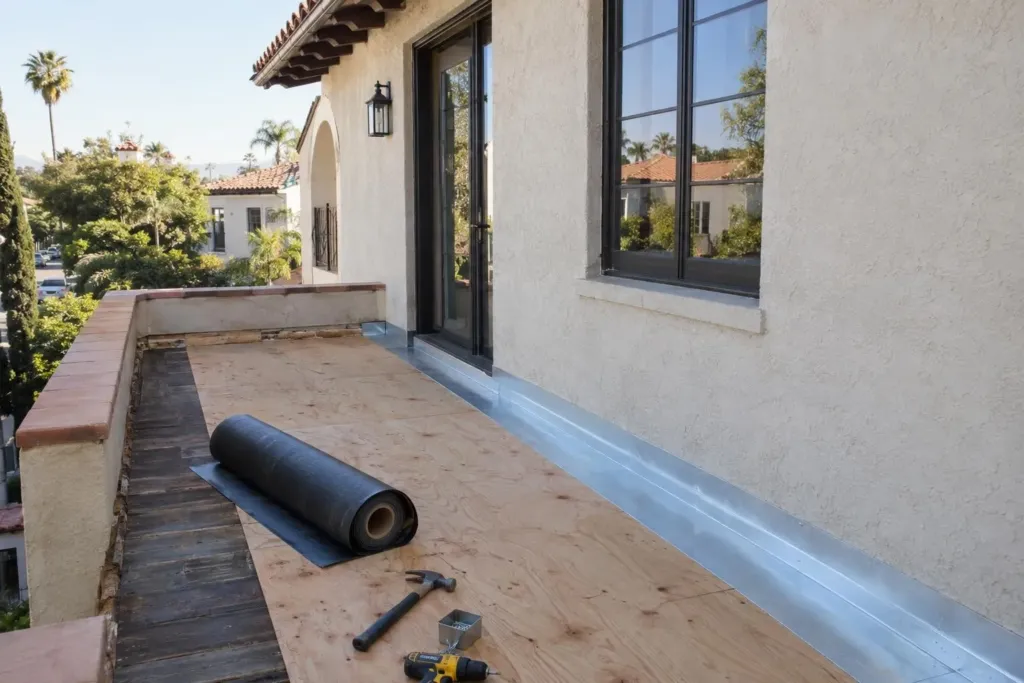
Do I need an LADBS permit, and where does LAHD fit in?
Yes. The law requires all necessary permits from your local building department, and in the City of Los Angeles structural balcony and stair repairs go through LADBS. LAHD runs the E3-Apartments program that tells rental owners about the inspection rule, but LAHD doesn't perform the inspection.
Replacing joists, ledgers, posts, stringers or guardrails is structural work. Expect LADBS to want an engineer’s drawings that show the new framing, connections and waterproofing. Our post on LADBS engineering requirements for balcony repairs covers what those drawings usually include.
The LAHD E3-Apartments page says owners must hire a licensed professional, not a city employee, to do the inspection. It also warns that some private businesses mail “E3” or “balcony inspection” notices that look official but don’t come from the city.
Check any notice before you act on it. Look for a city return address and a city department name. If in doubt, contact LAHD through its official website. Never pay a fee printed on a mailer that only looks like a city letter.
Buildings outside the City of Los Angeles go through their own city’s building department. The rules follow the same state laws, but the permit steps differ.
How do I handle tenants during the inspection and repairs?
Give tenants proper written notice before anyone enters their unit or balcony, and keep them off any element flagged unsafe. Plan how they'll get in and out if a stair or walkway closes, because you still have to keep the building livable.
The inspector usually needs access through the unit to reach a private balcony. Follow California’s entry-notice rules, and give tenants a clear time window. Tenants who know what’s happening are much more likely to cooperate.
A closed balcony is an inconvenience. A closed stair or walkway can block the only way into a unit. In that case, the repair plan may need shoring or temporary access so tenants can still get in and out safely.
Rent-stabilized and LAHD-regulated buildings carry extra duties to keep units habitable during construction. Check LAHD’s current rules before work starts, especially if the job will cut off a unit’s access for any length of time.
Older balconies and stairs may also have lead paint. Have suspect paint tested before anyone sands or scrapes, and make sure the crew follows state and federal rules for that work.
How much will repairs cost, and how can I prepare before calling a contractor?
There's no honest number until someone opens the framing, because the price depends on how far the rot has spread and what the engineer requires. You can speed things up by gathering the report, your past records and access details before the first site visit.
Two balconies that look the same from the courtyard can hide very different damage. One may need new flashing. The other may need a new ledger and joists. Anyone who quotes a firm price before opening anything is guessing.
Have these ready before the site visit:
- The full inspection report, with photos
- Any earlier inspection reports and repair records
- Original or past building drawings, if you have them
- Past permits for the balconies or stairs
- Tenant contact information and access notes
Condo boards should fold SB-326 findings into the reserve study so repair funding is planned, not rushed. Our article on how to prepare balcony repairs covers this step in more detail.
Ask every contractor who pulls the permit, who the engineer will be, and how hidden damage gets priced once it’s found. Clear answers to those three questions tell you a lot.
When should you call a licensed contractor about SB-721 or SB-326 repairs?
Call a licensed contractor as soon as you have an inspection report that recommends repairs, and right away if any element was flagged as an immediate threat. You should also call if you see soft wood, rust stains under a balcony, a guardrail that moves, or a stair that bounces. Villa Bella Construction handles the repair work after your independent inspector or engineer finishes the report. That includes opening the damaged areas, working from the engineer’s design, and taking the job through permits and city inspections. The building department decides approvals and timing, so starting early gives you the most room to plan.
“They are reliable and trustworthy.” — Al H., Google review
Villa Bella Construction is a licensed and insured general contractor, building in Los Angeles for 25 years. CSLB License #1093648 (B – General Building).
Call +1 (323) 825-9798 or send us your project details.
Learn more: Balcony and exterior stair repair (SB-721 / SB-326).
Planning a construction or remodeling project in Los Angeles?
Schedule a Free On-Site Consultation or call +1 (323) 825-9798.