Key Takeaways
- Most repeat leaks come from a missing or failed sill pan under the threshold, an outside surface that sits too high or slopes toward the door, or wind pushing rain through the bottom corners.
- A new sweep, weatherstripping, or caulk can slow a leak. They won't stop it for good if the flashing or the outside slope is the real cause.
- A lasting fix means pulling the door, repairing any rot, installing a sill pan tied into the wall's water barrier, and correcting the slope or drainage outside.
Water leaking under exterior door thresholds usually comes from one of three things: there’s no working sill pan under the door, the patio or stoop outside sends water toward the opening, or wind is driving rain through the bottom corners. Caulk and a new door sweep can buy you time. A lasting fix means pulling the door, flashing the opening correctly, checking the wood underneath for rot, and correcting the slope outside.
Why does water come in under my door only in heavy, wind-driven rain?
Light rain runs down the face of the door and drains off the sill. Hard rain with wind behind it builds pressure against the door, and that pressure pushes water sideways and even upward through small gaps at the bottom.
Think of the bottom of a door as a low dam. In a calm drizzle, water drops straight down and drains away. When a storm throws rain at the door, water piles up against the sill and the wind presses it into every gap. With enough wind behind it, water will climb a seal you’d swear was tight.
Los Angeles doesn’t get many big storms, so a small gap can sit unnoticed for years. Then one strong storm blows in and there’s a puddle by the door. Doors that face incoming storms with no roof overhang to shield them are the worst offenders.
Watch for signs between storms, too. A dark stain on the floor right inside the door, swollen baseboard at the bottom of the frame, paint bubbling low on the trim, or a musty smell all point to water getting in. The gap is real even if it only shows itself in hard rain.
How do I tell where water leaking under exterior door openings really starts?
A wet floor inside the door doesn't always mean the water came under the door. It can come through the bottom corners, down the frame from above, from a balcony overhead, or up through the slab, and a careful water test helps narrow it down.
Pick a dry day and have a helper watch from inside while you test from outside:
- Note exactly where the stains start on the floor, baseboard, and trim.
- With the door closed, run a garden hose gently across the sill only for several minutes. Use low pressure, never a spray nozzle.
- Move the water to the bottom corners, where the frame meets the threshold. These leak first on most doors.
- Work up the sides of the frame, then over the top of the door.
Always test from the bottom up. Water from higher on the wall runs down inside it and comes out at the floor, which looks like a door leak when it isn’t. If you see stucco cracks around windows above, read our post on a window leak during hard storms. If there’s a deck overhead, our article on a balcony leaking into the unit below explains how that water travels.
If the floor is wet away from the door, or a bare slab shows white powdery deposits, the water may be coming up from the ground. On a raised house, look underneath. Our post on water in a crawl space after rain covers that side of the problem.
What is a sill pan, and does my door have one?
A sill pan is a shallow tray of flashing under the threshold that catches water getting past the door and sends it back outside. Many older Los Angeles homes don't have one, and that missing piece is the most common reason a door leak keeps coming back after the seals are replaced.
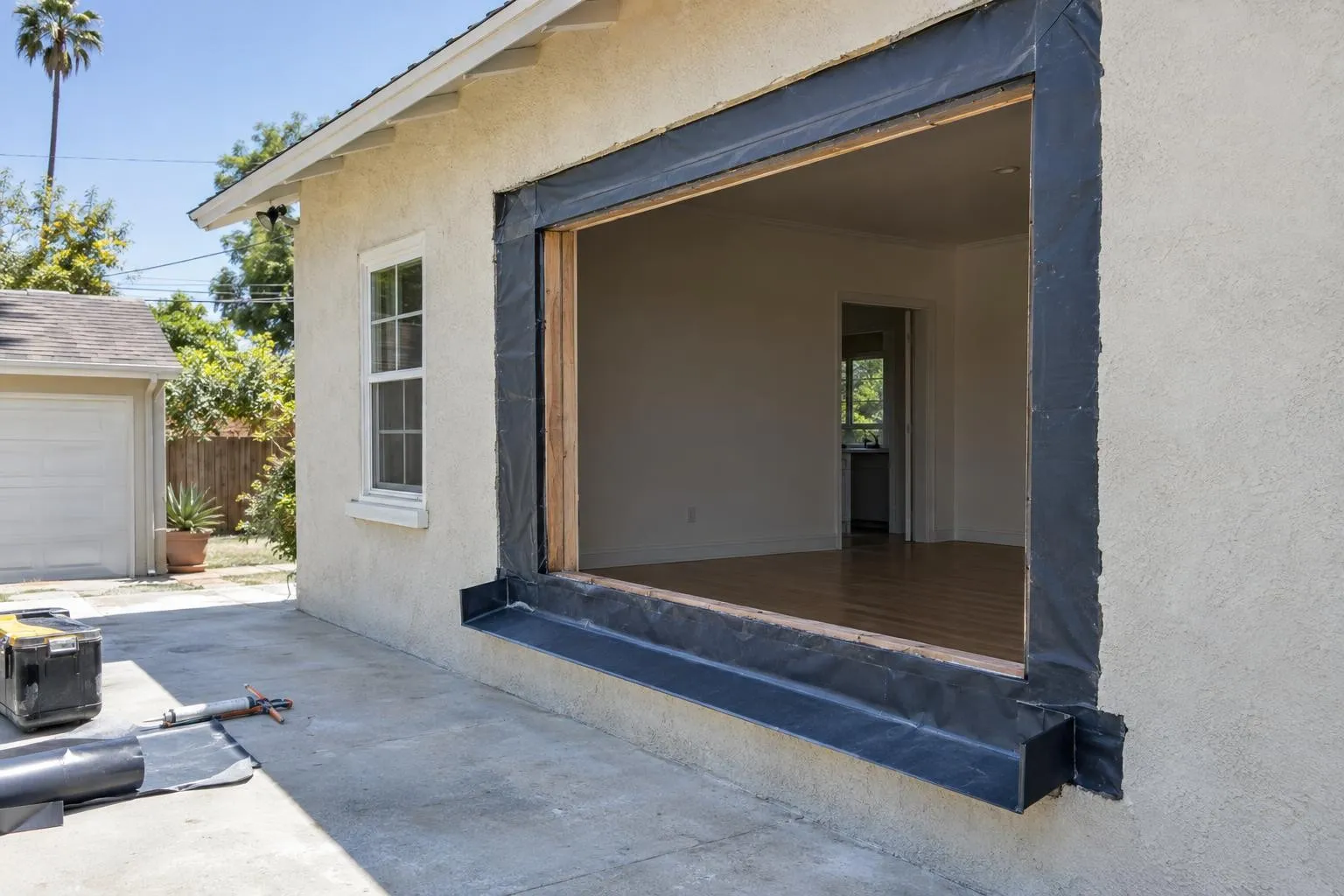
A good sill pan has a turned-up back edge so water can’t run into the house, turned-up ends at the sides of the frame, and a front edge that laps over the outside wall so water drains out. It can be formed metal, molded plastic, or flexible self-adhering flashing. The shape and the overlaps matter more than the material.
The pan also has to tie into the water-resistant barrier. That’s the paper or wrap behind your stucco or siding that sheds water getting through the outer finish. Every layer has to overlap the one below it, like roof shingles, so water always runs outward.
Stucco walls usually end at a weep screed, a metal strip at the bottom of the wall that lets trapped water drain out. At a door on a slab, that path often gets buried or caulked shut, so water collects right where the threshold sits. In older Los Angeles homes, it’s common to find no pan at all, just a wood threshold set in caulk.
You usually can’t confirm a pan without pulling the threshold. If you see nothing but caulk and stucco from outside, assume there isn’t one.
Will a new sweep, weatherstripping, or caulk fix it for good?
They help, and worn ones should be replaced, but they're only the first layer of defense. If there's no sill pan or the outside slopes toward the door, the leak will return once the new seals wear or a strong storm gets past them.
A door sweep is the rubber strip on the bottom of the door. Weatherstripping is the seal around the sides and top. The Los Angeles sun hardens rubber and shrinks caulk, so these wear out faster than people expect.
Seals are meant to stop most of the water, and the sill pan catches the rest. With no pan, every drop that slips by goes straight into the floor and framing. Caulk can even make it worse: a thick bead across the outside of the threshold traps water that already got under it, so the wood stays wet longer.
Treat new seals as a patch that buys you time. A lasting fix deals with what’s under the threshold and what’s outside it. If the leak returns within a season or two of new seals, that’s your answer.
Why do French doors and in-swinging doors leak more?
An in-swinging door closes away from the weather, so wind pushes it away from its seals instead of tighter against them. French doors add another weak spot where the two doors meet, plus two extra bottom corners in the middle that are hard to seal.
The strip where a pair of French doors meet is called the astragal. It covers the gap between the doors and holds a seal. One door usually stays latched with bolts at the top and bottom. If the bottom bolt is worn or misses its hole, that door flexes in the wind and opens a gap right where water collects.
Doors also drift out of line. Hinge screws loosen, heavy glass doors sag, and frames rack out of square. Once the gap along the top gets uneven, the bottom seals stop meeting the sill. If several doors are sticking at once, read our post on signs of foundation settlement before blaming the door.
The usual fixes are simple: adjust the hinges so the door sits square, replace the astragal seal and the corner pads, and raise an adjustable sill to meet the sweep. A badly warped door or a frame that has moved too far needs to be reset or replaced. Switching to an out-swinging door changes the door type, and the city building department decides what review that needs.
What if my patio, stoop, or balcony slopes toward the door?
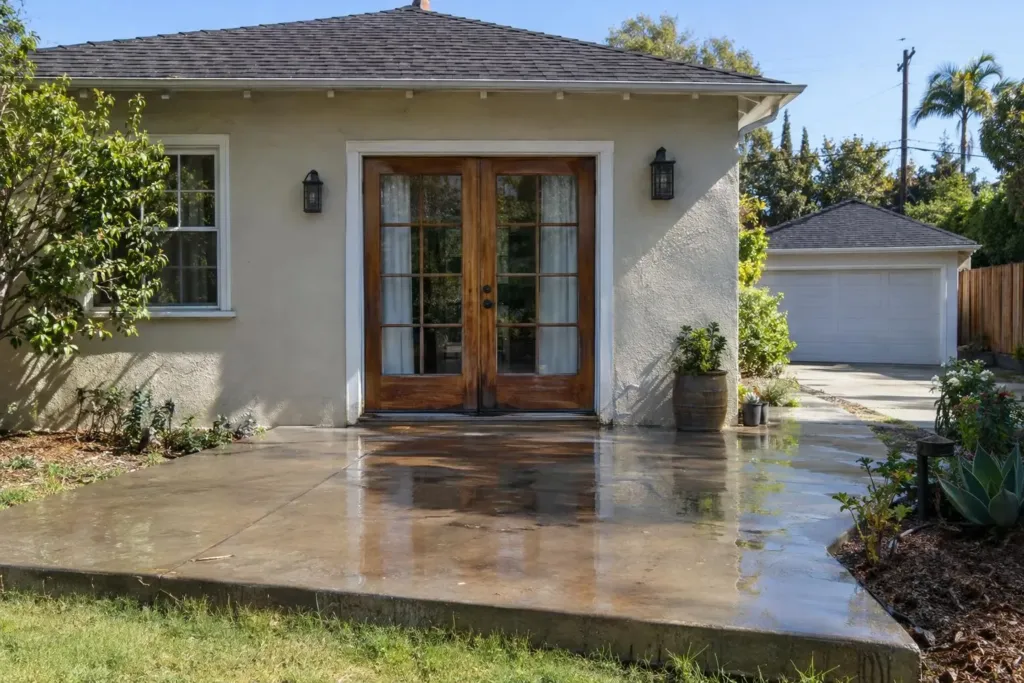
Then no seal or sill pan will keep up for long, because water pools against the threshold every storm. The outside surface needs to slope away, sit lower than the inside floor, or have a drain that catches water before it reaches the door.
This is common on Los Angeles slab homes. The patio was poured after the house, or new concrete or pavers went over the old surface. Each layer raises the outside a little until the step down at the door disappears. Once the outside sits level with the inside floor, water has nowhere to go but in.
To check, pour a bucket of water a few feet from the door and watch where it runs. Look up, too. Overflowing gutters above the door or a downspout emptying next to it can dump far more water at the threshold than rain alone.
A section of patio can be removed and repoured to slope away. A channel drain, a narrow trench with a grate on top, can run across the doorway and carry water to a safe outlet. Lowering the patio to restore a real step down is the most reliable fix where there’s room.
Balcony doors have the same problem from above. If a balcony drains back toward the building, the water that gets under that door can soak the framing that holds the balcony up. When a building’s balconies are inspected, a separate licensed inspector or engineer does that inspection, and if the report calls for repairs, our balcony and exterior stair repair work covers the fix afterward.
Do I need to replace the whole door, or can it be reinstalled with proper flashing?
If the door is sound, square, and seals well, it can usually be removed, the opening flashed correctly, and the same door set back in. Replacement makes sense when the door is warped, the frame bottoms are rotted through, or the glass and hardware are failing.
A lasting repair follows the same basic order either way:
- Remove the inside trim and take out the door unit carefully.
- Cut back the stucco or siding at the sides far enough to reach the water-resistant barrier.
- Repair any rotted subfloor, framing, or frame bottoms.
- Install a sill pan that slopes outward, with a raised back edge and raised ends.
- Lap the side and top flashing into the wall barrier so every layer sheds water outward.
- Set the door back level, plumb, and square.
- Patch the wall finish, then correct the outside slope or add a drain if needed.
Reusing a good door keeps the opening the same size and type, which matters for permits. If the frame has rotted from the bottom up, a new prehung unit is often cleaner than splicing old wood.
In homes built before 1978, door frames and trim may have lead paint. Contractors who disturb it must be certified, contain the work area, and give you the Renovate Right pamphlet first, as the EPA’s lead-safe steps guide explains. Owners doing their own work should still follow lead-safe practices.
How do I know if the wood under the door has rotted?
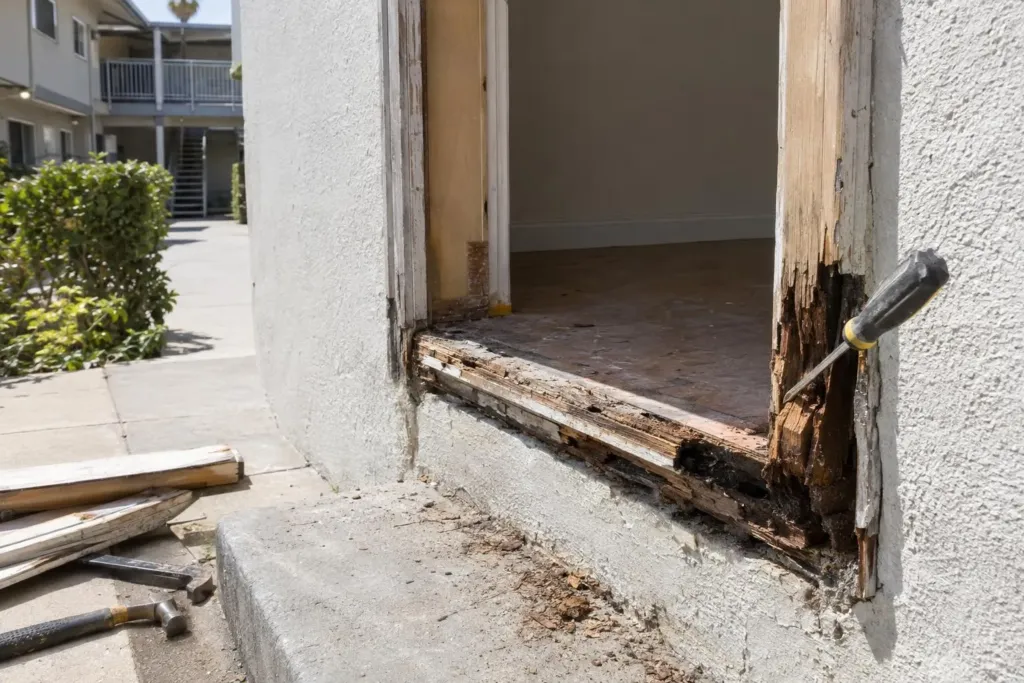
Soft wood at the bottom of the frame, a bouncy or sunken spot in the floor just inside the door, and stained or swollen trim are the usual signs. The only way to be sure is to open it up, because rot under a threshold often looks fine on the surface.
Press a screwdriver into the bottom few inches of the door frame on both sides. Sound wood resists. Rotted wood lets the tip sink in. Paint cracking or bubbling right at floor level usually means wet wood behind it.
On a raised house, go underneath and look up at the floor below the door for dark or crumbling wood. On a slab house, look for flooring that’s cupped or lifting near the door. The wood plate at the bottom of the wall sits on the slab and soaks up water fast when there’s no sill pan.
Years of water leaking under exterior door openings also invites mold, often hidden behind the bottom of the drywall, and termites, which go for damp, softened wood. If you see mud tubes, small piles of pellets, or wood that sounds hollow, have it inspected before the repair is closed up. When rot reaches the framing, that wood has to be replaced before new flashing goes in.
Do I need a permit in Los Angeles to replace a door or repair water damage?
In the City of Los Angeles, LADBS requires a permit for construction, alteration, or repair, and a same-size, same-type door replacement is listed as an express permit with no plan check. Water damage or dry rot repair below a set share of the building's value also has an express path, while changing the opening size or door type goes through plan check.
An express permit can be issued without waiting for plan review. The LADBS express permit list covers same-size, same-type residential door replacement plus water damage, termite, and dry rot repair under a set limit. If the rot is bigger than expected, the scope can grow, and LADBS decides what review and inspections the job needs and how long that takes.
That same list says replacement doors and windows in residential buildings of three stories or less need NFRC-labeled, certified dual glazing. Check for the label before buying a new French door.
The LADBS Homeowner’s Guide to Permits and Inspections notes that permits create records that matter when you sell or refinance. Outside the City of Los Angeles, your own city’s building department sets the rules.
Landlords: a leaking door can show up in a housing inspection. LADBS guidance on obtaining permits to resolve orders says the current owner is responsible for the repair, even if an earlier owner or tenant caused it.
When should I call a licensed contractor about a leaking exterior door?
Call a licensed contractor when the leak comes back after new seals and caulk, when the wood at the bottom of the frame or floor feels soft, or when the patio or balcony outside sits level with your floor. Get help, too, if water shows up away from the door or the door opens onto a balcony. These point to a flashing, framing, or drainage problem a sweep can’t fix.
Before hiring anyone, look up their license on the Contractors State License Board website. Villa Bella Construction is licensed and insured. We start by finding where the water really gets in, then recommend the safest targeted repair the city will accept, with the right permit, without tearing out more than the problem requires.
“If you want an honest, licensed contractor in the LA area, I highly recommend them!” — Robert H., Google review
Villa Bella Construction is a licensed and insured general contractor, building in Los Angeles for 25 years. CSLB License #1093648 (B – General Building).
Planning a construction or remodeling project in Los Angeles?
Schedule a Free On-Site Consultation or call +1 (323) 825-9798.