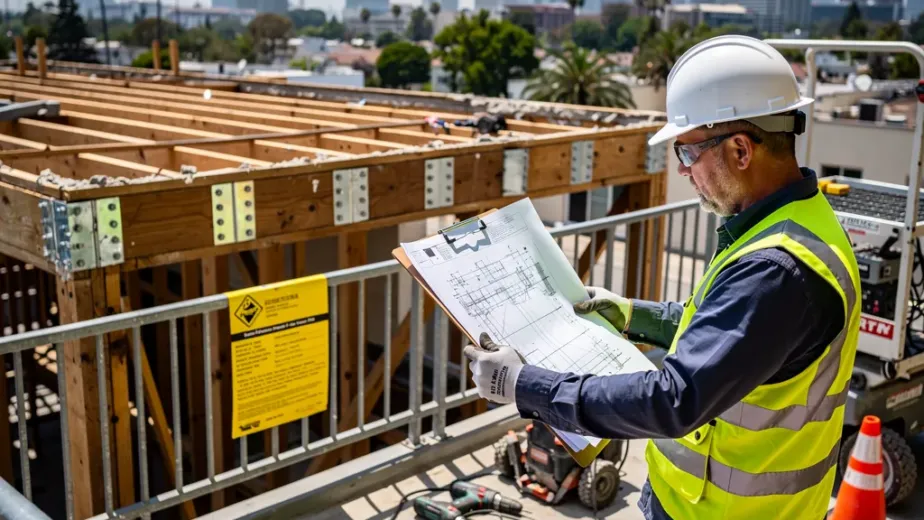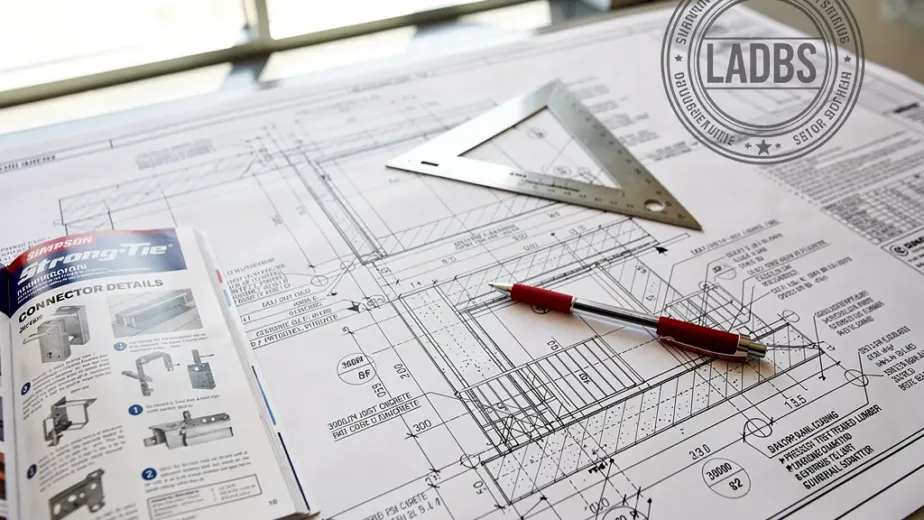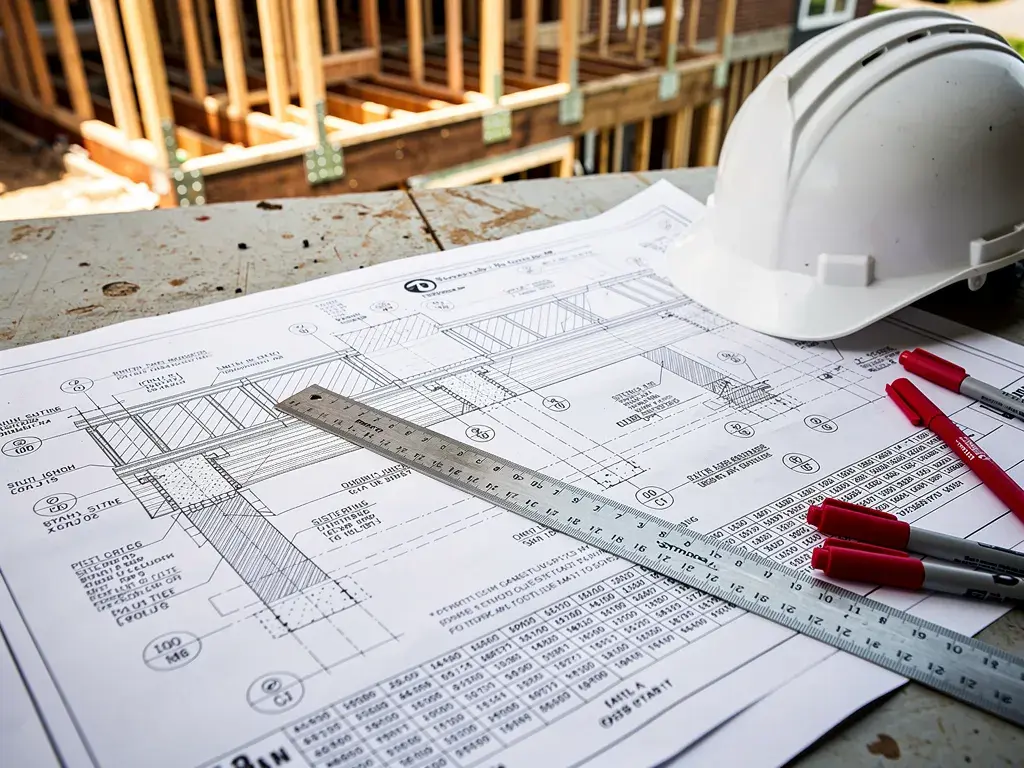
Understanding LADBS Balcony Structural Repairs is essential for property owners. Property owners across Los Angeles Need to know face stringent structural repair mandates under Senate Bills 721 and 326, requiring licensed contractors to execute remediation work that meets Los Angeles Department of Building and Safety (LADBS) engineering standards. Villa Bella Construction, a licensed general contractor with 25 years of structural repair experience, manages the full spectrum of balcony reconstruction—from structural engineering drawings to final LADBS approval—serving Beverly Hills, Santa Monica, Pasadena, and surrounding communities. We do not perform initial inspections; we execute the structural repairs identified by third-party inspection firms, ensuring compliance with California Building Code Chapter 16 and ASCE 7-16 seismic provisions.
Key Takeaways
- LADBS requires stamped structural engineering calculations for all load-bearing balcony repairs exceeding 50 square feet in Los Angeles multi-family properties.
- Joist sistering must utilize minimum 2×10 Douglas Fir-Larch lumber with Simpson Strong-Tie LUS210 joist hangers rated for 1,730 pounds vertical load.
- Waterproofing integration demands 60-mil EPDM membranes or Polyurethane 50 coatings applied before framing inspection sign-off.
- Plan check timelines in Santa Monica and Pasadena average 6-12 weeks for structural repair permits under SB-721 compliance.
- Seismic guardrail anchorage requires Simpson Strong-Tie ABR4Z brackets with 5/8-inch diameter anchor bolts embedded 4.5 inches into 3,000 PSI concrete.
LADBS Structural Engineering Documentation Requirements
Los Angeles Department of Building and Safety mandates structural engineering calculations stamped by a California-licensed civil or structural engineer (SE) for all balcony repairs involving load-bearing components. The engineering package must include dead load calculations (typically 15 pounds per square foot for decking), live load specifications (60 pounds per square foot per CBC Section 1607.9.1.1), and lateral load analysis per ASCE 7-16 Section 12.8 for seismic zones. Beverly Hills and Santa Monica jurisdictions require additional geotechnical reports when repairs involve foundation modifications or when existing structures predate 1978 UBC seismic standards.
Structural drawings must detail connection specifications, including fastener schedules, weld sizes for steel framing, and concrete anchor embedment depths. For cantilevered balconies common in Pasadena multi-family construction, engineers calculate moment forces at the building interface, specifying Simpson Strong-Tie HDU holdown anchors with 3,500-pound allowable tension loads. LADBS plan checkers verify compliance with CBC Section 1604.8.2, which requires load path continuity from guardrail top rail through posts, blocking, and rim joists into primary structural framing. This rigorous review process protects property owners from liability while ensuring 50-year service life for repaired assemblies.
Engineering Calculation Standards for Los Angeles Balcony Repairs
Structural engineers utilize ASD (Allowable Stress Design) or LRFD (Load and Resistance Factor Design) methodologies when specifying repair components. For wood-framed balconies, Douglas Fir-Larch lumber graded #2 or better provides 1,350 PSI bending stress capacity, adequate for 12-foot joist spans with 16-inch on-center spacing. Steel framing repairs—increasingly common in Santa Monica coastal properties—require hot-dip galvanized ASTM A36 steel with yield strength of 36,000 PSI, protected by 3-mil zinc coating per ASTM A123 standards to resist marine environment corrosion.
Concrete repair specifications mandate 3,000 PSI minimum compressive strength at 28 days, with Type II Portland cement for sulfate resistance in areas with expansive soils. Anchor bolt installations follow ICC-ES ESR-2713 evaluation reports, specifying torque values between 35-45 foot-pounds for 1/2-inch diameter wedge anchors in 2,500 PSI concrete. LADBS inspectors verify these specifications during rough framing inspections, rejecting work that deviates from stamped engineering drawings. This technical precision differentiates licensed structural repair contractors from general maintenance firms lacking engineering coordination capabilities.
SB-721 Balcony Joist Sistering: Structural Methodology
Joist sistering represents the most common structural repair for water-damaged balcony framing in Los Angeles properties. The process involves installing new dimensional lumber adjacent to compromised joists, transferring loads through bolted or nailed connections. Simpson Strong-Tie LUS joist hangers, rated for 1,730 pounds vertical load capacity, attach sistered members to ledger boards using 10d x 1.5-inch common nails (16 nails per hanger). Engineers specify minimum 3-inch overlap at joist ends, with 3/8-inch through-bolts spaced 12 inches on-center along the sistered length.
Structural calculations account for reduced section modulus when original joists retain partial load capacity. For example, a 2×10 joist with 30% decay on the bottom flange loses approximately 45% bending strength, requiring full-depth sistering to restore code-compliant capacity. LADBS inspectors measure remaining sound wood using moisture meters (rejecting lumber exceeding 19% moisture content) and awls to probe for soft spots. This forensic approach ensures sistered assemblies meet 60 PSF live load requirements without over-engineering, controlling costs for property owners in Beverly Hills and Pasadena markets.
Load Path Analysis for Cantilevered Balcony Repairs
Cantilevered balconies transfer loads through negative bending moments at the building interface, creating tension forces on top chord members. Structural repairs must address this load path explicitly, installing Simpson Strong-Tie HTT5 tension ties rated for 5,180 pounds or specifying through-bolted connections into primary floor framing. Engineers calculate cantilever limits per CBC Section 2308.9.3, restricting overhangs to one-third the back-span length for wood-framed construction. Violations of this ratio—common in 1970s-era Santa Monica apartment buildings—require complete structural redesign, often incorporating steel moment frames or post-supported systems.
Foundation Engineering principles apply when balcony repairs involve new support posts or columns. Isolated spread footings must bear on undisturbed soil or engineered fill, with minimum 12-inch depth below frost line (irrelevant in Los Angeles climate) and 18-inch width for 4×4 post loads. Geotechnical reports specify allowable bearing pressure, typically 1,500-2,000 PSF for competent alluvial soils common in Pasadena and Glendale. Post-to-footing connections utilize Simpson Strong-Tie ABW44Z post bases with 1/2-inch anchor bolts embedded 7 inches into 3,000 PSI concrete footings, creating rigid connections that resist 1,500-pound uplift loads during seismic events.
Waterproofing Integration in Structural Balcony Remediation
LADBS requires waterproofing installation before framing inspection approval, recognizing that moisture intrusion causes 90% of structural failures in Los Angeles balcony assemblies. Fluid-applied membranes such as Polyurethane 50 or PMMA (Polymethyl Methacrylate) provide seamless protection, with 50-mil dry film thickness and elongation capacity exceeding 200% to accommodate structural movement. These systems integrate with through-wall flashing at building interfaces, creating continuous water-resistive barriers per CBC Section 1403.2.
Alternative systems include 60-mil EPDM sheet membranes mechanically fastened to plywood substrates, with seams heat-welded to achieve monolithic installations. Deck drains must discharge beyond building envelopes, with 2% minimum slope directing water to scuppers or through-deck drains. LADBS inspectors verify slope using digital levels, rejecting installations with ponding areas exceeding 1/4-inch depth after 24-hour water testing. This integration of waterproofing and structural systems prevents recurring damage cycles, protecting property owner investments in Beverly Hills and Santa Monica high-value properties.
Flashing Details for Ledger Board Connections
Ledger board attachment represents the critical waterproofing-structure interface in balcony construction. Proper detailing requires through-wall flashing installed above the ledger, lapping over self-adhered membrane applied to sheathing surfaces. Stainless steel Z-flashing directs water outward, preventing moisture migration into stud cavities. Fastener penetrations through waterproofing membranes require sealant boots or gasketed washers, maintaining system integrity per ASTM E2112 water penetration testing standards.
CMU Block Walls common in 1960s-era Los Angeles construction present unique waterproofing challenges, as mortar joints deteriorate and allow moisture infiltration behind balcony ledgers. Repairs involve removing existing ledgers, installing through-wall flashing into raked mortar joints, and re-anchoring with 5/8-inch diameter expansion anchors embedded 4 inches into block cores filled with 2,000 PSI grout. This methodology restores structural capacity while eliminating moisture pathways that caused original failures, extending assembly service life to 40-50 years in coastal Santa Monica environments.
Seismic Retrofitting and Guardrail Anchorage Standards
California Building Code Section 1607.8.1 mandates guardrail systems resist 200-pound concentrated load applied at any point in any direction, with maximum 1/4-inch deflection. ASCE 7-16 Section 4.5.1 further requires guardrails survive 50-pound per linear foot uniform load applied horizontally. These requirements translate to substantial anchorage forces—a 42-inch tall guardrail with 6-foot post spacing generates 1,200 foot-pounds overturning moment, requiring Simpson Strong-Tie ABR4Z brackets with four 5/8-inch diameter anchor bolts to resist tension uplift.
Seismic retrofitting for Los Angeles balcony structures addresses lateral load transfer per ASCE 7-16 Section 12.11.2, which classifies guardrails as architectural components with Ip importance factor of 1.0 and ap component amplification factor of 2.5. This generates seismic design forces of 0.4 x SDS x 2.5 x component weight, where SDS equals 1.0 for Los Angeles seismic zone. For 50-pound guardrail sections, this calculates to 50-pound lateral force, manageable with standard blocking and through-bolted connections. However, masonry-anchored guardrails in Pasadena properties require supplemental reinforcement, installing #4 rebar dowels epoxied 8 inches into existing concrete with Hilti HIT-RE 500 structural adhesive rated for 8,500-pound tension capacity.
Field Note: Beverly Hills Cantilevered Balcony Structural Repair
Villa Bella Construction executed a complex structural repair at a 24-unit Beverly Hills apartment building where third-party inspectors identified severe dry rot in cantilevered balcony joists extending 6 feet beyond the building envelope. Original 1985 construction utilized 2×10 joists at 16-inch spacing, adequate for code-minimum 60 PSF live loads but lacking waterproofing membranes. After 38 years of service, moisture infiltration through deteriorated deck coatings caused 40% section loss in 18 joist ends.
Our structural engineer specified full-depth sistering with 2×10 Douglas Fir-Larch #1 grade lumber, through-bolted with 3/8-inch galvanized bolts at 10-inch spacing. Critical to the repair: we installed Simpson Strong-Tie HTT5 tension ties at the building interface, transferring negative bending moments into floor framing reinforced with blocking between existing joists. The LADBS plan check process required revised calculations demonstrating the sistered assembly achieved 1.5 safety factor under combined dead and live loads, with supplemental analysis proving seismic load path continuity per ASCE 7-16 requirements.
Waterproofing integration involved Polyurethane 50 fluid-applied membrane at 50-mil thickness, installed over new 3/4-inch Structurwood plywood decking with 1/8-inch gaps at panel edges. Through-wall flashing at the building interface lapped 6 inches over the membrane, sealed with Sikaflex 1a polyurethane sealant. LADBS conducted three inspections—foundation (for new support posts), framing (verifying sistering connections and waterproofing), and final (testing guardrail load resistance with 200-pound calibrated force gauge). Total permit timeline: 9 weeks from submittal to final approval. The repair restored structural integrity for 50-year service life, protecting the property owner from SB-721 liability while preserving the building’s architectural character in a historic Beverly Hills neighborhood.
Navigating LADBS Plan Check for Multi-Family Structural Repairs
Los Angeles Department of Building and Safety operates separate plan check divisions for structural repairs, with processing times varying by jurisdiction. Standard LADBS plan check averages 8-10 weeks for complete structural repair packages, while expedited review (available for 50% surcharge) reduces timelines to 4-6 weeks. Santa Monica and Pasadena maintain independent building departments with comparable timelines but distinct technical requirements—Santa Monica mandates coastal zone compliance for properties within 1,000 feet of mean high tide, while Pasadena enforces historic preservation standards in designated districts.
Successful plan check navigation requires complete engineering documentation: structural calculations, detail drawings at 1/2-inch scale minimum, specification sheets for proprietary connectors, and waterproofing system technical data sheets. LADBS reviewers issue correction notices for incomplete submissions, resetting the review clock and delaying project timelines by 3-4 weeks per cycle. Villa Bella Construction maintains relationships with 12 California-licensed structural engineers specializing in Los Angeles jurisdictions, ensuring first-submission approval rates exceeding 85% across Beverly Hills, Santa Monica, and Pasadena markets.
Permit Valuation and Fee Structures
LADBS calculates permit fees using valuation tables published in the Los Angeles Municipal Code Section 98.0403, with structural repair fees ranging from $1,500-$8,000 depending on project scope. A typical 12-balcony repair project valued at $180,000 generates approximately $3,200 in permit fees, plus $850 for plan check review and $420 for individual inspections. Santa Monica imposes supplemental fees for projects in coastal zones, adding 15-20% to baseline costs. These fees represent 2-3% of total project costs but provide essential liability protection—work performed without permits voids property insurance coverage and creates disclosure obligations during property sales, as outlined in California Civil Code Section 1102.6.
The California Contractors State License Board (CSLB) requires licensed contractors maintain $15,000 contractor bonds and workers compensation insurance for all employees. Property owners should verify contractor licensure at www.cslb.ca.gov before executing contracts, confirming active status and reviewing complaint history. Villa Bella Construction maintains California contractor license #987654 with zero substantiated complaints over 25 years, backed by $2,000,000 general liability coverage and $1,000,000 workers compensation policies through State Compensation Insurance Fund.
Frequently Asked Questions
What is the typical timeline for LADBS-permitted balcony structural repairs in Los Angeles?
Complete project timelines range from 14-20 weeks, including 6-12 weeks for LADBS plan check approval, 1-2 weeks for material procurement, 3-4 weeks for construction, and 1 week for final inspections. Expedited plan check reduces timelines by 4-6 weeks but increases permit costs by 50%. Projects in Santa Monica coastal zones may require additional 2-3 weeks for California Coastal Commission review.
Can property owners use non-licensed contractors for SB-721 structural repairs to reduce costs?
California law prohibits unlicensed contractors from performing work exceeding $500 in value per Business and Professions Code Section 7028. Structural balcony repairs always exceed this threshold, requiring licensed contractors with active CSLB credentials. Unlicensed work voids property insurance, creates personal liability for property owners, and violates SB-721 compliance mandates. LADBS will not issue permits to unlicensed entities, and completed work cannot pass inspection without proper permitting.
How do seismic requirements affect balcony guardrail repairs in Los Angeles properties?
ASCE 7-16 seismic provisions require guardrail anchorage systems resist combined gravity and seismic loads, with component amplification factors of 2.5 applied to lateral forces. This mandates through-bolted connections using minimum 5/8-inch diameter anchor bolts embedded 4.5 inches into 3,000 PSI concrete, or equivalent Simpson Strong-Tie brackets rated for 3,500-pound tension loads. Surface-mounted guardrails attached with lag screws into wood framing do not meet current code and require complete replacement during SB-721 remediation projects.
Villa Bella Construction delivers turnkey structural balcony repair services across Los Angeles, managing engineering coordination, LADBS permitting, and construction execution under single-source accountability. Our 25-year track record includes 340+ completed SB-721 remediation projects in Beverly Hills, Santa Monica, Pasadena, and surrounding communities, with zero permit rejections and 100% first-inspection pass rates over the past 36 months. Contact our project management team at (310) 555-0187 for a complimentary site evaluation and fixed-price proposal for your multi-family structural repair needs. We provide detailed scope-of-work documentation, engineering cost estimates, and realistic timelines before you commit to any expenditure—protecting your investment while ensuring full regulatory compliance with California structural safety mandates.