
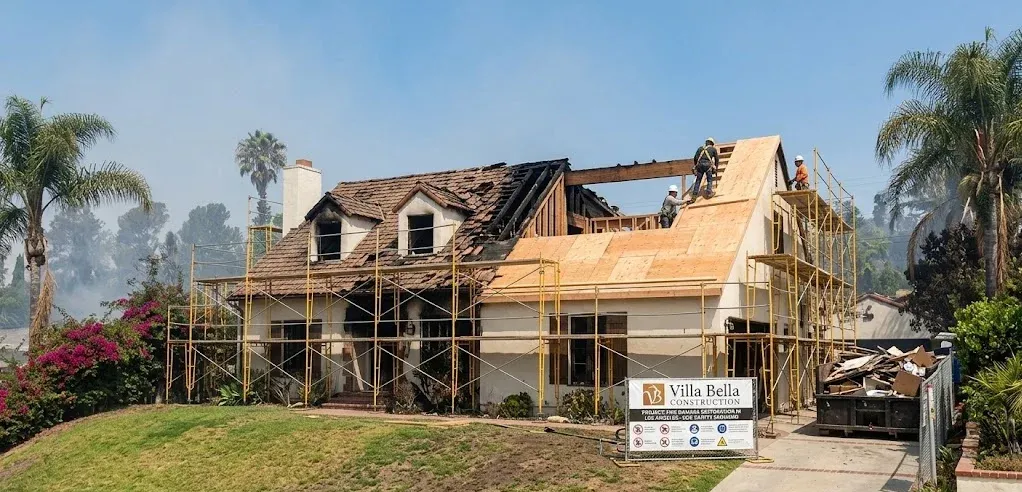
Fire damage restoration in Los Angeles requires careful assessment, safe stabilization, and full compliance with building codes and insurance requirements. Villa Bella Construction handles structural repair and full reconstruction for homeowners and property owners across Los Angeles, Glendale, Pasadena, Santa Monica, Century City, Venice, Sierra Madre, and surrounding areas—from emergency stabilization and board-up through permits, rebuild, and final inspection.
Why Fire Damage Goes Beyond Cosmetic Repair
After a fire, the visible damage is only part of the picture. Heat, smoke, and water from firefighting can weaken framing, damage electrical and plumbing systems, and compromise roofing and foundations. Structural members that look intact may have lost strength and need reinforcement or replacement.
In Los Angeles, Glendale, and Pasadena, any significant structural repair or rebuild requires permits and inspections. Skipping proper assessment and repair can create safety risks and problems with insurance, resale, and future claims. A qualified contractor works with engineers and the building department so the rebuild is safe and code-compliant.

First Steps After a Fire: Safety and Stabilization
Immediately after a fire, priorities are safety and preventing further damage:
- Site safety – The property may be unstable. Only enter when authorities allow and with appropriate precautions.
- Emergency stabilization – Temporary shoring, bracing, or board-up may be needed to prevent collapse and secure the site.
- Insurance and documentation – Your insurer will typically send an adjuster. Document damage with photos and notes and keep records of all conversations and correspondence.
- Hazardous debris – Asbestos, lead paint, or other hazards may be present in older Los Angeles homes. Removal and disposal must follow local and state rules.
Villa Bella Construction can provide emergency stabilization and work with your insurance carrier and engineers to define the full scope of repair or rebuild.
Assessing Structural Damage and Defining the Scope
Before rebuilding, the structure must be properly evaluated. An engineer or qualified contractor will look at:
- Framing – Charred, heat-damaged, or water-logged wood or steel that has lost load-bearing capacity.
- Roof and ceiling – Trusses, rafters, and decking that may be compromised by heat or collapse.
- Foundations – Cracking, shifting, or spalling that could affect the stability of the rebuild.
- Utilities – Electrical, plumbing, and HVAC systems that are damaged or unsafe.
The assessment drives the repair scope: partial repair versus full reconstruction. That scope, in turn, drives permits, engineering, and what the insurance policy will cover. We help document conditions and align the rebuild scope with the engineer’s and insurer’s requirements.
Permits and LADBS for Fire Rebuilds
Structural repair and reconstruction after a fire almost always require permits. In Los Angeles, LADBS reviews plans and inspects work at defined stages. Neighboring cities such as Glendale, Pasadena, and Santa Monica have their own permit and inspection processes.
Typical permit steps include:
- Plan review – Structural, architectural, and sometimes mechanical/electrical/plumbing plans.
- Demolition and rough inspections – As work progresses, inspectors verify framing, utilities, and other concealed work.
- Final inspection – Confirmation that the rebuilt structure meets code and is safe for occupancy.
We coordinate permit applications, plan revisions, and inspections so the rebuild stays on track and meets all code requirements.
Working With Insurance on Fire Restoration
Insurance policies and claim processes vary. In general:
- Document everything – Photos, reports, and written communication with the carrier and adjuster.
- Scope alignment – The contractor’s scope should match what the engineer and insurer have approved.
- Supplemental claims – If additional damage or code-related work is found during construction, we can help document and submit supplements.
- Direct communication – We can work with your adjuster to clarify scope, pricing, and timelines so there are fewer surprises.
We do not act as your public adjuster or attorney, but we can provide clear documentation and scope details that support your claim.
What Affects Fire Restoration Cost and Timeline
Fire restoration costs and schedules depend on:
- Extent of damage – Localized repair versus full or partial rebuild.
- Structural and mechanical scope – New framing, roof, foundations, and utilities.
- Permits and plan review – Complexity and city workload.
- Material and labor availability – Supply chains and contractor schedules.
- Code upgrades – Current codes may require upgrades (electrical, energy, accessibility) that add to scope and cost.
An itemized scope and estimate from your contractor, aligned with the engineer’s and insurer’s requirements, helps you understand cost drivers and plan for contingencies.
How Villa Bella Construction Manages Fire Restoration
Our fire damage restoration process typically includes:
- Assessment and scope – We review the damage, engineer’s findings, and insurance scope to define the work.
- Stabilization and securing – When needed, we provide shoring, board-up, and site security.
- Permits and planning – We prepare and submit permit applications and coordinate with LADBS or the local city.
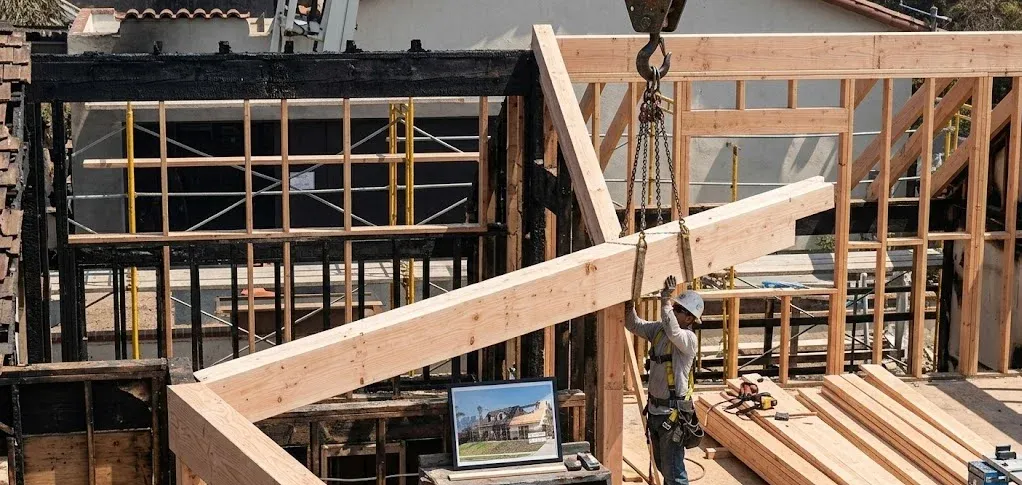
- Demolition and structural rebuild – We remove damaged materials and rebuild framing, roof, and load-bearing elements per approved plans.
- Rough and finish work – We complete mechanical, electrical, plumbing, insulation, drywall, and finishes.
- Final inspection and walk-through – We obtain final sign-off and review the completed work with you.
We focus on rebuilding correctly and documenting the work for both code compliance and your insurance file.


