Key Takeaways
- Keep people away from the wall today, then have a licensed engineer find the real cause before anyone picks repair or rebuild.
- A permitted wall that failed inspection goes back to the inspector on that permit. An unpermitted wall cited by Code Enforcement follows the Order to Comply.
- Work from the date printed on your order, ask for an extension in person if you need one, and get the correction permitted, inspected and signed off.
If your retaining wall failed inspection or the city cited it as unsafe, the path forward is the same in spirit. You make the area safe, a licensed engineer finds what’s really wrong, the fix gets a permit, and the city inspects the work until it signs off. What changes is who you answer to and how tight your deadline is. Below, we walk through each step the way we’d explain it to a neighbor standing in your backyard. The details here follow the Los Angeles Department of Building and Safety (LADBS), which covers only the City of Los Angeles. If you live in another city, its own building department runs the process, so check its rules.
My retaining wall failed inspection. Is that different from a Code Enforcement order?
Yes. A wall that failed an inspection on an open permit is a construction issue you fix and show the same inspector. A wall cited by Code Enforcement, usually an older or unpermitted wall, comes with an Order to Comply and a deadline.
Start by reading the paper you got. A correction notice from a building inspector during construction means the work on your permit doesn’t match the approved plans or code yet. Your contractor fixes the items listed, then calls that inspector back.
An Order to Comply is different. It’s a formal notice that says what’s wrong, what you must do, and the date it must be done. The city may also call a wall substandard, which simply means it’s in a condition the city considers unsafe. According to LADBS guidelines for permits and inspections, retaining walls built without permits that receive Orders to Comply are inspected by the Code Enforcement Bureau, not the regular inspection divisions.
That matters because you’ll be talking with a Code Enforcement inspector the whole way through. Keep their name, phone number and case number in one place. Every call, email and inspection should reference that case.
Is the wall dangerous right now, and what should I do today?
It might be, and you shouldn't wait for drawings to find out. Keep people away, take water off the slope, and have a qualified engineer or contractor look at it quickly.
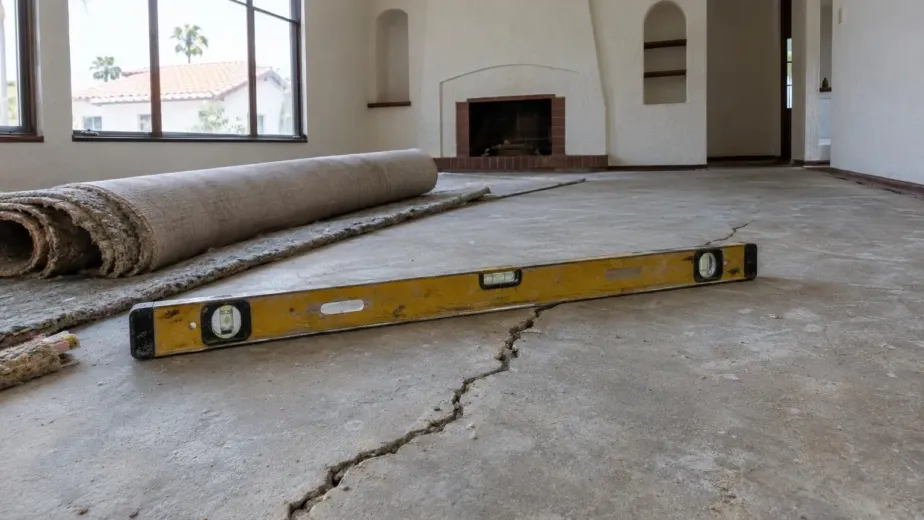
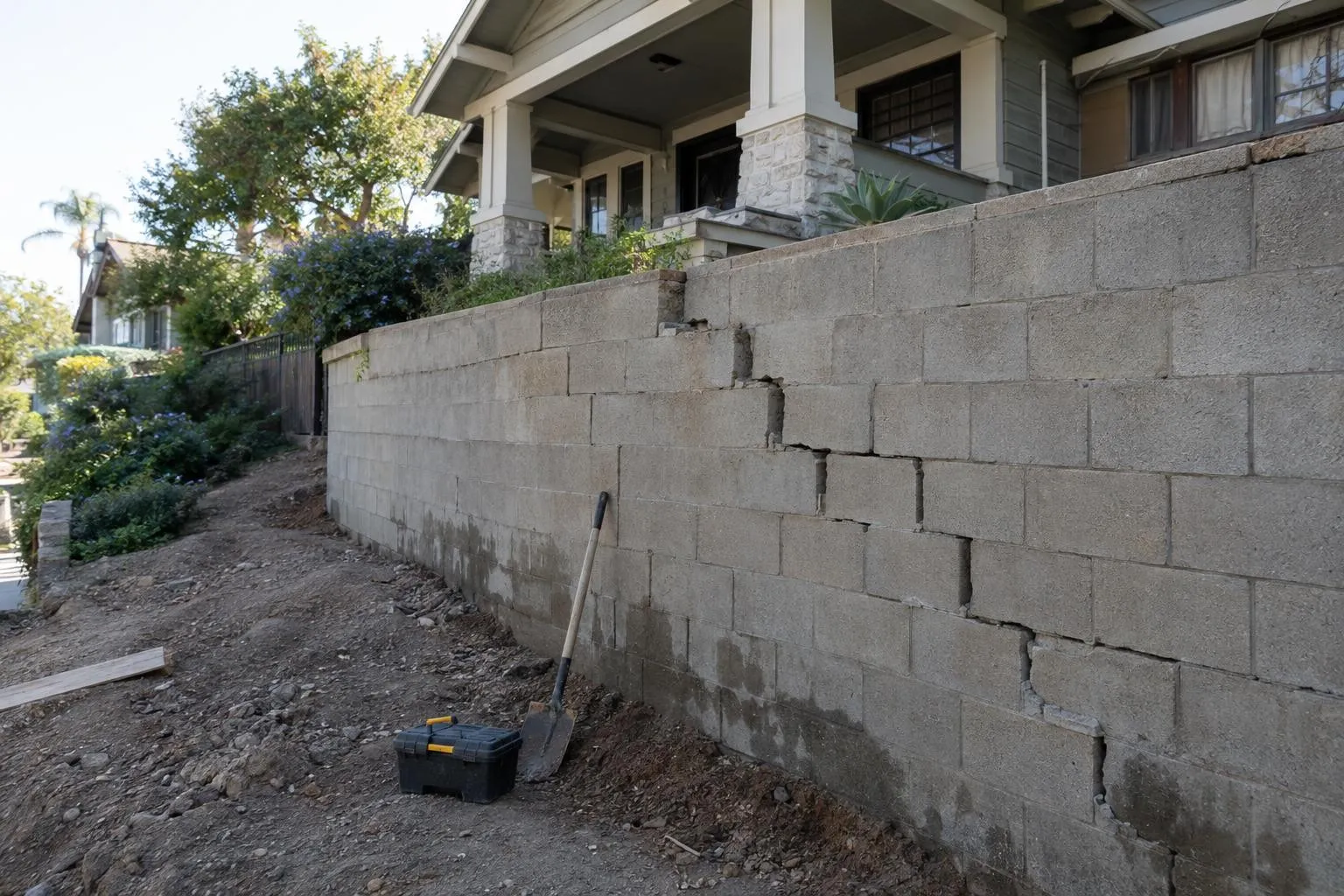
Watch for fresh cracks, a face that bulges outward, a wall that tilts more each week, wet soil seeping at the base, or cracks opening in the ground behind it. In older Los Angeles hillside yards, walls often lean slowly for years and then move fast after a heavy rain.
Steps you can take now:
- Rope off the area below the wall and keep kids, pets and tenants out.
- Cover the slope above with tarps so rain doesn’t soak in.
- Point downspouts away from the wall and shut off sprinklers above it.
- Move cars, firewood and anything heavy away from the top of the wall.
- Ask about temporary shoring. Shoring is a set of braces that holds the wall or soil in place until the permanent fix is built.
If the wall is actively moving toward a home, a street or a neighbor’s yard, call 911 and get everyone clear. If you rent out a unit and the wall threatens it or blocks the way in, tell your tenants in writing and check with the Los Angeles Housing Department about your duties as a landlord.
How long do I have to fix it, and can I get more time or appeal?
Your deadline is the compliance date printed on your own order, not a number from a website. If you need more time, ask before the date passes. The order should also explain your right to appeal.
Deadlines vary from case to case, so ignore anyone who quotes a standard number of days. Read the order front and back. It lists the compliance date, the inspector, and the Code Enforcement office handling your case.
Real retaining wall work takes longer than most people expect. An engineer has to visit, the soils may need testing, plans get drawn, and the city reviews them before a permit is issued. If that can’t fit inside your compliance date, ask early. LADBS says an extension must be requested in person at the Code Enforcement office named on your order.
Bring proof that you’re moving: a signed engineer proposal, a contractor’s scope, or plans already submitted. The city decides whether to grant more time, so don’t assume it will. If you believe the order is wrong, follow the appeal steps written on it and keep copies of everything you file.
What happens if I miss the compliance date?
Missing it can bring extra fees and late charges. The city can also record the order against your property, which follows the house when you sell or refinance.
The LADBS Code Enforcement Bureau fees explanation says a non-compliance fee may be charged when an owner misses the compliance date. Late charges can stack on top of unpaid fees. The same sheet says the best way to avoid that fee is to correct the violations and contact the inspector to arrange an inspection.
Recording is possible, though not automatic. When an order is recorded, it shows up in title searches, so buyers, lenders and escrow officers will see it. Clearing it later takes the same work you would have done anyway, plus extra paperwork.
The practical lesson is simple. Stay in touch with your inspector, even when the news is “we’re still waiting on plan check.” A quiet owner looks like an owner who’s ignoring the order.
Do I need a structural engineer, a geotechnical engineer or a surveyor?
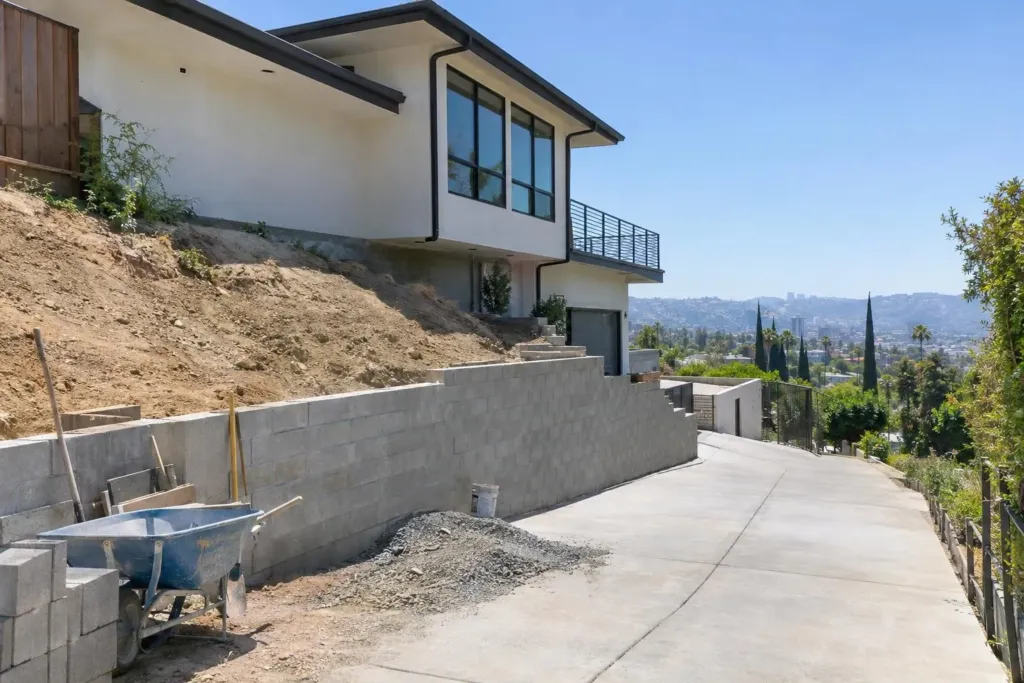
Most cited walls need at least a licensed engineer to judge the wall and design the fix. Hillside walls usually need a geotechnical engineer too. Walls near the property line often need a surveyor.
A structural engineer designs the wall itself: footing size, steel, block or concrete. A geotechnical engineer is a soils engineer who studies how the ground and water behind the wall behave, which is often the real story on a slope. The city may ask for a soils report before it approves the plans. You can check any engineer’s or surveyor’s license with the California Board for Professional Engineers, Land Surveyors, and Geologists.
If the wall sits on or near the line, a survey shows whose land it’s on. That affects who’s responsible, whether you need your neighbor’s permission to work from their side, and how the new wall gets placed. We cover that side in our article on who fixes a leaning property line wall. Who pays depends on the facts and sometimes the law, so talk with an attorney if you and your neighbor disagree.
Call your insurance company early, too. Whether a policy pays for a failed wall depends on the policy wording and the cause, so read yours and get the answer in writing.
Can the wall be repaired, or does it have to be torn down and rebuilt?
It depends on what the engineer finds. Some walls only need their drainage corrected, while others have bad footings or rusted steel and must be replaced. The engineer of record and the city make the final call.
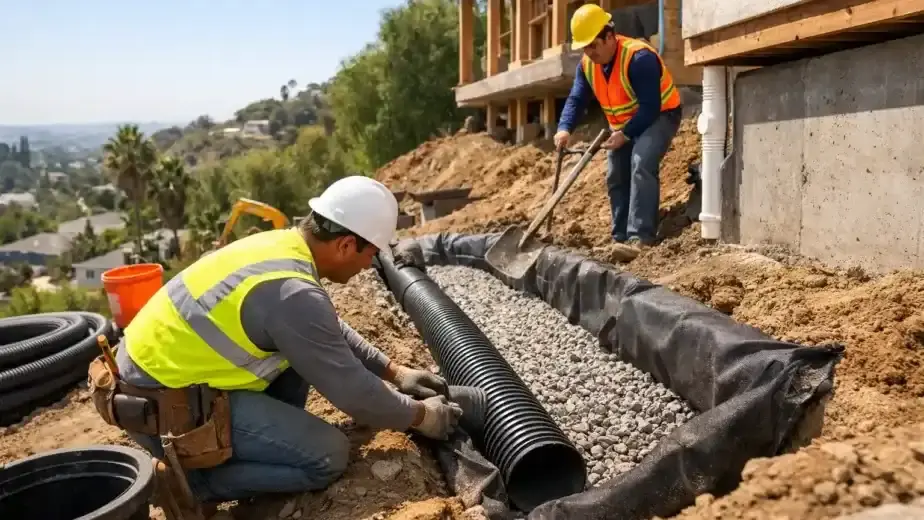
Most failures we see trace back to water. Hydrostatic pressure is the push of water trapped behind a wall, and it can be far stronger than the soil alone. Blocked or missing drains, downspouts dumping behind the wall, and sprinklers running on the slope all add to it. Our guide to retaining wall drainage explains how a working drain system is put together, and our post on why retaining walls fail on Los Angeles hillsides covers the other common causes.
One job shows why the cause matters. A previous contractor had built a short wall, roughly three to four feet tall, from the city’s standard small-wall detail, and an inspector ordered the whole thing torn down. The homeowner brought us in to handle the city side and the ordered demolition. When we looked closely, the wall itself was mostly sound, and the missing drainage was the real problem. We proposed drilling weep holes, small drain openings through the wall, about four inches wide and roughly every six to seven feet, so water couldn’t build up behind it. A second inspector reviewed that plan and agreed. The homeowner avoided demolition and paid for a small repair instead of a full rebuild.
That won’t fit every wall. A cracked footing, rotted wood lagging or a wall leaning far out of plumb may leave rebuilding as the only safe answer. Our approach at Villa Bella Construction is to find the real cause first, then recommend the safest targeted repair the city will accept. You can read more on our retaining wall and foundation repair page.
Does the fix need a permit if the old wall never had one?
Expect so. A wall cited by the city is usually corrected under a new permit, even when the original was built without one. Confirm the exact rules for your parcel with LADBS, because online height rules often contradict each other.
Don’t rely on a height number you read online. Contractor websites quote different thresholds measured in different ways. When the city has already cited the wall, the inspector will tell you what the correction needs, and the engineer designs to that.
The usual order of work:
- The engineer inspects the wall and, if needed, orders soils testing.
- The engineer draws repair or replacement plans.
- The plans go through plan check, which is the city’s review of drawings before it issues a permit.
- The permit is issued and work begins.
- Inspectors check the work at set stages until final sign-off.
Hillside owners often worry that a new wall can’t be built as tall as the old one. Los Angeles has a hillside retaining wall ordinance that limits wall height and number in Hillside Areas. It states those limits don’t apply to a wall built to comply with an LADBS order to repair an unsafe or substandard condition. You can check whether your lot is in a Hillside Area on ZIMAS, the city’s online parcel map.
Which inspections happen during the rebuild, and who does them?
The inspector checks the footing excavation, the steel, and the concrete or grout before they're covered up. Drainage and backfill get inspected too. For an unpermitted wall under an order, the Code Enforcement inspector usually handles the inspections.
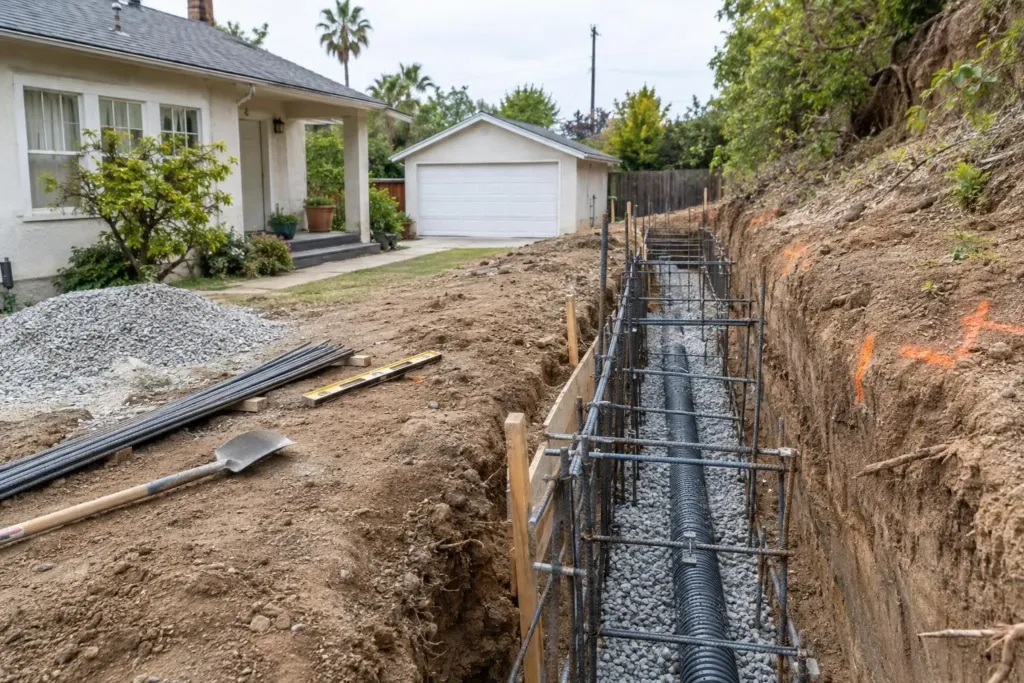
Each stage has to be approved before the next one covers it. That’s why a good contractor never pours concrete or backfills before the inspector signs the card. Typical stops include:
- Footing excavation, before any concrete.
- Reinforcing steel, once it’s tied in place.
- Grout or concrete, depending on the wall type.
- Drainage and backfill, meaning the gravel, drain pipe and soil placed behind the wall.
- Final inspection.
When a wall is part of a grading project, the LADBS guidance says backfill and subdrains are inspected on the grading side. A subdrain is a perforated pipe in gravel behind or under the wall that carries water away.
Before anyone digs out an old footing, the contractor must contact DigAlert by calling 811 or using DigAlert Direct at least two working days ahead. Gas, water and electric lines near the dig get located by hand before machines go in. Deep footing trenches also fall under Cal/OSHA trench safety rules, so ask your contractor how they’ll protect workers in the hole.
How do I prove the fix is done and get the case closed?
The case closes when the inspector approves the final inspection and clears the order. Get written proof, and if the order was recorded, confirm the release was recorded too.
A finished wall isn’t the same as a closed case. After final inspection, ask the inspector how they’ll close the order and when it will show as resolved. Then check the status yourself on the LADBS website or by calling the Code Enforcement office named on your order.
Keep a folder with the order, the permit, every signed inspection, the engineer’s letters and the final approval. If the order was recorded against your property, ask how the release gets recorded and get a copy. Title companies will want it when you sell.
How long the whole thing takes depends on the wall, the engineering, plan check and inspection schedules. The city building department controls approvals and timing, so plan for some waiting and keep your inspector updated. Since a retaining wall failed inspection often means more than one trip back, build in time for corrections.
When should I call a licensed contractor about a cited retaining wall?
Call as soon as you get the order or the failed inspection notice, and right away if the wall is moving. A contractor can help with temporary safety steps, work alongside your engineer, and plan the repair so it matches what the city will accept. Before hiring anyone, look up their license with the Contractors State License Board at cslb.ca.gov and confirm it’s active. Our article on hiring a retaining wall repair contractor lists the questions to ask. Villa Bella Construction is licensed and insured and handles retaining wall repairs and rebuilds across Los Angeles.
“The work was very well done and exceeded all my expectations.” — Cindy W., Yelp review
Villa Bella Construction is a licensed and insured general contractor, building in Los Angeles for 25 years. CSLB License #1093648 (B – General Building).
Call +1 (323) 825-9798 or send us your project details.
Learn more: Retaining walls, block walls, concrete slabs, driveways, foundation repair.
Planning a construction or remodeling project in Los Angeles?
Schedule a Free On-Site Consultation or call +1 (323) 825-9798.