Key Takeaways
- Charred or smoky framing doesn't all have to go. Each piece is judged on site by how much solid wood is left and what load it carries.
- Smoke-only framing can usually be cleaned and sealed. Charred load-bearing studs, headers and joists need an engineer's call on sistering or replacement.
- The repair needs a permit, an asbestos survey and inspections before the walls are closed, and the insurance adjuster should see the damage first.
Some charred or smoke-damaged wall framing can be saved and some has to come out. That decision is made one piece at a time on site, not for the whole house at once. Fire damaged framing repair usually mixes three approaches. Wood that only took smoke gets cleaned and sealed. Studs and joists that lost real wood to char get sistered or replaced. Anything an engineer says can no longer carry its load gets fully replaced. Which approach fits depends on how deep the char goes, what job that piece of wood does, whether hose water soaked it, and what the building inspector accepts. Here’s how that call gets made in Los Angeles, and what has to happen before any wall gets closed up again.
How can I tell if charred framing can stay, and who makes that call?
You can't tell reliably by looking at it from across the room. Someone has to scrape and probe the wood to see how much solid material is left. For load-bearing pieces, a licensed structural engineer makes the call, and the building inspector decides whether the repair passes.
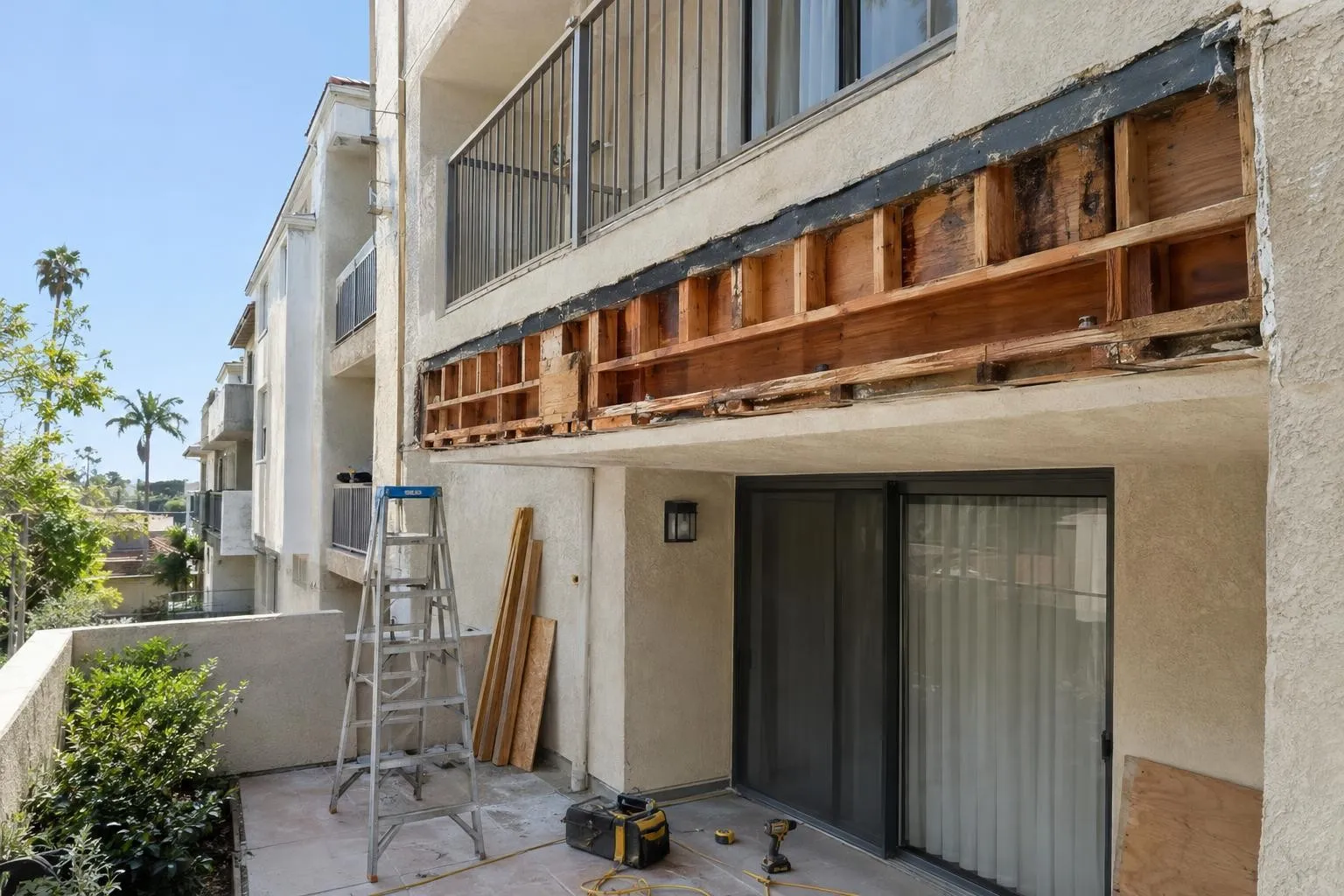
Char is the black, crusty layer that forms when wood burns. Under it sits a thin brown zone that got hot, and under that is wood that may still be sound. The real question is how much good wood remains, not how black the surface looks. A heavy coat of soot can look terrible and still wipe off. A deep, cracked char can hide a stud that has lost a big part of its thickness.
On site, the check usually goes like this:
- Remove the drywall, insulation and debris so every stud, header and joist in the burn area is exposed.
- Scrape or wire-brush the char down to clean wood and measure what’s left.
- Probe for soft spots, splits, and nails or straps that loosened as the wood shrank.
- Check for water damage and sagging, and look at the framing above and below the burned area.
- Mark each piece as clean, reinforce, or replace, and have the engineer confirm the load-bearing ones.
You’ll see rules of thumb online that set a fixed char percentage as the cutoff. Be careful with those. They come from blogs and old trade articles, not the current code. The USDA Forest Products Laboratory guide to assessing wood after a fire explains why judgment matters. The inside of a charred member usually keeps its strength, but how much that helps depends on the size of the piece.
A restoration technician can tell you what’s dirty. They shouldn’t decide whether a bearing stud stays. That’s an engineering question, and the engineer’s letter or plans usually go into the permit file. Our guide to the fire damaged home inspection covers who looks at what.
Does it matter whether the burned piece is a stud, a header, a beam or a joist?
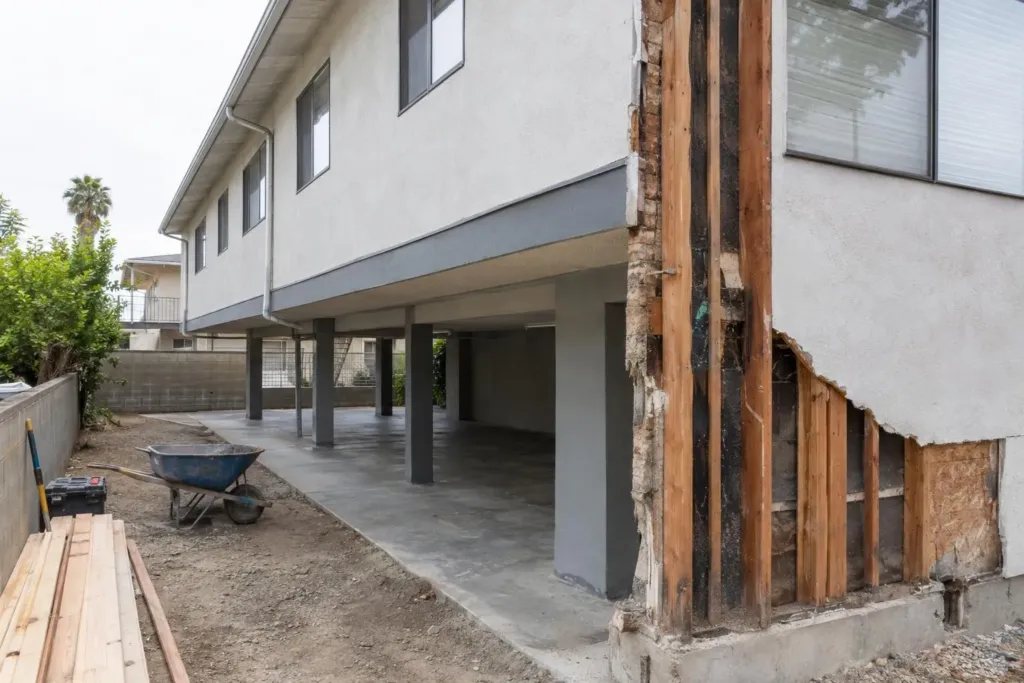
Yes, it matters a lot. Large beams have extra wood to lose before they get weak, while ordinary 2x studs and joists have very little to spare. Headers and beams also carry concentrated weight, so damage there counts for more.
A stud is a vertical board inside the wall. A header is the beam over a door or window that carries weight around the opening. A joist is one of the parallel boards holding up a floor or ceiling. Each one fails differently.
Big timbers, like the exposed beams in some older Los Angeles homes, char on the outside and keep a solid core. A standard 2×4 stud is only about an inch and a half thick to begin with. Lose a little off each face and there isn’t much left. That’s why light framing gets a stricter look than heavy beams do.
Location matters too. A scorched stud in a closet wall that carries no load is a simple fix. A charred header over a sliding door, or a joist under a bathroom, holds up weight the house depends on. In older homes, fire often runs up inside the wall cavities and across the attic. Check the ceiling joists and rafters above a burned room even when the wall below looks fine.
Sistering means fastening a new full-size board alongside the damaged one so the two share the load. It’s common for studs and joists that are hurt but not destroyed. Headers and beams with real wood loss are usually replaced or reinforced to an engineer’s design. After a severe fire, the support underneath needs its own review, which we cover in our post on whether you can reuse the foundation after a fire.
Can framing with only smoke or soot damage be cleaned and kept?
Usually, yes, as long as the wood is sound and not charred. It has to be cleaned of soot and residue first. Then it gets an odor-sealing primer before the wall is closed.
Smoke leaves a greasy, acidic film on everything it touches, and raw wood soaks some of it up. Framing near the fire may carry soot plus heat stains. Framing in far rooms may only have a light film. Both can usually stay once they’re cleaned properly.
Cleaning methods include HEPA vacuuming, hand scrubbing, and blasting with soda or dry ice. HEPA means a filter fine enough to trap the tiny particles in soot. These methods remove residue. They don’t make weak wood strong, and no method can promise the smell is gone for good.
The Forest Products Laboratory guidance says framing you keep shouldn’t have char or untreated fire residue left on it, even when it’ll be covered. Once the wood is clean and dry, it gets an odor-sealing primer. That’s a heavy coating that locks any leftover smell into the wood.
Don’t skip the hidden surfaces. Smoke travels through every gap, so the top plates, the backs of studs against the outside sheathing, and the attic side of the ceiling all need the same treatment.
Will the smoke smell come back if the framing is cleaned but not replaced?
It can, if residue was left behind or the sealer missed spots. The smell usually returns on hot or humid days, when warmth pulls trapped odor out of the wood.
Los Angeles walls and attics get hot in summer, and that heat drives smell out of poorly cleaned framing. Owners often notice it months later, after the new drywall and paint are already up. By then, fixing it means opening the walls again.
The usual causes are easy to name:
- Char left in cracks and checks in the wood.
- Sealer brushed over wood that was still dirty or damp.
- Top plates, attic framing or wall backs that were skipped.
- Smoky insulation that was reused instead of replaced.
- Ducts that carried smoke and were never cleaned.
Ozone machines and similar treatments can cut odor in the air for a while. They don’t remove the residue that causes it. Good fire damaged framing repair deals with the residue on the wood itself.
Before the walls get closed, walk the open framing yourself on a warm afternoon. Put your nose close to the wood. If a spot still smells, it isn’t finished yet. Finding it now beats finding it after the drywall goes up.
Do I need a permit for fire damaged framing repair in Los Angeles?
Yes. Repairing or replacing damaged framing needs a permit. In the City of Los Angeles, some smaller jobs on houses and duplexes can use an express permit, while bigger or more complex repairs go through plan check.
An express permit is one the city issues without a full review of drawings. The LADBS express permit list includes fire damage repair for homes when the work stays under 10 percent of the building’s replacement cost. It also covers replacing damaged framing members under that same limit for single-family homes and duplexes. Wiring repair goes under a separate permit.
Plan check is the city’s review of drawings before it issues a permit. Larger fires, apartment buildings, engineered repairs and structural changes usually need it. LADBS decides which path a project takes and how long the review runs, so plan your schedule around the department, not the other way around. Other cities near Los Angeles have their own building departments and their own rules.
Inspectors generally want repaired framing left open until they’ve seen it. Don’t let anyone hang drywall early. To match the old framing like for like, you can request your home’s original permitted plans from LADBS Records.
A big repair can also bring current code requirements into play. Our post on whether you have to rebuild to current code after a fire explains when that happens. If your home was hit by the January 2025 wildfires, check with LADBS about the recovery programs and fee waivers. They’re limited to owners of record on January 7, 2025, and they don’t apply to ordinary house fires.
Do I need an asbestos survey before opening up fire-damaged walls?
Generally, yes. South Coast AQMD asbestos rules still apply after a fire. A survey and an emergency demolition or renovation notification are usually needed before work starts, whatever the age of the house.
Asbestos is a mineral fiber that was once used in joint compound, textured ceilings and insulation. It’s harmful when it’s disturbed, and fire can break those materials down. The South Coast AQMD emergency demolition and renovation page says owners still need a survey first and must file notifications as soon as possible. Homes built before 1984 are more likely to contain asbestos, but newer homes can have some too.
Exemptions exist, but they’re narrow. Don’t assume a small job is exempt just because it’s small. The survey has to be done and signed by an asbestos consultant before anyone starts tearing into walls.
Lead paint is the other old-house concern. Homes built before 1978 may have it on trim, doors and walls. The EPA’s renovation rule sets safe work practices for disturbing it, and burned, flaking paint spreads dust easily.
Get these tests done early. Their results shape how the walls come apart, how debris gets bagged, and who is allowed to do the work.
What about framing soaked by fire hoses, and could it grow mold?
It can grow mold if it's closed up wet. Hose-soaked framing has to be dried and checked with a moisture meter before it's sealed or covered.
Firefighters put a lot of water into a house, and it doesn’t stay where it landed. It runs down inside walls and collects at the bottom plate, which is the board the studs sit on. It also soaks the subfloor and the framing under it. Rooms that never burned can end up the wettest.
Watch for musty smells, dark stains at the bottom of walls, warped flooring, and wood that feels soft under a screwdriver. Wet framing that sits closed up can start to rot as well as grow mold.
A sound drying plan usually follows these steps:
- Remove wet insulation and drywall so air can reach the framing.
- Run fans and dehumidifiers until the wood dries out.
- Take moisture meter readings at several heights on studs and plates.
- Replace any plates or joists that stayed wet long enough to soften.
- Seal and close the wall only after the readings come down.
Never put odor sealer on wet wood. It traps the moisture inside, which is the opposite of what you want.
Can the wiring and outlets in the burned walls be reused?
That's a call for a licensed electrician and the inspector, and you shouldn't assume either way. Heat can damage wire insulation, and water damage often means parts must be replaced.
Heat can make wire insulation brittle, melt plastic boxes, and loosen connections even where the framing looks fine. Hose water adds its own problems, like corrosion inside breakers and outlets that can show up long after the fire.
Electrical Safety Foundation International’s guidance on water-damaged electrical equipment says a qualified electrician should do the evaluation. Its list of parts to replace includes breakers, outlet and junction boxes, receptacles, switches, and wire or cable in dry locations.
In practice, replacing framing often means pulling the wiring anyway, because it runs through the studs being removed. Wiring repair in the City of Los Angeles goes under its own permit, separate from the framing work. Plan for the electrician’s rough-in inspection to happen while the walls are still open.
Will insurance pay to replace framing instead of cleaning it, and should I wait for the adjuster?
Wait for the adjuster before any major permanent work, but go ahead with temporary repairs that protect the house. Whether insurance pays for replacement or cleaning depends on your policy and the documented damage, so nobody can promise it ahead of time.
The California Department of Insurance residential claims guide tells owners not to make extensive permanent repairs until the adjuster has seen the damage. It also says to make reasonable temporary repairs, keep the receipts, and get written bids from licensed contractors.
Photograph the framing before anyone scrapes or removes it. Close-ups of char depth, wet bottom plates and burned headers are hard to argue with later. An engineer’s report that marks which pieces stay and which go also helps explain why some framing was replaced and not just cleaned.
For wildfire smoke, California’s new Smoke Damage Recovery Act sets standards for investigating, testing and restoring homes. It applies to wildfire claims, not to an ordinary kitchen or electrical fire. Ask your insurer for a full copy of your policy so you know what’s actually covered.
When should you bring in a licensed contractor for burned or smoke-damaged framing?
Bring in a licensed contractor once you see char on anything that holds weight: studs in exterior or bearing walls, headers over openings, ceiling joists or beams. Do the same if more than one room took smoke, if hose water soaked the walls, or if the repair will need a permit, which most do. Fire damaged framing repair involves several trades at once. That means the engineer, the asbestos consultant, the electrician and the city inspector all have to line up before the walls close.
Villa Bella Construction is licensed and insured, and our fire damage rebuilding work starts by finding what the fire really did to the framing. From there, we recommend the safest targeted repair the city will accept, instead of tearing out sound wood that can stay.
“They are reliable and trustworthy.” — Al H., Google review
Villa Bella Construction is a licensed and insured general contractor, building in Los Angeles for 25 years. CSLB License #1093648 (B – General Building).
Call +1 (323) 825-9798 or send us your project details.
Learn more: Fire damage rebuilding.
Planning a construction or remodeling project in Los Angeles?
Schedule a Free On-Site Consultation or call +1 (323) 825-9798.