Key Takeaways
- Most hillside retaining walls fail when water, added weight, or a moving slope pushes harder than the wall was built to resist.
- Clogged drains, intense winter storms, earthquakes, and wildfire burn scars raise the risk on Los Angeles hillsides.
- Slow cracks or a growing lean call for an engineer or licensed contractor soon. Fast movement during a storm means get out first.
Hillside retaining walls usually fail because the soil behind them pushes harder than the wall was built to resist. Water builds up, someone adds weight above the wall, or the slope itself starts to move. That’s the short answer to why do retaining walls fail in Los Angeles, and it’s rarely about the block or concrete you can see. The face of the wall only shows the damage. The cause sits in the soil, the drains, and the ground under the footing.
Why do retaining walls fail, and what does failure look like?
A retaining wall fails in one of four ways. It slides forward at the base, tips over at the top, cracks or bulges through its own body, or moves along with the whole slope it sits on. Each type has a different cause and a different fix, so naming the type comes first.
A retaining wall holds back soil that would otherwise slump downhill. That soil pushes sideways all the time, which engineers call lateral earth pressure. The wall resists with its weight, its steel, and its footing, the buried concrete base it stands on.
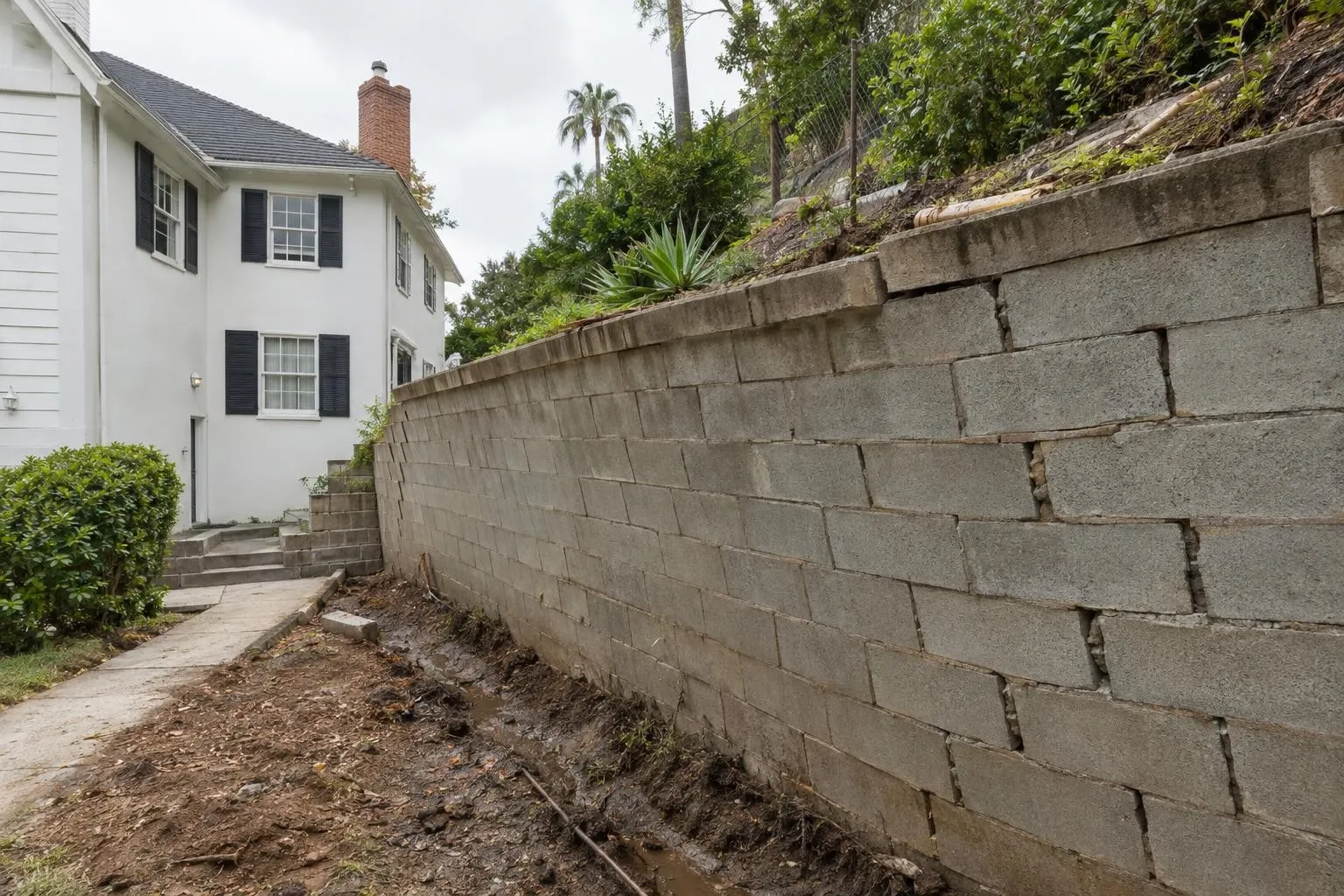
Sliding means the footing loses its grip and the whole wall moves outward. Overturning means the push near the top wins and the wall rotates forward, leaning a little more each wet season. Structural failure means the wall itself breaks. You’ll see horizontal cracks in concrete, stepped cracks through block joints, or a belly bulging out partway up. That usually points to missing steel, empty block cells, or a wall too thin for its load.
The fourth type gets missed. Sometimes the soil behind and under the wall slides as one mass, and the wall just rides along. Fixing the wall alone won’t help, because the ground keeps going. In older hillside neighborhoods, walls are often stacked in tiers, so when the top tier moves, the lower ones tend to crack first.
Why is water behind the wall such a big deal?
Wet soil weighs more than dry soil, and water trapped behind a wall adds its own pressure on top of that. If the drainage behind the wall is clogged or missing, a wall that stood fine for years can start leaning after a single wet winter.
When people ask why do retaining walls fail on hillsides, water comes up first. Water pressure behind a wall is called hydrostatic pressure, the push of water that has nowhere to go. A wall designed for damp soil isn’t designed to hold back standing water. Water also softens the soil under the footing, so the base loses grip just as the push grows.
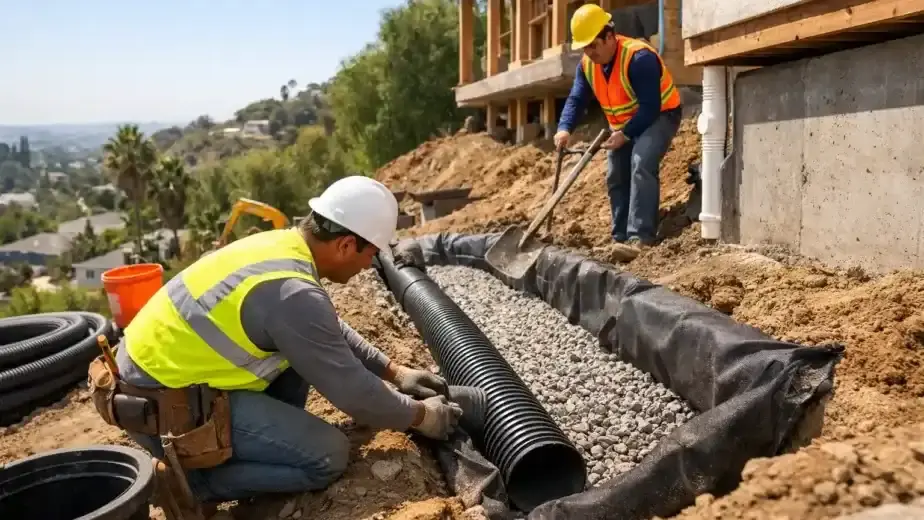
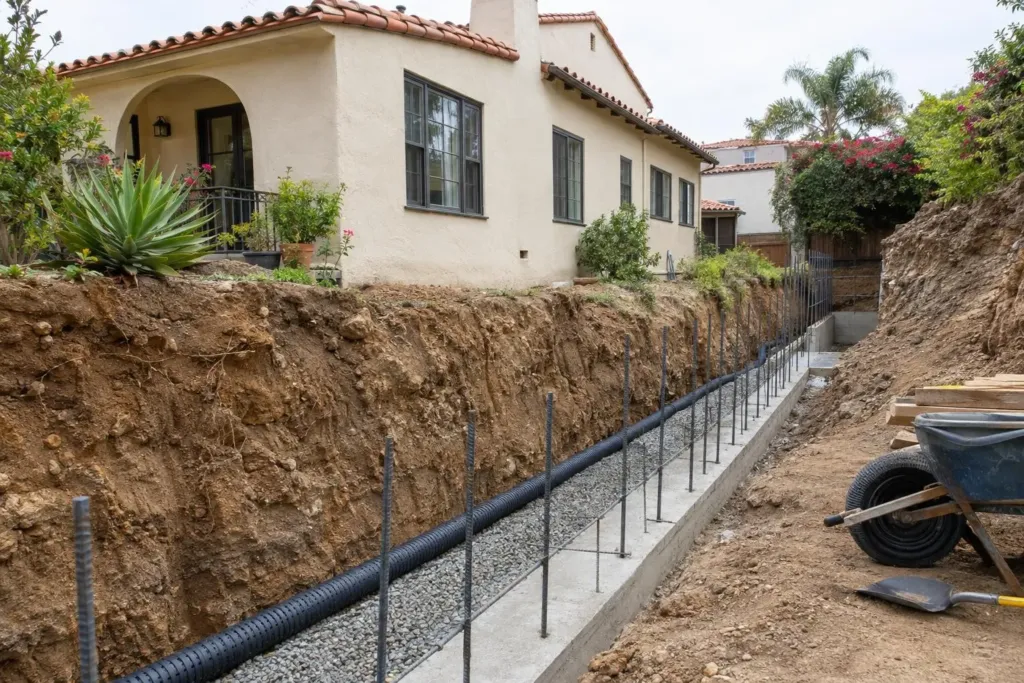
A well-built wall gives water a way out. Clean gravel behind the wall lets water drop down instead of soaking the soil. A subdrain, a perforated pipe at the bottom of that gravel, carries the water to an approved outlet. Weep holes, small openings near the base, let water escape where the design calls for them. Our guide to retaining wall drainage covers each piece.
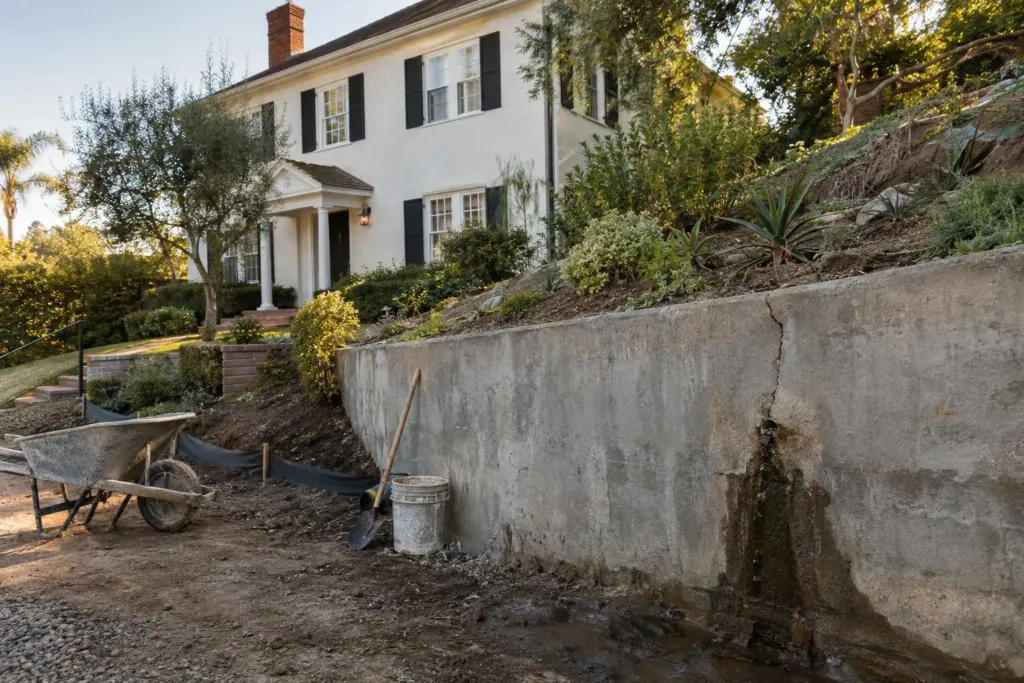
These parts clog over time. Roots grow into pipes, silt fills the gravel, and weep holes get packed with mud or hidden behind planters. Watch for weep holes that stay dry in heavy rain, wet stains or white crusty deposits on the face, soggy ground at the top, and mud washing out at the base. Leaking irrigation and downspouts aimed at the slope add even more water.
What makes Los Angeles hillsides harder on retaining walls?
Steep slopes, long dry spells followed by intense winter storms, earthquake shaking, and wildfire burn scars all hit hillside walls in ways a flat lot doesn't see. Frost and wave action, which national guides mention, barely matter here.
After a few dry years, hillside soil shrinks and cracks. Then a big storm drives water deep into those cracks fast, and walls that looked fine through the drought suddenly hold back saturated soil. Earthquakes add a short, hard sideways push, and a wall that’s already leaning or wet has less margin left. Steep lots also tend to have loose fill dirt left from when the house was built, and it settles more than natural ground.
Fire changes slopes too. When plants burn, their roots stop holding soil, and the ground can shed water almost like pavement. The U.S. Geological Survey’s research on rainfall and landslides in southern California notes that debris flows cause more deaths and injuries during rainstorms than all other kinds of slope failure combined. A debris flow is a fast-moving river of mud, rock, and burned debris.
If your home sits below a recent burn scar, including slopes burned in the 2025 fires, a wall built for normal runoff may now face mud it was never meant to hold. After a strong quake or a fire on the slope above, walk your walls and compare them with older photos.
Could added weight above the wall be the cause?
Yes, and it's a frequent reason an older wall starts moving. A driveway, pool, parked cars, a new structure, or extra fill dirt placed above a wall adds load it may not have been designed to carry.
Engineers call added load a surcharge, which means any weight sitting on the soil behind the wall. The soil passes that weight down and sideways into the wall. Surcharge answers a lot of “why do retaining walls fail” questions on older lots, because a wall built to hold a plain slope can be overloaded once someone pours a parking pad near the top.
Ask what changed above the wall since it was built:
- A new or widened driveway, or vehicles parked near the edge.
- A pool or spa at the top of the slope.
- A new house, addition, or ADU uphill, on your lot or the neighbor’s.
- Soil piled behind the wall to level the yard.
- Heavy stored materials or large planters along the top.
Don’t add new weight near the top of a wall that’s cracking or leaning. Move stored items and keep vehicles back until someone qualified looks at it. If the load came from the neighbor’s side, our article on who fixes a leaning property line wall explains how that usually gets sorted out.
Is my wall failing, or is the whole hillside moving?
You can't tell for sure from the wall alone. If cracks and movement show up in the ground, pavement, or house well beyond the wall, the slope itself may be moving, and that takes a geotechnical engineer or engineering geologist to diagnose.
A geotechnical engineer studies how soil and rock behave under load. An engineering geologist studies what’s underneath, like old landslides and weak rock layers. On a hillside, one or both often need to look before anyone designs a repair.
Clues that point to the slope include ground cracks running across the slope above the wall, bulges in the yard below it, fences or trees tilting downhill, new cracks in the driveway or house foundation, and movement that continues past both ends of the wall. A wall problem is usually local: one leaning section, cracks around a clogged drain, or one settled corner.
A stronger wall on a moving slope just gives the slope something heavier to carry downhill. You can check an engineer’s or geologist’s license through the Board for Professional Engineers, Land Surveyors, and Geologists, and a contractor’s license through the Contractors State License Board. Ask who will actually sign the reports and drawings.
Which warning signs mean call an engineer, and which mean get out?
Slow changes, like a growing lean, widening cracks, or water seeping at the base, mean you should get a professional out soon. Fast changes during a storm, like rumbling, sudden cracking, moving mud, or tilting trees and poles, mean get everyone out first and call 911.
The U.S. Geological Survey’s landslide preparedness page lists signs of moving ground: new springs or soggy ground in normally dry spots, new cracks or bulges in the ground or pavement, soil pulling away from foundations, decks tilting away from the house, and broken underground utility lines. Doors or windows that suddenly stick can be another clue.
Call an engineer or licensed contractor soon if you see:
- A lean that gets worse from one season to the next.
- Cracks that widen after rain.
- Soil or water washing out through joints or the base.
- Sinking or cracking pavement at the top of the wall.
Leave right away if you hear cracking or rumbling, see mud or debris moving, notice drain water suddenly turn muddy, or see walls, trees, or poles tilting during a storm. Follow evacuation orders and don’t stay to watch. For slow changes, take dated photos from the same spot and pencil-mark the ends of each crack, so the engineer can see how fast things are moving.
Who is responsible for the slope drains on my property?
Usually you are. Slope drains, bench drains, and wall drains on private property are generally the owner's job to keep clear, and clogged ones can wash out the soil that supports the wall.
Bench drains are the concrete channels across the flat steps cut into graded slopes. Los Angeles County Public Works, in its homeowner’s guide for flood, debris and erosion control, says poorly maintained slope and bench drains cause many flooding problems, and that with few exceptions the homeowner maintains them. Blocked drains can overflow, erode the hillside, and undermine the drains themselves.
Before the rainy season, work through this list:
- Clear leaves, soil, and debris from bench drains, downdrains, and inlets.
- Look for cracks or gaps where water can slip under the concrete.
- Make sure weep holes and subdrain outlets are open and flowing.
- Point downspouts away from the slope and fix irrigation leaks.
- Check everything again after each big storm.
Don’t regrade a slope or reroute water without expert advice. Changing where water goes can push the problem onto the wall below or onto a neighbor’s lot.
What does fixing a failed hillside retaining wall involve?
It starts with finding the cause, then an engineered repair or rebuild that the building department reviews and inspects. Whether a wall can be repaired or must be replaced depends on the engineer's findings and the building department's approval, not on how the face looks.
Once you know why your wall moved, the right fix gets clearer. Sometimes a targeted repair works, like restoring drainage or rebuilding one damaged section. If the steel is inadequate, the soil has moved, or the wall carries a load it wasn’t designed for, an engineered replacement is usually the safer path. Tiebacks or soil nails can help in the right conditions, but only after an engineer evaluates the site.
A typical sequence looks like this:
- Look up your parcel in ZIMAS, the City of Los Angeles online zoning map, to see whether it’s in a hillside area or a fire or other hazard zone.
- Have the wall, drains, and slope evaluated, with a geotechnical engineer or engineering geologist involved if the slope may be moving.
- Stop extra water and remove extra weight above the wall.
- Get engineered plans and submit them for permit review.
- Call DigAlert at 811 before digging so buried utility lines get marked.
- Shore the slope or remove the old wall in stages so the ground stays stable.
- Build the footing, steel, wall, drainage, and compacted backfill to the approved plans, with city inspections along the way.
- Finish grading so water drains away from the new wall.
In the City of Los Angeles, the Department of Building and Safety’s grading permits page says grading in the hillside grading area needs a grading permit, and it lists retaining-wall cuts, backcuts, and backfill under grading review. A backcut is the temporary slope dug behind a wall during construction. Other cities and unincorporated county areas have their own building departments. Our article on retaining wall permits and engineering in Los Angeles covers what may apply. Either way, the building department decides approvals and timelines, so plan around its review.
Our retaining wall and foundation repair work starts with the real cause and aims for the safest targeted fix the city will accept. If you’re comparing companies, our retaining wall repair contractor guide lists the questions worth asking.
Will insurance pay for a collapsed retaining wall?
Maybe, but don't count on it. Most standard homeowners policies exclude earth movement, and earthquake policies often limit or exclude retaining walls, so the answer depends on what caused the failure and the exact wording of your policy.
Coverage turns on the cause. A wall knocked down by a car or a burst water line may be treated differently from one that slowly leaned under soil pressure or slid with the slope. Read the policy form itself, not just the summary page, and look for sections on earth movement, landslides, retaining walls, and other structures.
If you carry earthquake insurance, check whether retaining walls are covered at all, or only when they support the house. The California Department of Insurance can help if you have concerns about how a claim was handled.
Before repairs start, take photos and video of the damage, keep every engineer’s report, and talk with your agent or adjuster. Emergency work to keep people safe is fine, but document it carefully.
When should you call a licensed contractor about a hillside retaining wall?
Call when a wall is leaning more, cracking more, or leaking soil or water, or when it sits below a driveway, pool, or house. Call after a major storm, an earthquake, or a fire on the slope above, even if the wall looks fine. A licensed and insured general contractor can check the wall, the drains, and the loads above it, bring in a geotechnical or structural engineer when the slope needs one, and handle permits and inspections for the repair. If the ground is moving fast, get out first. The wall can wait.
“immediately spotted problematic work on a project a different builder was working on” — Stephen L., Yelp review
Villa Bella Construction is a licensed and insured general contractor, building in Los Angeles for 25 years. CSLB License #1093648 (B – General Building).
Call +1 (323) 825-9798 or send us your project details.
Learn more: Retaining walls, block walls, concrete slabs, driveways, foundation repair.
Planning a construction or remodeling project in Los Angeles?
Schedule a Free On-Site Consultation or call +1 (323) 825-9798.