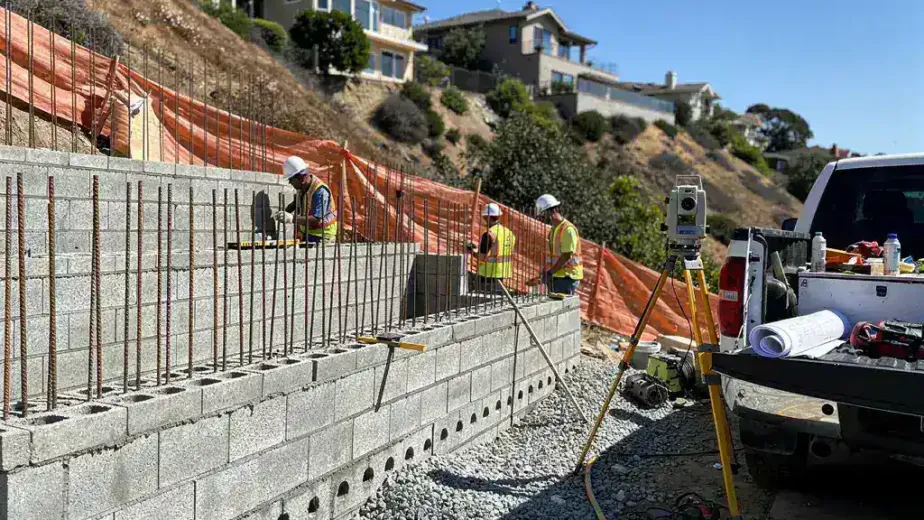
If you’re planning a construction or remodeling project in Los Angeles, understanding when and how to use CMU block walls can make the difference between a structurally sound investment and costly mistakes. Concrete masonry unit (CMU) block walls are load-bearing elements commonly used in Los Angeles CMU block walls construction for foundations, retaining structures, and lateral support systems. With Los Angeles’s challenging hillside terrain and seismic requirements, proper CMU block wall installation isn’t just recommended—it’s essential. Villa Bella Construction, with over 25 years of specialized experience in Los Angeles structural and foundation work, has guided hundreds of property owners through the complexities of CMU block wall applications.
Understanding CMU Block Walls and Their Purpose in Los Angeles Construction
CMU blocks are hollow concrete units that provide exceptional strength and durability for structural applications. In Los Angeles, these blocks serve multiple critical functions, from creating earthquake-resistant foundations to supporting hillside retaining walls. The material’s thermal mass and fire-resistance properties make it ideal for the local climate and building code requirements.
Los Angeles CMU block walls must comply with strict seismic design standards established by the Los Angeles Department of Building and Safety (LADBS). The city’s proximity to fault lines means all structural elements must meet California Building Code (CBC) requirements for lateral force resistance. Proper reinforcement, grouting, and installation techniques are non-negotiable for code compliance.
When to Use CMU Block Walls in Los Angeles Projects
Foundation and Basement Applications
CMU block walls excel as foundation elements on hillside properties throughout Los Angeles. Their compressive strength handles the weight of multi-story structures while resisting soil pressure from sloped terrain. For basement construction, CMU blocks provide waterproofing compatibility and excellent moisture management when properly sealed and drained.
Retaining Wall Construction
Retaining walls are among the most common applications for Los Angeles CMU block walls, especially in hillside neighborhoods. These walls prevent soil erosion and stabilize slopes on properties with elevation changes. Proper design, reinforcement, and drainage are critical for long-term performance and LADBS approval.
Seismic and Lateral Support Systems
CMU block walls provide exceptional lateral bracing for structures in seismic zones. When reinforced with steel rebar and properly grouted, they resist earthquake forces that would compromise unreinforced masonry. Los Angeles building codes mandate specific reinforcement patterns and spacing for all structural CMU applications.
Best Practices for CMU Block Wall Installation in Los Angeles
Design and Engineering Requirements
Every CMU block wall project in Los Angeles requires a licensed structural engineer’s design and stamped plans. LADBS will not issue permits without professional engineering documentation that addresses:
- Soil bearing capacity and geotechnical analysis
- Seismic design parameters and lateral force calculations
- Reinforcement specifications and placement details
- Drainage and waterproofing systems
- Foundation depth and frost protection requirements
Material Selection and Quality Control
Specify concrete masonry units that meet ASTM C90 standards for compressive strength. Los Angeles contractors must source materials from approved suppliers with verified test reports. Block strength typically ranges from 2,000 to 4,000 PSI, depending on structural requirements.
Reinforcing steel must be Grade 60 rebar with proper spacing and lap splices. Grout must achieve minimum 2,000 PSI compressive strength and completely fill all cells containing rebar. Villa Bella Construction’s 25 years of Los Angeles hillside construction experience ensures material specifications meet or exceed LADBS requirements.
Installation Techniques
Proper mortar joint thickness is critical—typically 3/8 inch for horizontal and vertical joints. Head joints must be fully filled with mortar to prevent water infiltration and ensure structural integrity. Each block must be level and plumb, with reinforcement properly positioned before grouting.
Grouting must be done in lifts of 4 feet or less to prevent segregation and ensure complete consolidation. Vibration during grouting removes air pockets and creates a solid bond between rebar and grout. Weather protection is essential—Los Angeles rain can compromise unset grout and mortar.
Drainage and Waterproofing
All below-grade CMU block walls require comprehensive drainage systems. Perforated drain pipe at the base, exterior waterproofing membranes, and weeping holes prevent water accumulation and hydrostatic pressure. For retaining walls, internal drainage blankets behind the blocks are essential for long-term stability.
LADBS Permit Requirements for Los Angeles CMU Block Walls
The Los Angeles Department of Building and Safety requires specific documentation before approving CMU block wall projects. Stamped structural plans must include detailed reinforcement schedules, material specifications, and construction details. Geotechnical reports are mandatory for retaining walls and hillside construction.
Inspections occur at critical stages: foundation excavation, rebar placement, first grout lift, final grout, and backfill. LADBS inspectors verify code compliance and proper construction sequencing. Building permits for CMU block walls typically cost between $500 and $2,000 depending on project scope, plus plan review fees.
Common Mistakes to Avoid
Inadequate reinforcement is the leading cause of CMU block wall failure in Los Angeles. Undersizing rebar or spacing it incorrectly compromises seismic resistance. Skipping proper grouting leaves voids that weaken the structure and allow water infiltration.
Insufficient drainage causes hydrostatic pressure buildup, leading to wall cracking and failure. Improper mortar joints and workmanship reduce structural capacity. Working without proper engineering and LADBS permits creates liability and future code violations.
Why Professional Installation Matters
CMU block wall construction requires specialized knowledge of Los Angeles soil conditions, seismic requirements, and LADBS regulations. Villa Bella Construction brings 25+ years of verified experience in complex hillside and foundation projects throughout Los Angeles. Our team understands the nuances of local geology, drainage challenges, and code interpretation that protect your investment.
Professional installation ensures your CMU block walls meet all current codes, resist seismic forces, and provide decades of reliable performance. The cost of proper engineering and quality construction is far less than repairing failed walls or managing code violations. When your property’s structural integrity depends on CMU block walls, trust expertise that has proven itself across hundreds of Los Angeles projects.