Concrete Driveways, Block Walls & Retaining Walls in Los Angeles: What Homeowners Need to Know
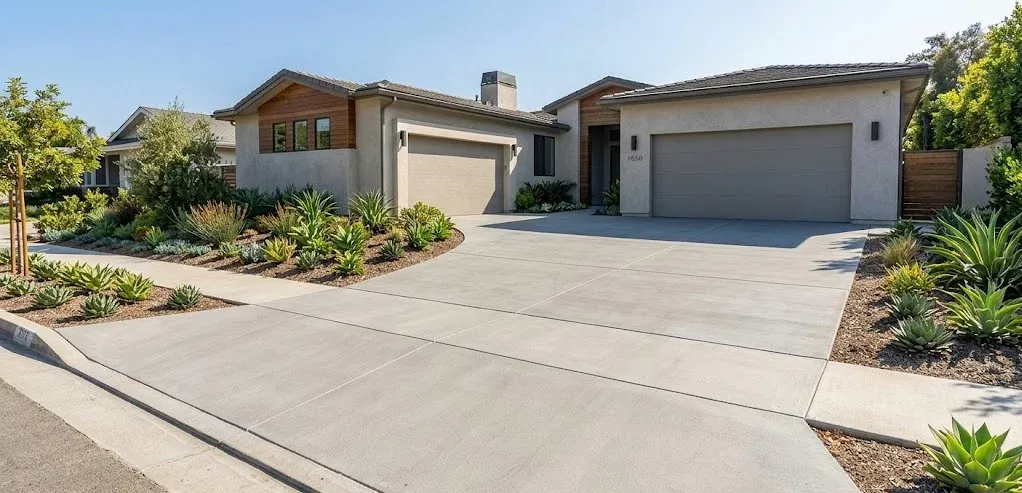
Concrete driveways, block walls, and retaining walls in Los Angeles must handle heavy use, changing soil conditions, and strict city requirements. Villa Bella Construction pours and repairs concrete in Los Angeles, Glendale, Pasadena, Beverly Hills, Santa Monica, and surrounding cities, focusing on proper design, reinforcement, and drainage so your concrete work lasts for years instead of cracking after one season.
Why Concrete Work in Los Angeles Needs More Than Just a Pour
Los Angeles properties deal with expansive soils, slopes, tree roots, and frequent vehicle traffic. A driveway, slab, or retaining wall that looks fine on day one can quickly crack, settle, or lean if it was not designed and reinforced for local conditions.
In neighborhoods like Glendale and Pasadena, many older driveways and walkways were poured over minimal base material or without proper rebar. Today’s codes and engineering standards are stricter, especially for retaining walls that hold back soil near property lines or structures. Working with a contractor who understands soil, load, and drainage is essential.
Designing a Concrete Driveway That Lasts
A durable concrete driveway is more than a smooth gray surface. It should:
- Be properly graded so water flows away from the house and garage
- Include enough base material (compacted gravel) for support
- Use rebar or mesh reinforcement appropriate for expected vehicle loads
- Have control joints placed at the right spacing and pattern
- Use concrete with the correct strength and mix design
Driveways in Los Angeles, Beverly Hills, or Culver City that regularly support SUVs, trucks, or work vehicles may need thicker slabs and heavier reinforcement. We evaluate access, turning areas, and parking patterns before recommending a design.
Block Walls vs. Retaining Walls – What’s the Difference?
Not all block walls are retaining walls. A simple block wall used as a property line divider may only support its own weight, while a retaining wall holds back tons of soil and sometimes water.
- Block walls – Often CMU (concrete masonry unit) walls used for privacy, property boundaries, or light structural support.
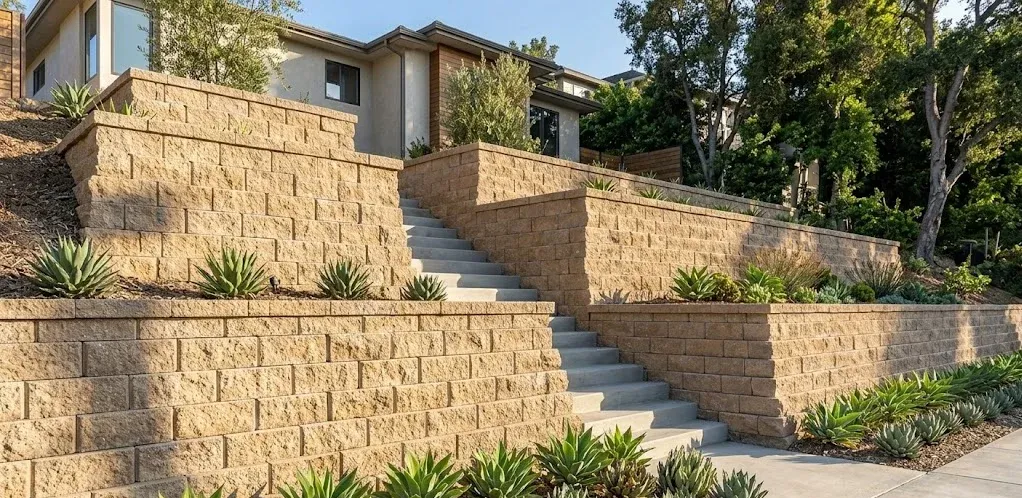
- Retaining walls – Engineered systems (poured concrete or reinforced CMU) designed to resist lateral soil pressure and manage drainage.
Retaining walls in hillside parts of Los Angeles, Glendale, or Highland Park typically require engineering, permits, and carefully installed drainage systems such as weep holes, perforated drains, and gravel backfill. Skipping drainage is one of the fastest ways to make a wall bulge or fail.
Drainage and Soil Considerations
Water is the enemy of poorly designed concrete and masonry. Key drainage and soil factors include:
- Surface water – Driveways and patios should slope away from buildings and not send water toward foundations.
- Subsurface water – Retaining walls and slabs may need drains to relieve hydrostatic pressure.
- Expansive clay soils – Common in parts of Los Angeles and Pasadena, these soils expand and contract with moisture, stressing concrete.
- Tree roots – Large roots can lift slabs and crack driveways; sometimes root barriers or design changes are needed.
Villa Bella Construction evaluates existing conditions and may recommend additional drainage or soil preparation to protect your investment.
Permits and Inspections for Concrete Projects
Many concrete projects require permits, especially when:
- Retaining walls exceed certain heights or support loads
- Driveways connect to public sidewalks or streets
- Foundations or structural slabs are involved
- Existing concrete is removed near property lines or easements
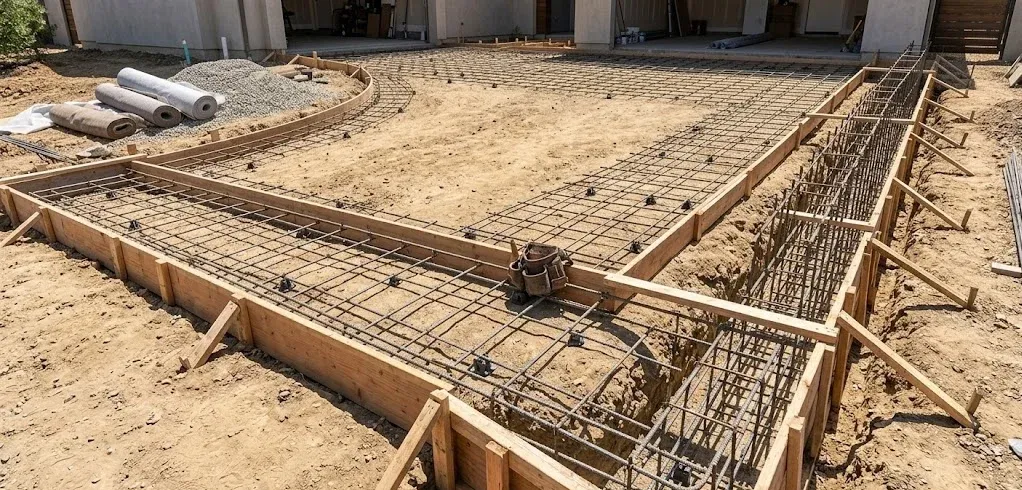
Cities like Los Angeles, Glendale, and Pasadena have specific rules, and inspectors often want to see reinforcement, footing depths, and forms before concrete is placed. We handle permit applications, coordinate inspections, and adjust details based on engineering requirements.
What Affects Concrete Project Costs
Concrete project pricing depends on:
- Size and thickness of the pour or wall
- Reinforcement (rebar size, spacing, and configuration)
- Site access (tight lots or hillsides require more labor and sometimes pumps)
- Demolition and removal of existing concrete
- Drainage and grading needs
- Engineering and permitting for retaining walls or structural work
A clear proposal should outline each of these items so you know exactly what is included and where you can adjust scope or finishes.
How Villa Bella Construction Handles Concrete Projects
Our concrete and structural process typically includes:
- Site assessment – We review the existing driveway, wall, or slope and discuss goals, drainage, and access.
- Design and engineering – For retaining walls and structural slabs, we coordinate with engineers to produce plans.
- Permits and planning – We obtain necessary permits and schedule work to minimize disruption.
- Demolition and preparation – Old concrete is removed, subgrade is compacted, and forms and reinforcement are installed.
- Concrete placement and finishing – We pour, finish, and cure the concrete according to specifications.
- Cleanup and final review – Forms and debris are removed, and we walk the project with you to review details.