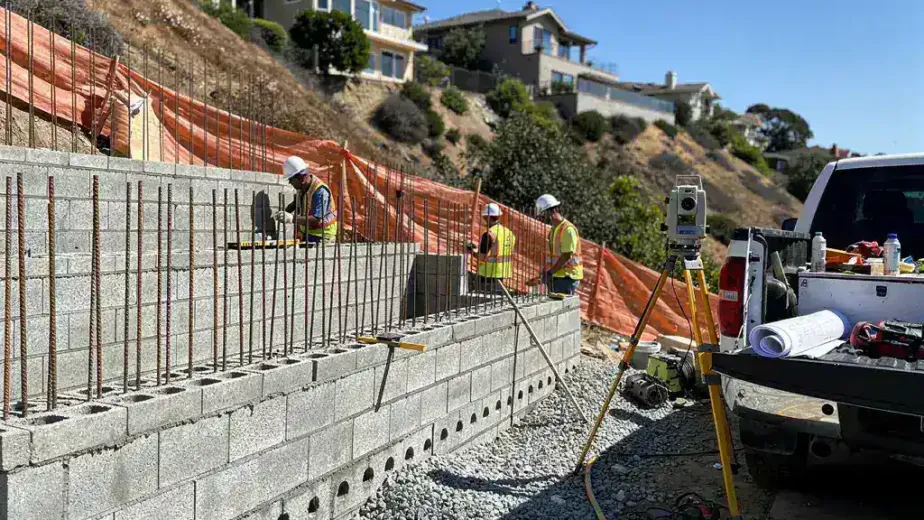
Los Angeles hillside properties present some of the most complex foundation engineering challenges in California. Whether you own a multi-million-dollar residence in the Hollywood Hills, a Bel Air estate, or a Malibu clifftop property, your foundation’s integrity depends on understanding soil mechanics, LADBS permit requirements, and California seismic safety codes that most contractors overlook. At Villa Bella Construction, we’ve spent over 25 years navigating these technical complexities, and the difference between a properly engineered hillside foundation and a compromised one can mean the difference between a stable investment and catastrophic structural failure.
Understanding Los Angeles Hillside Soil Dynamics and Foundation Failure Risk
Hillside properties in Los Angeles sit atop some of the most geologically unstable terrain in Southern California. Unlike flat-land construction, hillside homes must account for soil creep, lateral earth pressure, and subsurface water migration—factors that standard foundation systems simply cannot handle.
The primary risk factor is soil shifting. Los Angeles hillsides are composed of fractured bedrock, weathered granite, and clay-rich soils that expand and contract with seasonal moisture changes. During heavy rainfall, hydrostatic pressure builds behind your foundation walls, pushing laterally with force that can exceed 1,500 pounds per linear foot. Without proper drainage and structural reinforcement, this pressure causes foundation cracks, wall bowing, and in severe cases, complete foundation failure.
Additionally, Los Angeles experiences ongoing seismic activity. The 2020 Malibu fires exposed thousands of hillside homes to soil destabilization, and subsequent winter rains caused widespread foundation damage. Properties built on slopes steeper than 15 degrees face exponentially higher risk of ground failure during both seismic events and heavy precipitation cycles.
LADBS Permit Requirements for Hillside Foundation Work
The Los Angeles Department of Building and Safety (LADBS) enforces strict regulations for hillside construction that differ significantly from standard municipal codes. Understanding these requirements is non-negotiable before breaking ground on any foundation project.
Geotechnical Investigation and Soil Reports
LADBS requires a Phase I Environmental Site Assessment and a comprehensive geotechnical report prepared by a licensed California Professional Engineer (PE). This report must include:
- Soil boring logs identifying soil type, density, and bearing capacity at multiple depths
- Groundwater elevation mapping and seasonal fluctuation data
- Slope stability analysis using Factor of Safety calculations (minimum 1.5 for static conditions)
- Recommendations for foundation type, depth, and reinforcement specifications
- Seismic hazard assessment per ASCE 7 standards
This geotechnical work typically costs $8,000–$15,000 but is absolutely essential. Cheap contractors who skip this step expose you to liability and permit rejection.
Hillside Grading Permits and Slope Stability Certification
Any hillside grading project exceeding 5,000 cubic yards of soil movement requires a separate Hillside Grading Permit from LADBS. This includes cut-and-fill operations needed to level foundation pads. The permit demands a Licensed Soils Engineer sign-off certifying that all slopes are stabilized and will not fail under static or seismic loading conditions.
Santa Monica and Pasadena have additional municipal variance requirements. Pasadena’s Hillside Stability Ordinance requires steeper slopes to be terraced and stabilized with engineered retaining walls. Santa Monica’s coastal hillside regulations mandate additional seismic bracing and liquefaction assessments for properties within 500 feet of the Pacific Coast Highway.
Foundation Types for Los Angeles Hillside Properties
Standard slab-on-grade foundations are inadequate for hillside terrain. Villa Bella Construction specifies engineered foundation systems designed specifically for slope conditions.
Caisson and Friction Pile Foundations
For steep hillside properties with deep soil instability, caisson foundations are the gold standard. These are large-diameter drilled holes (typically 18–36 inches) that extend 15–40 feet into stable bedrock or dense soil layers. The caisson acts as an anchor, transferring structural loads deep into the earth where soil movement is minimal.
Friction piles function similarly but rely on lateral soil friction rather than bedrock bearing. Both systems require:
- Reinforced steel cages (typically #6 or #8 rebar) installed full-depth
- Minimum 4,000 PSI concrete with low water-cement ratios for durability
- Proper spacing (center-to-center) calculated by the structural engineer
- Load testing certification before construction loading
Caisson foundations cost 40–60% more than conventional foundations but prevent foundation failure in high-risk zones.
Engineered Retaining Walls and Lateral Load Management
Hillside foundations require retaining walls to manage lateral earth pressure. These are not simple concrete walls—they are engineered structures that must resist hydrostatic pressure, seismic inertial forces, and soil surcharge loads.
LADBS specifies reinforced concrete retaining walls with:
- Minimum 12-inch thickness for walls under 6 feet high
- Heavy-duty CMU (concrete masonry unit) blocks rated for 2,000 PSI minimum
- Vertical and horizontal rebar at 12-inch centers (minimum #5 bar)
- Perforated drainage pipe behind the wall with gravel backfill to manage groundwater
- Proper setback and footing depth (minimum 3 feet below finish grade)
Without proper drainage design, retaining walls fail catastrophically. Water buildup creates hydrostatic pressure that can push a 10-foot wall over in a single rainy season.
Waterproofing and Moisture Barrier Standards (SB-721/SB-326 Compliance)
California’s SB-721 and SB-326 laws mandate comprehensive waterproofing for all common interest developments and multi-unit properties. Even single-family hillside homes benefit from these standards because they address the real-world challenge of moisture intrusion in below-grade spaces.
Hillside properties require specialized waterproofing because they often have:
- Below-grade living spaces or basements exposed to groundwater
- Lateral soil pressure pushing moisture through foundation walls
- Seasonal water table fluctuations that saturate subgrade areas
Villa Bella specifies multi-layer waterproofing systems including:
- Exterior membrane barriers (liquid-applied or sheet-applied polyurethane)
- Interior capillary breaks and vapor barriers (6-mil polyethylene minimum)
- Perimeter drainage systems with sump pumps for active water management
- Hydrostatic pressure relief valves if necessary
These systems cost $15–$25 per square foot but prevent $100,000+ in water damage and mold remediation.
Material Specifications for Premium Hillside Construction
Material quality directly impacts foundation longevity in Los Angeles’s aggressive soil and climate environment. Generic contractors use standard concrete and rebar—premium hillside work demands engineered specifications.
High-performance concrete for hillside foundations must include:
- Minimum 4,500 PSI compressive strength (not standard 3,000 PSI)
- Low water-cement ratio (0.45 or lower) to reduce porosity and moisture penetration
- Air entrainment for freeze-thaw resistance during winter rain cycles
- Supplementary cementitious materials (fly ash or slag) for long-term durability
Steel reinforcement must meet ASTM A615 Grade 60 specifications with proper lap splicing and concrete cover (minimum 2 inches for exterior exposure). Cheap contractors use minimum-gauge rebar and inadequate lap lengths—this is where structural failures originate.
Seismic Design and Lateral Load Resistance
Los Angeles hillside foundations must be designed for seismic forces per ASCE 7-22 standards. This means calculating lateral loads based on soil type, building mass, and site-specific seismic hazard data.
For hillside properties, seismic design becomes more complex because slope geometry amplifies ground motion. Properties on ridge tops experience 20–40% higher seismic accelerations than flat-land sites. The foundation system must resist these amplified forces without yielding.
Proper seismic design includes:
- Shear wall reinforcement at foundation level to transfer lateral forces to bedrock
- Moment connections between foundation and superstructure (not simple pin connections)
- Anchorage of mechanical systems and heavy fixtures to prevent equipment failure during seismic events
A structural engineer’s seismic analysis typically costs $5,000–$8,000 but is mandatory for LADBS permit approval.
The Cost of Cutting Corners on Hillside Foundations
We’ve seen hillside properties fail because contractors skipped proper geotechnical investigation, used undersized foundations, or ignored drainage requirements. The financial and safety consequences are severe.
Foundation failure in a Los Angeles hillside home typically costs $200,000–$500,000+ to remediate. This includes underpinning existing foundations, installing caissons, managing groundwater, and repairing structural damage. In catastrophic cases, properties become uninhabitable and unsellable.
Beyond financial loss, foundation failure creates liability exposure. If your hillside property slides or collapses due to inadequate engineering, you face personal injury lawsuits, environmental remediation costs, and potential criminal negligence charges if anyone is injured.
Proper hillside foundation engineering—with licensed geotechnical engineers, structural engineers, and LADBS-compliant specifications—costs 15–25% more upfront but protects your investment for 50+ years. This is not an area where cost-cutting is acceptable.
When you engage a hillside foundation project, demand geotechnical reports, structural calculations, and LADBS permit documentation from licensed professionals. Your property’s structural integrity and your family’s safety depend on engineering excellence, not contractor convenience. Villa Bella Construction brings 25+ years of Los Angeles hillside expertise to every project—because in this market, settling for standard construction practices is simply not an option.