
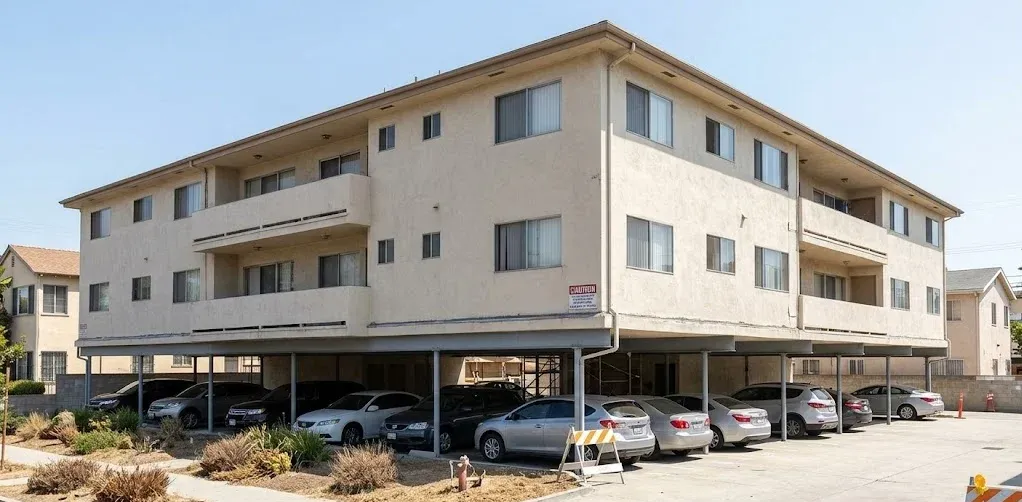
Soft story retrofit in Los Angeles is essential for many multi-family and mixed‑use buildings with weak ground floors and large garage or storefront openings. Villa Bella Construction works with structural engineers and LADBS to complete retrofit projects across Los Angeles, Glendale, Pasadena, Santa Monica, and surrounding cities, strengthening vulnerable buildings and helping owners meet seismic safety mandates.
What Is a Soft Story Building?
A soft story building typically has a weak or open ground floor with much less lateral strength than the floors above. Common examples in Los Angeles include:
- Apartment buildings with tuck‑under parking
- Mixed‑use structures with large storefront openings
- Buildings with minimal walls or bracing at the ground level
During an earthquake, these weak stories can sway or collapse because they lack the walls or frames needed to resist lateral forces. Los Angeles and several nearby cities have adopted ordinances that require certain soft story buildings to be evaluated and retrofitted by specific deadlines.
Why Soft Story Retrofit Is Required in Los Angeles
Past earthquakes in California showed that soft story buildings are especially vulnerable. In response, Los Angeles and other jurisdictions created programs that:
- Identify buildings that meet soft story criteria
- Notify owners of required evaluations and retrofit deadlines
- Establish minimum performance standards for retrofit designs
Retrofits are not just about meeting a legal requirement—they reduce the risk of partial or total collapse, protect tenants and neighbors, and limit financial losses. In neighborhoods like Santa Monica, Glendale, and Pasadena, complying with local retrofit programs also helps preserve long‑term property value.
Common Soft Story Retrofit Solutions
Retrofit strategies vary based on building design, engineering, and city requirements, but typical solutions include:
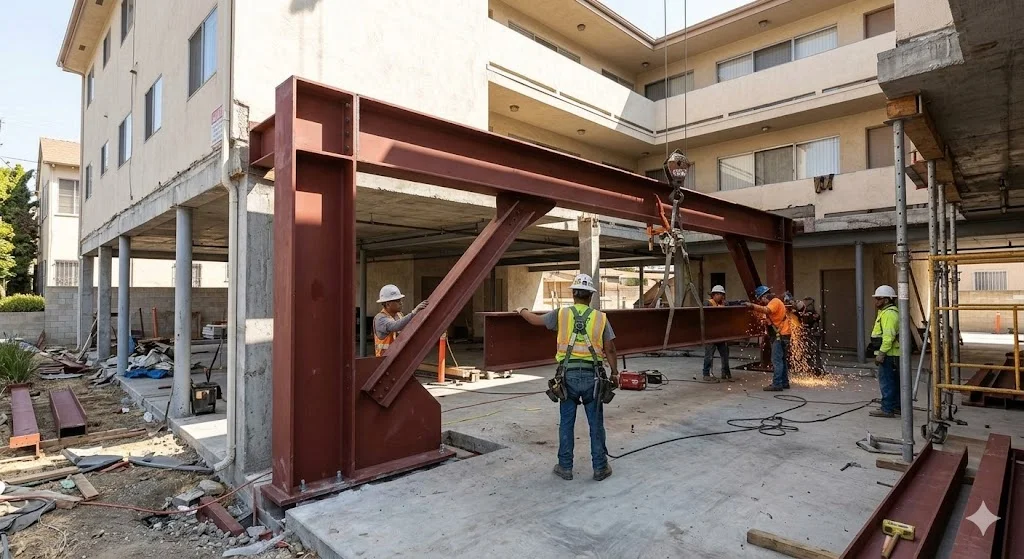
- Steel moment frames – Rigid steel frames installed at open frontages (such as garage entries) to resist lateral loads while preserving parking and access.
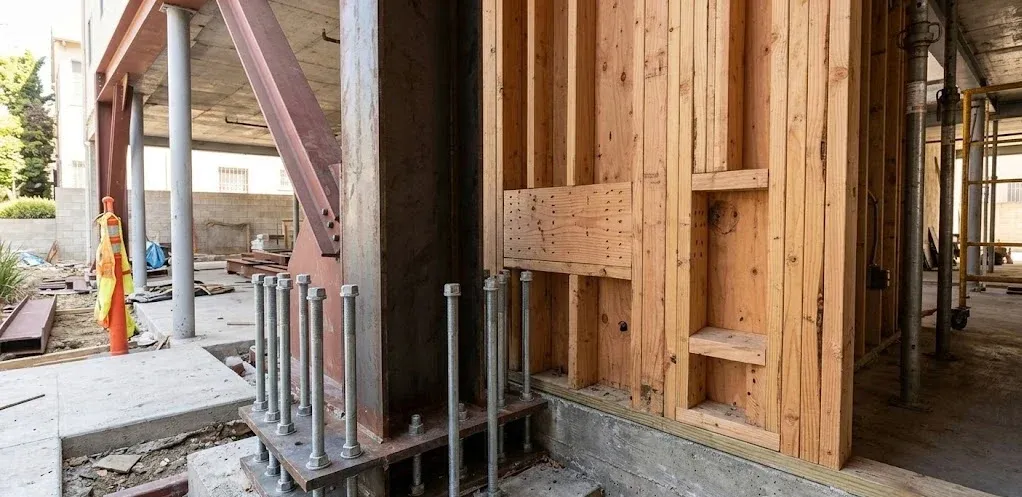
- Shear walls – New or strengthened walls with plywood or steel sheathing to increase lateral resistance.
- Foundation upgrades – New footings or grade beams to support added frames or walls.
- Column and connection strengthening – Reinforcing existing columns, beams, and joints with steel or fiber‑reinforced polymer (FRP) systems.
The final design is always prepared and stamped by a licensed structural engineer. Villa Bella Construction follows these plans closely and coordinates inspection steps with the city.
Permits, LADBS, and Engineering Coordination
Soft story retrofits are engineering‑driven projects. The typical sequence includes:
- Engineering assessment – A structural engineer analyzes existing conditions and prepares retrofit plans.
- Permit application – Plans are submitted to LADBS or the appropriate city for review and approval.
- Pre‑construction coordination – Owners, property managers, and tenants are notified about the work schedule and access needs.
- Construction and inspections – Frames, shear walls, foundations, and connections are installed and inspected at key stages.
- Final sign‑off – The city performs a final inspection and issues documentation that the retrofit is complete.
Our team coordinates closely with engineers and LADBS so construction matches the approved plans and inspection requirements.
What Affects Soft Story Retrofit Costs
Soft story retrofit budgets differ from building to building. Major cost factors include:
- Building size and configuration – More units, longer lines of parking, and complex geometries increase engineering and steel quantities.
- Number and type of retrofit elements – Steel frames, shear walls, and foundation upgrades each add to the scope.
- Access and staging – Tight alleys, limited parking, and active occupancies can increase labor time.
- City fees and engineering – Plan check fees, engineering design fees, and any required geotechnical work.
- Finish restoration – Patching stucco, repainting, and restoring landscaping or paving after construction.
An experienced retrofit contractor can help you understand these factors early so you can plan budgets and financing realistically.
Impact on Tenants and Operations
Most soft story retrofit projects are performed while buildings remain occupied. We work to:
- Coordinate schedules with property managers and HOAs
- Maintain safe access to units whenever possible
- Clearly mark work zones and temporary parking changes
- Limit noisy or disruptive work to reasonable hours
Some parking spaces and common areas may be temporarily unavailable. Clear communication and planning reduce stress for both owners and residents.
How Villa Bella Construction Manages Soft Story Retrofits
Our soft story retrofit process typically includes:
- Plan review – We review engineering drawings and ordinances to understand the full scope.
- Coordination with engineers and LADBS – We clarify details, staging, and inspection sequences before work begins.
- Construction – Our crews install frames, shear walls, foundations, and hardware per the engineer’s specifications.
- Inspections – We schedule and pass required inspections at each milestone.
- Final walk‑through – We review the completed work with the owner or manager and ensure documentation is in order.
We focus on doing the retrofit once, correctly, so you can move forward with confidence.
